 I’m doing a workshop this June on Creating Likeable Characters for Hearts Through History.
The workshop came about because I kept seeing a classic mistakes that is often made. The writer gets caught up in creating a character with problems—with challenges. Yes, you want there to be some conflict and you want a flawed character. But go too far with that and the character comes across on the page as someone that’s not likeable. End result is that the reader bails on the story because the reader doesn’t want to identify with that character.
Why does this happen?
Look, if you have a choice, are you going to spend the evening with folks you like or with people who make you grind your teeth? I’m going to bet on the former unless you are being forced to be there by blood ties or a job. This holds true in a book, too. Readers (all of us) want to spend time with folks we like.
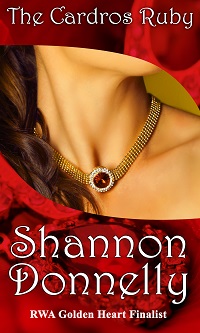 This is a huge issue in any book—it was one I faced in A Cardros Ruby. In an early draft, the heroine came off as too cranky and hard-edged. She was not likeable. Now, she had her reasons for being how she was, but she wasn’t someone you wanted to root for. That meant she needed major work to bring in some things to make her likeable. I had learned about this when I wrote the heroine of A Dangerous Compromise. She’s a spoilt girl who eventually redeems herself—or at least shows a good side—but that came too late in the story for many readers who just didn’t warm to her. And I can understand that.
If I’m going to pay money and spend my hours with some folks—even fictional folk—I want to have fun. I want to be with people I like. If your characters aren’t likeable, you’re not going to sell that book. That’s the voice of experience talking.
As a reader, I want characters I can root for, characters I can laugh with and cry with, characters with whom I sympathize. I want to spend time with folks I like.
Which brings up the question—what is likeable?
This is where subjective opinion gets into it. Even the most beloved characters have their detractors. And good characters are like people, or they should be. This means not every character will be liked by every reader. However, there are some basic things you can do give a character a better chance of being someone that a reader wants to spend hours with, as in give your characters:
Mad Skills – We tend to like folks we admire. We like people who are good at what they do. This is why we like sports figures at the top of their game. We like to see folks doing amazing things. Think of Indiana Jones—we like him because right off, even if things don’t go his way, he’s shown to have extraordinary skills. This is something I use in The Cardros Ruby—the hero’s shown as being able to handle a tough situation right off.
Good Intentions/Actions – We tend to like folks who mean us (and the world in general) well. We like characters who have good reasons for what they’re doing—as in a mother who is out to protect her child. She may do bad things, but if she’s got really good reasons (as in Sarah Conner of The Terminator) we’re going to be on her side. We like folks even more when they do good thing. The guy who rescues a stray dog is likeable. The woman who goes without movies for a month to buy her niece the prom dress the poor girl has been longing for and can’t afford is likeable. Little acts of kindness can mean a lot to a reader—and will put the reader on the character’s side. This is another one I use in The Cardros Ruby—even though the heroine’s heard bad things about the hero (and some of the gossip is deserved), she stands up for him because she recognizes she owes him and that helps put the reader on her side.
Underdog Status – We like characters that don’t start out with everything going their way—folks who are behind the eight ball and have had nothing but bad luck tend to stir our sympathy. If the main character has everything else stacked in his or her favor, that’s not someone who is earning our praise and sympathy. This is another one I use (and notice that you can layer these on—just don’t go heavy handed with this). However, the important thing is we want to see a strong underdog. That means someone being strong against overwhelming odds. Make your underdog whiny or weak and you’ll lose the reader’s sympathy—most folks just don’t like weaklings.
Grit – This could be called strong moral fiber—or even just stubbornness. These are folks who don’t quit when things get tough—characters who preserver, because it’s nice to see that works (even if only if fiction at times). This is a trait most admire. Again, don’t take it too far. If this turns into someone being stupid, you can lose the reader.
Humor – Let’s face it, we like folks who make us laugh. This is what keeps comedians in business. These are the witty types, folks we admire for having a fast mind and a way with words. I actually try to have all my characters be funny and quick because I love people who are sharp—so that’s a personal choice. A wry wit has turned many a bad guy into someone we love (as in Loki in the Avenger movies).
Quirks – Every character needs some flaws. No one likes perfection. A few quirks and a character is both more memorable as well as more likeable. An odd physical trait—a scar, or a handicap overcome such as being very, very short. Or a metal quirk, as in Monk, the OCD detective. Again, if you go too far, the character may come across as just crazy, and most folks shy away from that. Even Monk has mad skills to balance out his oddities.
Empathy – Characters don’t exist in isolation. They need to be aware of the world around them. Characters who demonstrate empathy for others earn our empathy—we are prone to like these folks. This means you do not want a character who is all about me…me…me.
Now this is not to say that all characters must display all these traits. That would be too much for any reader to believe. But pick three or four things. Or even a couple. Demonstrate that your main characters—your protagonists—are likeable. This means you do not tell the reader others like this person, you SHOW the character DOING things that make the reader think this character is likeable.
Keep in mind that if a character is going to have to do bad or stupid things in the story, that character needs the reader on his or her side early and to a great degree. Even give some of these likeable traits to your antagonists. They need to earn the reader’s sympathy, too, if the conflict is going to be strong. Even Hannibal Lecter has the admirable traits of being a cultured man—and mad skills (emphasis on the mad there).
Let your readers get to know and like your characters before you start having your characters do terrible things—and then think long and hard about if a reader can forgive that character.
Think about making sure your character demonstrates he or she is likeable—it’s not enough to tell the reader these things. The character has to be shown doing things that are worthy of the reader. (If you’re not sure about this, read Dick Francis, he’s a master at making you like a character in less than a page.)
Use viewpoint to your advantage—not to your character’s disadvantage. If a character thinks about her long, raven hair, she comes across as vain. If a guy is eyeing another guy and thinking about that other guy’s muscles, the character comes across as gay. Now all of that is fine if you want the reader to believe one character is vain and another is gay, but KNOW what you are conveying to the reader with those internal thoughts. Don’t just stuff description into thoughts because it’s easy—you may be sending the wrong signals to the reader.
Above all, remember you’re asking a reader to spend time in your world. Make sure readers want to stay, want to root for your characters, and start to like them. It all starts off with creating characters you really like—and making sure they show up right off doing some admirable things.
 There’s some advice in romance writing that it is the external conflict brings the hero and heroine together, and the internal conflicts that keep them apart. That’s a great guideline for writers. Too often I see writers going for just the external conflicts, and these are often clichés, which include:
 This is where you get down to bedrock in a character’s psyche—this is what drives this person and makes them do stupid as well as smart things. This is where deep emotions brew—and where actions are driven by core issues for that character. Debra Dixon in her book GMC: Goal, Motivation, Conflict, talks about how this core motivation works best if deeply entrenched in the character–in other words, you want his to be something the character learned in the formative years. It is a deeply held believe that shapes that person’s identity, and to let go of it would be to face the destruction of self.
 In Orson Scott Card’s book, Characters & Viewpoint, he holds that the first four to five ideas will be clichés. They pop into mind just because you have read them too often. Throw them out and keep digging. Somewhere about idea six or seven you’ll start to come up with ideas that better fit your characters in terms of both actions and motivations.
 I just finished up a synopsis workshop and one of the things I kept seeing was that folks were having a hard time writing the synopsis due to not really knowing what is the main conflict in the story. It really does help to know this before you start writing, but it’s vital to know this at some point because the conflict has to come to a head in the third act. If it doesn’t, the story risks being unsatisfying.

 There are as many ways to plot as there are writers. However, one thing I’ve learned over the years is that if you have an idea where you’re going, it can save you from having to do massive revisions. This is not to say you have to know every detail. Sometimes knowing too much can keep you from writing the story–you feel as if it’s already been told.
 The idea behind the workshop is that if you plot from trying to think up actions to happen, you’re more than likely going to end up pushing your characters around as if they are paper dolls. The characters are going to come across as one-dimensional and not well motivated to take the actions demanded by the plot (because the plot is being pushed onto them, not pulled from who these characters are). The other problem is the plot is going to seem contrived–the author will have to manipulate the characters to make these actions happen. That’s going to strain the reader’s ability to believe in these characters (and their situations).
 I’ve seen a new habit cropping up with a lot of beginning writers–they’re all rushing the story. It’s like these writers are so afraid of a slow pace that the story takes off the other direction, meaning too fast for the reader to start to care about the action and way too fast to establish the scene and the characters.
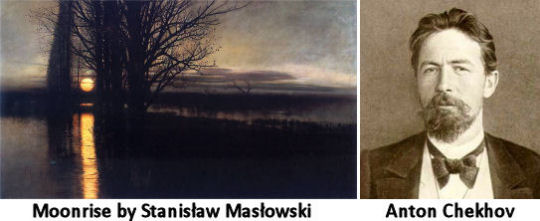 This has come to be attributed as: Don’t tell me the moon is shining; show me the glint of light on broken glass.
 One of the most important things to think about when you open any story is—what are you SHOWING the reader about that character? You want to remember that what you TELL the reader doesn’t matter as much as what you SHOW.
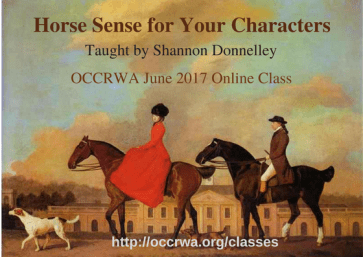 I’m teaching a
  All this means horses have always been part of my life. My aunt—also a horsewoman—taught me to ride side saddle. I went to England to get my riding instructor’s certificate and learned to drive carriage horses—and I got to hunt (meaning vast amounts of time standing about, then galloping to a new cover and more standing about, but it’s all on horseback, so not a bad time at all). I’ve shown hunters, jumpers, dressage, three-day, and did a year of western riding, and now only ride the trail for fun—my show days are behind me.
 I’ve also been bucked off, rubbed off on a tree, had a horse fall with me, dealt with barn sour, rearing horses, dirty stoppers, and a load of other problem horses. I’ve galloped race horses (and you really do have to get up all too early for that), and then I’ve had wonderful horses who would do anything for me–including the splendid Drake shown in the photo above (who hated to be left out and insisted on always having his stall door open so he could join in the fun), and the handsome Woody (the photo on the left) who was a perfect hunter, but never got the hang of fast turns in jumper classes.
