Gretna Green and the Runaway Regency Bride

Eloping

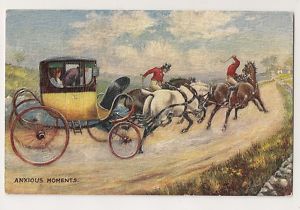
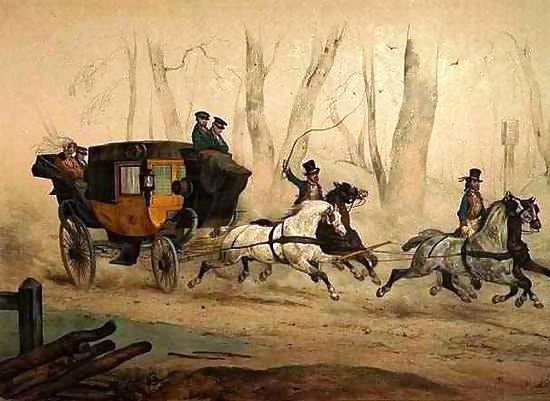
A forbidden young love.  A frantic carriage chase across England.  A hasty wedding ‘over the anvil’ at Gretna Green.  Such a scene is a staple of many a Regency romance.  In fact, it’s with such a mad drive to the border that I chose to end my second Regency, A Dangerous Compromise.

But why might a young couple have to elope to Scotland to marry?

A chance of geography and an act of Parliament led Gretna Green to become famous as a haven for young lovers who could not win their parent’s consent.

In 1753, Lord Chancellor Hardwicke’s Act for the Prevention of Clandestine Marriages passed.  The law took effect on the twenty-fifth of March in 1754.

The act had been passed, after a good deal of debate and struggle, to regularize marriages and to protect wealthy families from having their underage offspring preyed upon.  Prior to this, London had become infamous for it’s “Fleet marriages” where disreputable ministers would perform a wedding within the Rules of the Fleet Prison.  Clergymen who had been imprisoned for debt could live in the Rules, an area just outside the prison, meant to provide them a sanctuary.  Since they were already here for being in debt they could not be fined for performing irregular marriages, and so were effectively beyond the law of the time.

By the 1740’s, it is estimated that around a hundred minister had set up in business to marrying anyone who had the money for it.  They could even provide a groom if a pregnant woman needed legitimate status for her child.  The bride and groom exchange vows, coins exchange hands, and the couple was married.

These Fleet weddings had been the bane of many a rich family.  Stories circulated of underage heiresses who had been tricked, or kidnapped and forced, into such marriages by unscrupulous men.  And fathers complained of sons who had married unsuitable brides.  Two dukes even saw their sons married in such secret ceremonies.

In 1754, the informal wedding was swept away.  The new act required that the groom and bride must each be 21 years of age, or have the consent of their parents or guardians.  The wedding had to take place during daylight hours in a parish church ceremony within the Church of England.  For “three several Sundays” prior to the wedding, the banns had to be posted–meaning that the curate would ask “after the accustomed manner” if anyone knew any reason why these two could not marry.  If the couple lived in separate parishes, banns had to be called in each.  Finally, a license had to be obtained and the marriage had to be recorded in the parish church.

To avoid these conditions, a Special License could be bought, so that bans did not have to be posted and the marriage ceremony could take place anywhere.  But such a license had to be obtained from the Archbishop of Canterbury’s offices, and the names of those to be married had to be written on the license.  With these constraints, it did not help young couples who were trying to wed against the wishes of their families.

By requiring parental consent, the act gave parents the right to invalidate any marriage they considered undesirable.  A clergyman who preformed an illegal marriage could be transported for up to fourteen years.  English legislators expressed relief at having done away with foolish notions of romantic love in favor of more practical statutes governing the institution.

However, because Scotland and Ireland were separate countries, the act applied to only those marriages contracted in England.  It also did not apply to Quakers and Jews, who wed outside the Church of England (and who also stood outside the power and wealth structure that the act sought to protect).

Ireland had already enacted laws with heavy penalties to do away with clandestine marriages.  However, in Scotland, a couple had only to be 16 years of age and had only to declare their intentions to be husband and wife in the presence of two witnesses, and their word was law.  So Scotland became the place to flee to for a quickie wedding.

On the west of Scotland, at the most southerly point of the English border, the main road between Carlisle and Glasgow passed through the small village of Gretna Green.  A half-mile from Gretna, the road crossed the Sark river which marked the border itself.  The closest village on the English side, before you reached Carlisle, was Longtown.

Near the Solway Firth, the Greta Green of Regency era is described in Gretna Green Memoirs as, “…a small village with a few clay houses, the parish kirk, the minister’s house, and a large inn…from it you have a fine view of the Solway, port Carlisle and the Cumberland hills, among which is the lofty Skiddaw; you also see Bowness, the place where the famous Roman wall ends.”

Within Gretna, at the Headlesscross, is the junction of five coaching roads, and here lay the Blacksmith’s Shop.

Marriage over the AnvilIn coaching days, a blacksmith’s shop was an obvious stop for any carriage.  And it became a prime spot for many eloping couples to stop and wed before parental pursuit caught up with them.  An elopement to Gretna soon became known as a ‘wedding over the anvil,’ and the ‘blacksmith priests’ were the ones to ask for to perform the ceremony.

In fact, however, many couples wed at the inn, or at other Scottish villages, and any man could set himself up as an ‘anvil priest.’  It could be a lucrative trade, for a fee had to be paid, along with a handsome tip, which could be upwards of fifty guineas.  According to Romances of Gretna Green, “…the man who took up the trade of ‘priest’ had to reckon on the disapprobation of the local Church authorities…” but that was the only requirement for the job.

Between 1780 to 1790, a second village took shape about a half a mile from Gretna.  Springfield was built on land leased from Sir Patrick Maxwell.  Small, with one-street, it was a weaving town, but David Lang (or Laing) soon set up as an anvil priest to marry couples at the Queen’s Head Inn.

But Gretna had another anvil priest and, as the first in the wedding trade, he kept most of the fame and business.

Joseph Paisley had began marrying eloping couples in Gretna in 1753 when the Hardwicke Act had passed but had not yet taken effect.  It is said he continued to wed couples until his death (which Robert Elliot reports as 1811, but other sources give 1814).  Paisley had been a smuggler, and reports paint him as, “grossly ignorant and insufferably coarse…an overgrown mass of fat weighing at least twenty-five stone….who drank a good deal more than was necessary to his thirst.”  He had been a fisherman, and it is reported that he kept “…a store for the sale of groceries and odds and ends…,” but his main trade was in weddings.  He is also said to have drunk a Scotch pint (or three English pints) of brandy a day.  He must have reeked like a distillery.

Paisley, however, had a comely granddaughter, Ann Graham.  In 1810, Robert Elliot courted Ann, and they wed a year later, and Elliot stepped into what had become the family business of wedding lovers who came to Gretna or Springfield.

Robert Elliot began marrying couples in 1811.  The son of a Northumberland farmer, Elliot had worked at various trades–most of them involving coaching work.  When he went to work for a Mr. Wilson, keeping his coach-horses at Springfield, he met Joseph Paisley.

Elliot quite liked his grandfather-in-law, and says of him, “He was an upright, well-disposed man, beloved by all his neighbors, and esteemed by all who had his acquaintance.”  But he also reports, “Over a mixed glass of mountain dew, or good smuggled cognac, would our village patriarch relate…the most remarkable events he remembered.”  So perhaps Elliot found nothing amiss with a man downing a Scotch pint of brandy a day.

Elliot continued to perform weddings until 1839.  In 1842 he published his memoirs, which sold in private subscription of one guinea each, and this is all we have of the records of who he might have married.  The story goes that Paisley and Elliot’s records were stored on a bed canopy, and were lost when Elliot’s daughter set fire to the bed, killing herself and destroying the records.

All tolled, Elliot laid claim to having married almost 4,000 couples, from 1811 to 1839.

Some famous couples who eloped to Gretna include John Fane, the tenth Earl of Westmoreland, who ran off with Sarah Anne Child.  As the daughter of Robert Child, of the famous Child’s Bank, Sarah Anne stood to inherit a fortune.  But when the earl went seeking Mr. Child’s consent, the banker is said to have replied, “Your blood, my lord, is good, but money is better.”

And so the earl talked Sarah into running away with him.

They were chased to the Scottish border by an irate Mr. Child and barely made it across to be wed.

Child never forgave them.  He changed his will so that his wealth passed to Sarah Anne’s second son, or to her eldest daughter, so that no Earl of Westmoreland would inherit.

But, as in a good romance, Sarah and Westmoreland were happy enough, had six children, and the eldest daughter, Sarah Sophia, inherited Child’s riches.

Interestingly, Sarah’s granddaughter, Lady Adela Villiers (Sarah Sophia’s daughter), also eloped to Gretna, to avoid her mother’s matchmaking and wed her beloved Captain Charles Parke Ibbetson.  Runaway marriages seem to have run in the family.

The trip to Gretna from London could not have been pleasant, even in a well-sprung coach that would absorb most of the ruts and swaying.  It was some 300 miles or so from London to Gretna.  The trip would be longer if a couple, in fear of pursuit, chose to stay to side roads in an attempt to throw anyone following off the scent.

To travel fast, the horses would need to be changed every 10 or 20 miles, meaning at least 16 stops along the way.  And the cost of it!  A post chaise and four might cost as much as 3 shillings a mile.  Plus there’s the hire of fresh horses, tips to encourage fast changes, food and drink to be bought, plus a room and the wedding in Gretna.  And there is the return trip home to be paid for as well.  A man might spend from £50 to £100 for his elopement if he were in a great hurry.  But such expense would seem as nothing if the bride came with a fortune attached.

The trip would also be tedious.  Horses can average 8 to 10 miles an hour, with the occasional ‘springing them’ for short bursts that might net you 14 to 16 miles an hour for perhaps a quarter hour.  With this in mind, the trip might take as little as 25 hours, with very good horses and frequent changes.  But there were the potential delays of a horse going lame, a wheel falling off, muddy roads, snow, or other bad weather conditions to slow the pace.

To give a more exact time estimate, the Royal Mail left London for Carlisle at 7:30 PM and arrived at 10:00 PM on the second night.  That’s two full days on the road.  But a private coach could make better times–it would be lighter and therefore faster.

After such an ordeal, if a couple arrived still inclined to wed–instead of kill each other from exhaustion and too much of each other’s company–that would seem to bode well for a long and happy marriage.

To wed in Gretna, a couple had only to find one of the anvil priests.  He would call on his neighbors to have the necessary two witnesses.  The ceremony was brief and went like this, according to Elliot’s Gretna Green Memoirs:

“The parties are first asked their names and places of abode; they are then asked to stand up, and enquired of if they are both single persons; if the answer be in the affirmative, the ceremony proceeds.

“Each is next asked:– ‘Did you come here of your own free will and accord?’ Upon receiving an affirmative answer the priest commences filling in the printed form of the certificate.

“The man is then asked ‘Do you take this woman to be your lawful wedded wife, forsaking all others, kept to her as long as you both shall live?’  He answers, ‘I will.’  The woman is asked the same question, which being answered the same, the woman then produces a ring which she gives to the man, who hands it to the priest; the priest then returns it to the man, and orders him to put it on the forth finger of the woman’s left hand and repeat these words, with this ring I thee wed, with my body I thee worship, with all my worldly goods I thee endow in the name of the Father, Son and Holy Ghost, Amen.  They then take hold of each other’s right hands, and the woman says, ‘what God joins together let no man put asunder.’  Then the priest says “forasmuch as this man and this woman have consented to go together by giving and receiving a ring, I, therefore, declare them to be man and wife before God and these witnesses in the name of the Father, Son and Holy Ghost, Amen.”

In 1856, and with railways coming into being, a bill finally passed to make a Gretna wedding ceremony illegal, and that effectively ended the days of a runaway marriage.

Since then, wedding laws have relaxed somewhat and Gretna Green is again a popular spot for weddings, but for romantic rather than legal reasons.  Gretna’s Blacksmith Shop now houses a museum, with a collection of 19th century coaches, including the State Landau used during King William IV’s reign, and a stage coach that ran between the Lake District and Scotland.

While legislation has done away with the need for couples to flee to Greta Green, the village thrives by playing on its association with star-crossed young lovers and desperate romantic rides through the night for a happily ever after.  And what more could any romantic wish for?

Sources:

The Gretna Green Web site at http://www.gretnagreen.com

The Family, Sex and Marriage: In England 1500 – 1900 by Lawrence Stone

Road to Divorce by Lawrence Stone

Romances of Gretna Green and its Runaway Marriage by Lochinvar

Gretna Green Memoirs by Robert Elliott

Great Britain Post Roads, Post Towns and Postal Rates 1635 – 1839, Alan W. Robertson


Egg-cerpt Exchange – Susan Wingate

“Spider Brains” by Susan Wingate

Information from Susan:

Spider Brains by Susan WIngate

Susan Wingate’s Debut YA Novel <> Available May 15, 2012

If you would like to read SPIDER BRAINS on my blog, I’ll be posting this story daily (with the occasional break by some amazing guest author postings) and chapter-by-chapter. Press Here to Read an Installment of SPIDER BRAINS.

A Short Synopsis of SPIDER BRAINS:  If one were to bake the story SPIDER BRAINS into a cake, they should sprinkle in Charlotte’s Web, toss in one Jellicle Cat, then stir in a little Spiderman—but as a girl and not in that goofy latex outfit! A tale of hope, transformation, transition and inspiration.

After her father’s death last year and, now, in the throes of a gnarly teacher’s whim as she thinks ahead to college (or really just dreams of getting into college), a small black arachnid bites fifteen-year-old Susie Speider on the finger. The bite sends her nights into fantastical dreams about taking revenge on a teacher who, ultimately, holds her college aspirations in the palm of her cold calloused hand. But, after Susie figures out the dreams are real, she ups the ante by visiting the teacher regularly… as the spider! And, oh, by the way! Who is that boy spider munching on flies, hiding over there in the corner? A story of loss and forgiveness, tolerance and kindness, Susie Speider deals with the death of her father while Matt Ryder–the new neighbor boy–has just lost his mother. Ultimately, SPIDER BRAINS poses some important questions about how to treat Attention-Deficit-Disorder.

“Simply put, Susan Wingate is a master of the written word.  In SPIDER BRAINS, she weaves a heart-warming tale full of wit and intrigue: a nod to Kafka’s Metamorphosis in a quirky blend with The Princess Diaries.  There are laugh out loud moments with the teenage protagonist, Susie Speider, whose voice was well executed and credible.  But there are also moments that tug at the heartstrings and even bring a tear to the eye, as we see Susie’s angst when she faces pain from the past, as well as redemption through the relationship with her mother. Whether or not you’re a fan of YA literature, you’ll love SPIDER BRAINS.  But don’t expect anything ordinary!” ~Joshua Graham, award-winning, no. 1 Amazon & no. 1 Barnes & Noble bestselling author of “Darkroom” (S&S/Howard Books) and “Beyond Justice”)

“A heartwarming story full of laughs, great friendship, a touch of romance, and lots of fun facts about spiders and more. Every now and then a wonderful book like this one comes along that entertains while it teaches. I look forward to reading SPIDER BRAINS with my kids!” ~Ann Charles, award-winning author of the Deadwood Mystery Series

Pre-Sale Orders Now Being Taken Thru

Barnes & Noble

Roberts Press

 Read more about #1 Amazon Bestseller & Award-winning author, Susan Wingate at: www.susanwingate.com.

Related articles

What’s the Book About?

I’m doing my “Sexy Synopsis” workshop for Outreach RWA Chapter this March — link here — and the workshop always has me thinking about how most writers dread the synopsis, but it really is a great tool. The two big dreads seem to be:

1 – If I write a synopsis, I won’t want to write the book, and

2 – How can I possibly condense my great, big wonderful book into a couple of pages?

(Yes, folks, a synopsis really should be only about 2 – 3 pages — anything more and you’re talking a detailed outline, which is a different animal.)

I started calling this workshop the “sexy synopsis” since a synopsis really should be short, stylish and cover the basics — you want to sell the book. And it’s not just about selling the book to editors and agents.

You’ve got to sell your book to readers, too.

In other words, the synopsis is really just slightly longer back cover copy. It answers the basic question–what’s the book about? (And you cannot flippantly say, oh, about 200 pages.)

But how do you answer those two basic dreads?  Well, you can take the workshop, but here’s some quick easy tips.

1 – Start with the big stuff — like theme and the core conflict. Bob Mayer does a great workshop on core conflict, and he’s teaching this soon, so I recommend it highly. This will get your idea down to just a single line, meaning you’ve got a lot of the work on your synopsis done right there.

2 – Focus on only the main character and main plot.

3 – Know what’s your selling point, and make sure that’s there — as in, if the book is funny, make sure the synopsis has a light tone, too.

4 – Be sure to include the ending — this is where a synopsis is different than back cover copy. The synopsis must have the resolution so that it shows the book has a satisfactory ending.

5 – Cut extra words.

6 – Read your synopsis aloud. Preferably to a friend whose never heard this story or ideas — that will tell you if you’re telling a story that makes sense.

7 – Think of your synopsis as the “bedtime story” version of your story — hit only the ‘good parts’, but make sure you do have good parts scenes mentioned.

8 – Shorter is harder — know this is going to be work going in and you won’t be so frustrated when it takes ten drafts to get even close to anything approaching ten pages that make sense.

9 – If all else fails, tape record yourself telling the story to a friend, and make sure you set a time limit of getting the telling done in less than five minutes.

10 – Don’t take it too seriously. The book still matters more than the synopsis. But, here’s the thing, if the synopsis comes out bad or flawed or with big holes in it, time to look at your book structure. The synopsis can be an early warning that you really have not fully thought out your story — make sure you pay attention to what the synopsis tells you. It can save you lots of headaches in revisions.

Most of all, remember that a synopsis is a guide–not a bible. Leave yourself room to diverge, and leave your characters room to grow. Let the story surprise you. And if the story wants to go in a new direction, let it. You can always change the synopsis later.

Also keep in mind that if you get stuck or lost, go back to your synopsis. Sometimes those few pages can be key to guiding you out of the woods and into finishing your story.

Egg-Cerpt Exchange – Tina Gayle’s Book

The Executive Wives’ Club SeriesFour women…One fatal car wreck…Everyone’s lifes changes…

Blurb for “The Unwilling Widow”:Jennifer Larson, having lost her husband, friends and the perfect life she’d had plan, now faces the biggest challenge of her life, moving into an unplanned future. While the rest of the Executive Wife Club is still wallowing in the past, Jen is tempted into the future by a sexy chiropractor, Hagan Chaney.But does he really love her or is he only after her money like everyone else?Excerpt:Friday night sitting at a booth in a nice, romantic restaurant, Jen silently wished she could enjoy the subdued atmosphere, and order a rib eye steak. Instead, her hands shook and her stomach churned with doubt. The survival skills, she’d learned after becoming a real estate agent demanded a calm composed front, but she couldn’t pull it off.

Hell, who was she fooling?

After ten years without a date, what made her believe she could do this again? She stared at the menu. Could she even swallow a bite of beef? And if not, what should she order?

She lifted her gaze to the drop-dead gorgeous man on the other side of the table. Hagan Cheney, a Greek god incarnated, had strawberry blonde hair glowing like gold around his head. Wide shoulders and strong arms encased in a hunter-green cashmere sweater. Apollo, himself, wouldn’t look any better.

Why in heavens name did he ask her on a date?

And why did she care?

She had no plans other than a casual dinner for two.

He glanced up and a pretty-boy grin crossed his lips. The twinkle in his hazel eyes softened the square line of his jaw. “So have you decided what you want?”

Heat simmered low in her belly. Oh, yeah, answering that question the wrong way could get her into a world of trouble.
Find out more on

Tina’s Book Page
Visit Tina at
www.tinagayle.net

www.tinagayle.blogspot.com

Private Carraiges of the English Regency

The Regency saw the pinnacle of the art of carriage driving. New technologies provided opportunities to build better carriages. In 1804, Obadiah Elliott of Lambeth invented the elliptic spring, lightening the weight and eliminating the need for perches. Samuel Hobson improved carriage shapes by lowering the wheels in 1820. At the same time, the engineer Jon Loudon McAdam introduced his process to pave roads to create a hard, smooth surface and double the speed at which carriages could travel.

During this time, carriage types flourished, and perhaps the most popular of carriages were the phaetons and curricles.

Phaeton by StubbsPhaetons first appeared around 1788. The young Prince of Wales popularized their use in the 1790’s. In Greek, the name means “shining”, and Phaeton was a mythical character who stole his father’s sun-chariot. The carriage was noted for being built very high over the body, with four wheels (large wheels in back and smaller wheels in the front). They sported two types of under-carriage. A high perch phaeton had a straight or sightly curved central beam that connected the two axles. The ‘superior’ crane-neck phaeton offered a heavier construction of iron with two beams and hoops which allowed the front wheels to turn. These “Highflyers”could be drawn by a pair, four or six horses. However, contemporary artists usually shown them as postillion-driver (with riders on the horse’s backs), if more than four horses were in harness.

Ladies as well as gentlemen drove phaetons, and the carriages were known as spider, park, and ladies phaetons. These were often drawn by ponies. Lady Archer, Lady Stormont, Mrs. Garden and even the Princess of Wales were noted whips. Among the gentlemen, Sir John Lade, Lord Rodney, Charles FinchRE and Lord Onslow set the pace.

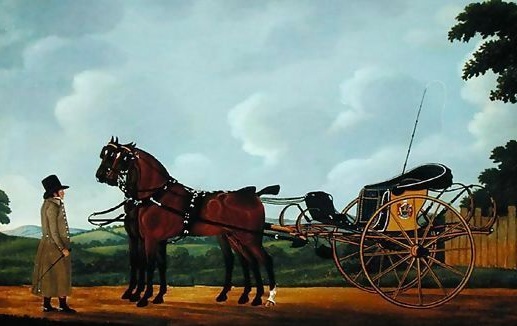
CurricleThe curricle came into fashion in the 1800’s. This was a two-wheel vehicle, built to take a pair of horses. Again, the sponsorship of the Prince of Wales (now too fat to climb into his high perch), promoted their popularity. Horses were attached to the light-weight body by harness connected pole, with a steel bar that attached to pads on the horse’s back to support the pole. The curricle offered seats for two, with a groom’s (or tiger’s) seat behind (the tiger was not the big cat, but a slang name for a small groom who could easily jump down to hold or walk the horses).

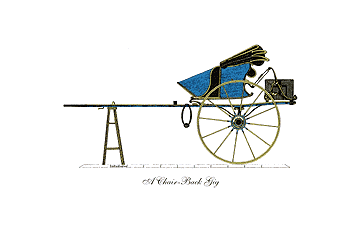
Chair Back GigLess fortunate gentlemen had to be content with driving a gig, which remained in service from the 1780’s until the 1900’s. Originally, the gig was built high and given such names as the “suicide” gig, denoting popular opinion of the safety of such vehicles. However, since the groom’s seat sat three feet above that of the driver’s, the name might well be based on the opinion of those in service. Since carriages were built to custom order, there were many designs, and gentlemen often competed with each other for new innovations in their carriage designs.

By the 1800’s, the big and whiskey were in common use, however, Quality did not take to them until after 1815. Both were two-wheeled vehicles that could be drawn by one horse. The whiskey got its name from the fact that it was light and easy to go ‘whisking’ along.

Many noted whips designed their own carriages, hence the Stanhope gig made in 1815 to the design of the Hon. Fitzroy Stanhope. Carriages also bore the name of their builders. The Tilbury gig of 1820 was designed and made by Tilbury the coach-builder. Unlike other gigs it had no boot, and the rib-chair body was supported entirely on seven springs, making it a popular vehicle for use on rough roads.

Cocking Cart driven tandemAt the same time the suicide gig became popular, so did the cocking cart. This two-wheeled vehicle was often driven tandem, with one horse between the shafts and the lead horse attached only by harness, so you’d have one horse in front of the other. As one might infer from its name, the cocking cart offered a boot with slatted venetian blind panels on either side for carrying fighting cocks.

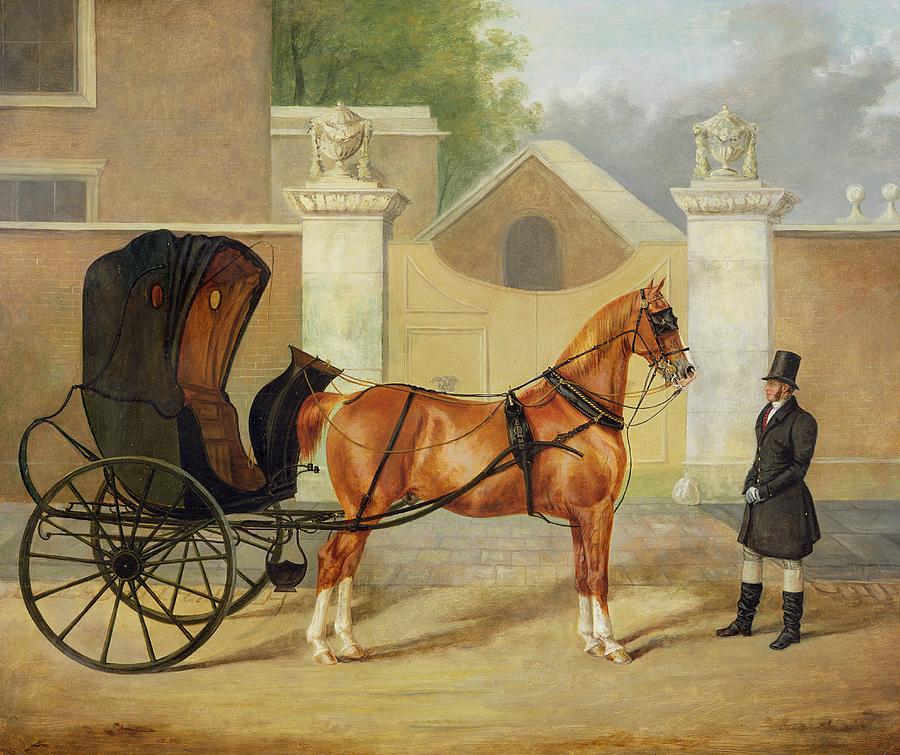
CabrioletIn 1815, Count d’Orsay (the king of fashion in London after Waterloo) sponsored the cabriolet. This was in addition to his curricle, for a rich gentleman could afford to keep multiple carriages and teams. The cabriolet was import from France, and appeared similar to the curricle but required only a single horse. Instead of providing a seat for the groom, it held a small platform on which the ‘tiger’ stood. This carriage, like the curricle, offered a hood to help protect the driver and the passenger from weather, but it still served better as a town carriage for fair weather.

Full enclosed town coaches had been is use since 1605. However, in the late 1700’s these began to evolve away from the massive vehicles that held four and which required up to six, heavy draft horses.

The sociable appeared in the 1780’s. This low-hung vehicle offered a box seat for a driver and held four passengers (two facing backwards). In bad weather, a hood could be raised over the back seat, and the front seat could be folded down.

By the 1800’s, the sociable had evolved into the sociable-landau and the landau. Both were usually drawn by a pair of horses, and driven with postillions or by a coachman if a box seat had been built onto the body. Hoods could be raised, front and back, so that the landau resembled a coach, or could be lowered in fine weather.

Landeu Luke Hopkinson of Holborn introduced the briska-landau, which offered seats that rose six inches then the top was put down. Canoe-landaus offered curved, shallow bodies and were sometimes called Sefton-landaus, after the Earl of Sefton. (The landau with postillions is often the carriage still used by English royalty for events where great visibility and ceremony is required, such as for weddings, reviewing the troops, or for arrivals at the Royal Ascot race meet.)

Another town coach, the barouche did not gain in popularity until it’s heavy body and low build had been modified. However, when Mr. Charles Buxton founded the Whip Club in 1808 (which became the Four-In-Hand Club the following spring), its members drove “…fifteen barouches and landaus with four horses to each….” to the first June meeting on a Monday in Park Lane. Because its members often drove barouches, the Whip Club sometimes came to be called the Barouche Club.

BaroucheThe barouche required large, ‘upstanding’ horses, with impressive action. It could be driven from the box or with postillion riders, and could accommodate a pair, four or six horses. Two passengers could be seated in the body, and a seat provided comfort for two grooms.

A private drag was the slang term for a gentleman’s private coach, and these were built for four-in-hand driving.

Drags of the Four in Hand Club by AikenCopying the Mail Coach, a drag offered seats inside the coach, and on the roof for the driver and for two grooms. Gentlemen drove their drags to race meetings (for grandstand viewing), to meets of the Four-in-Hand and other sporting events. A convenient tray in the boot could even be lowered to create a table for picnics.

By 1815, the heavy traveling coach had been replaced by the traveling chariot. Two or four horses could be used with this light body vehicle, and were driven by postillions or post-boys. Some offered seats at the back for servants, all offered upholstered seats in satin or petit-point.

Post Chaise "Yellow Bounder" These vehicles also served as the post-chaise carriages which could be hired on the road at posting houses. At a cost of 1s 6d (that’s one shilling and six pence) a mile for a pair of horses, and double that for four, a post-chaise was not an economical method of travel. They earned the slang name ‘Yellow Bounder’ for the almost inevitable yellow bodies.

Until the advent of the automobile, carriages continued to flourish in type and design.

In 1820, the cleche (a larger version of the barouche) came to England. In 1818, T.G. Adams introduced the briska or britzcha. The fourgon and plentum, the vis-a-vis came and went. Beauty in shape and color for carriage and horse became symbols of wealth and leisure.

SOURCES:

The Elegant Carriage, 1979, Marylian Watney

Horse & Carriage, 1990, J.N.P. Watson

The History of Coaches, 1877, George A. Thrupp

The Coachmakers, 1977, Harold Nockolds

Egg-cerpt Exchange

Author Egg-cerpt ExchangeStarting Feburary 22, author Tina Gayle is coordinating an Easter Egg-cerpt Exchange — authors will be posting excerpts from their books for readers.

So, if you’re interested in finding new books to read, check out the exchange, which starts Ash Wednesday and runs through Easter. Also look for give-away specials from authors during the Egg-cerpt Exchange.

For more information head over to Tina Galye’s site.

Paths of Desire – A Regency Historical Romance

Paths of DesirePATHS OF DESIRE

On Amazon Kindle

ISBN: 978-0-9831423-9-3

With too many secrets in her past, and too little future as an actress, Theodosia Newell wants one thing more than all else—security. She’s seen her mother abandoned, her younger brother die, and she’s vowed never to be poor. But then her path crosses that of a man who tempts her to abandon caution and all thought for the future for a passionate affair. Can she find the courage to break from her deepest fears? And will her love prove enough to save them both?

Born with a soul for adventure, David Llewellyn cannot resist a challenge—and his enthusiasm for life is as magnetic as his personality. But two women share his life, and only one can be his. Will his stubborn refusal to make a choice between them lead him to lose everything? Or will he find, in the journey to the lost city he dreams of discovering, a path to a deeper love than he thought possible?

For ten years, the affair between David and Thea goes from passion to love. Lives are changed.  Secrets come out. Marriages end. And new ones begin. Through it all, the desire of two strong-willed people lead them to clash, and to eventually find their own path–to each other and to facing the need and love they share.  From London to Italy to Syria, the Paths of Desire lead them on a journey they must make together.

—————————————-

My first step into a self-published novel — I’ll be posting updates each month to let you know how it’s going.

Regency Coin — What Did it Cost?

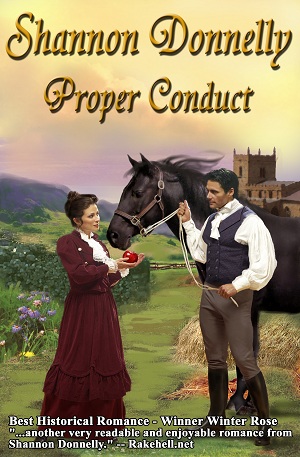
Proper ConductIn Proper Conduct, the heroine spends a good deal of time worrying about money that is not there, particular after her father spends nearly 1,000 pounds on a horse.  Not an excessive sum to someone such as the Prince Regent, whose racing stud farm cost him 30,000 pounds a year.  But all these numbers seemed to need a bit perspective.

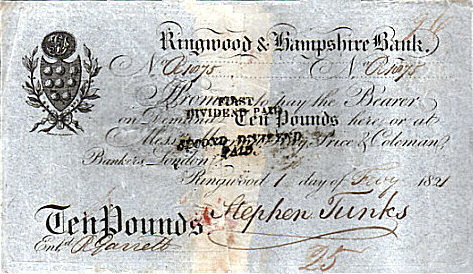
We also have to remember that back in the 1800’s England was not on a decimal system–you had to know your farthings, pennies, and shillings. And coins were far more common for use than any paper money. Banknotes–slips of paper that promised payment for a set amount–were initially issued by individual banks. In the late 1600’s the Bank of England was established and by the late 1700’s their notes were viewed as being as good as gold (or silver). But Scottish banks issue their own notes until the mid 1800’s, and other private banks o issue their own notes until the mid 1800’s, and the last English private banknote was issued in the early 1900’s.

Banknotes began to be standardized in the mid 1700’s, with ten and five pound notes appearing. These were all hand-lettered and signed–and 1821 banknotewere viewed by many with deep suspicion. A coin, after all, was to hold the value of itself within it’s metal. And for many, a bit of gold or silver in hand was better than any promise given in a bit of paper. Banknotes were much easier to forge than any coin–another good reason for anyone to prefer payment in solid coin.

So we look to coinage as the most common form of currency.

In the Regency, we have as the main coins denominations:

  • Farthing – four farthing made a penny
  • Penny or Pence – twelve pennies (or twelvepence) made a shilling
  • Shilling – five shillings made a crown
  • Crown
  • Pound – twenty shillings made a pound
  • Guinea – twenty-one shillings made a guinea

In ledgers, a pound is often written with the pound mark–£. Shilling is written as an “s” or a slash mark, as in 6/ is six shillings. And a penny is written up as “d” for denarius, a Roman silver coin that had the same value as the English penny. So 4d is four pence.

Coinage in use in the Regency included:

  • Gold for one, two, five and half-guinea coins
  • Silver for one, two, three, four, and six penny (or pence), shilling, and crown coins
  • Copper for half-pence and farthing coins

Two-penny coins were called tuppence. And there were all sorts of slang names for coins including a quid (pound), a bob (shilling), and a goldfinch (guinea).

Due to a shortage of copper and silver coins in the late 1700’s, firms began to use tokens to pay wages.  There was also a growth in payments by foreign coins at this time.

The annual expenses of a great house could run between 5,000 and 6,000 pounds a year including housekeeping, repairs, stables, parklands, gardens, home farm costs, servants, and taxes.

Mrs. Whitney’s  Boarding School for Young Ladies at Buckingham cost twelve guineas a year, and one guinea extra if tea and sugar were required to be served.

In Bath, one paid two guineas were paid for subscription balls, five shillings for concert tickets, and ten shillings sixpence for a subscription to the booksellers.

With an income of 400 pounds a year, one could employ two maids, one groom and keep one horse in London.  On 700 hundred a year, one could have one manservant, three maids and two horses.  With an income of 1,000 pounds a year, one could have three female servants, a coachman, a footman, two carriages and a pair of horses in London.

There were three to four hundred families whose income was over 10,000 pounds a year, due to vast land holdings (hence, these were called “The four hundred” — it was a small world at the top).

During the London season, the lease on house in the West End could cost as much as 1,000 pounds.

Anyone with a debt of twenty pounds or more could be sent to debtor’s prison.  However, a member of Parliament could not be imprisoned while Parliament was sitting.

The capital to secure an estate was approximately thirty times the desired income–so, if you want to make 1,000 pounds a year, you need 30,000 to secure the amount of good land that could produce such an income.

The Earl of Egremont saw a rise in income due to land rentals from 12,976 pounds in 1791 to 34,000 pounds in 1824.

In Somerset (where Proper Conduct is set) 30 acres for let went for 35 pounds per annum, with the tenant paying all taxes except land tax.

In 1801, a 100-acre estate in Sussex sold for 3,500 pounds.

In 1804, due to the silver shortage, the Bank of England issued light-weight token silver coins for one shilling, three shilling and six pence coins.

From 1811 to 1812, an estimated 250,000 people lived comfortably on more than seven hundred pounds a year each.  A half million shopkeepers made a hundred and fifty pounds a year each, two million artisans lived on the edge of poverty at 55 pounds per annum, and one and one half million laborers earned only 30 pounds a year each.

In 1813, a cow fetched about 15 pounds at the market, while a ewe went for 55 to 72 shillings.

In 1816, a new British one pound coin made of gold, the sovereign, began to be produced.

In 1820, 1,100 years after the first English silver pennies were minted, the last British silver pennies were minted.

New Cover, New Book – Paths of Desire

Paths of DesirePaths of Desire comes out as an eBook this week—my first venture both into self-publishing and my first Regency Historical romance. I’ve been bringing out my backlist of Regency romances, and that’s encouraged me to take this next step.

There are several reasons to take “Paths” on this path, the main one being I really want the book out in print and in reader’s hands. It’s a book about courage and stepping out onto risky paths, so it seems to be one that really fits into new ventures.

It’s a book I wrote a few years back—my step into writing a longer Regency Historical. But it ended up being smack in the middle between being a Historical romance and a Historical novel—there are elements of both, and therefore it’s a hard book to market to publishers. Traditional publishers don’t know what to do with it. It covers ten years, a long time for a romance, and the hero is a married man—unhappily so. That’s a really hard sell to any romance publisher. But that’s something I wanted to deal with in this story. Fiction is a place to look at life, and romances can tackle issues of infidelity and what does it mean to love someone when you have ties to others. Yes, I could have pulled that out, changed the character to better fit the market, but this one stuck with me—this story needed to be told.

It’s a story about paths crossing—about how sometimes the timing for a relationship isn’t right, and then it is. The heroine struggles with her own issues—her need for security after having grown up on the streets of London and seen her younger brother die due to not having the money for a doctor. And also her realization that her acting talents are never going to get her to the top of her craft—limitations are a hard thing for anyone to come to terms with. The hero has both a loveless marriage with a wife who doesn’t really like sex, and a wanderlust that keeps taking him from home—he’s an adventurer, and the wrong man to love if you’re looking for that illusion of security. As with all my books, I wanted to give all the characters a “star moment” in the book—that was fun. It was great fun to research London theaters of the early 1800’s and to also be able to use Lady Hester Stanhope in a story—she’s the larger than life type of character that you could never hope to create and have believable because she defies all the conventions of the time.

So “Paths” is about to take its own path—and it’s actually been hard to let it go (compulsive editing and checking and I know I’ve still left typos in there or formatting stuff where Word is not playing nice with eBook formatting). But it’s been an adventure to get this ready to go out in the world—it’ll be another one to see if readers like something that’s a little different. But that’s the point of the book—we all have to find our own paths, and the courage to follow them if we’re to be worthy of our desires.

Look for Paths of Desire as Amazon Kindle eBook, exclusive to Amazon until April 2012.

Traveling in the Past – Cary’s New Itinerary

Cary's New ItineraryWhen writing about characters who live in the Regency, we often need t o get into those character’s heads. We need to see how they lived. We need first-hand experience. I’ve been known to read by candlelight–truly an eye-straining experience–brandish a sword, and even try a pen and ink to see what it’s really like (that’s pen as in a sharpened quill, and boy does it make you take time when you write).

But there are some books that offer a first-hand experience. And one of my favorites is Cary’s New Itinerary.

At the end of the eighteenth century, John Cary was commissioned by the Postmaster-General to survey all the principal roads in England. He did this by walking these roads, pushing a wheel connected to a counter, which kept a tally of the number of rotations and then produced an accurate mileage.

Between 1787 and 1831, Cary put his knowledge to use and published, among other books, the New English Atlas, The Travellers’ Companion, the Universal Atlas of 1808, and Cary’s New Itinerary. The maps and surveys have some of the most accurate and valuable data about the structure of the Regency world. They also provide an insight into how people traveled in the Regency.

Published in 1815, the fifth edition of Cary’s  goes on to explain that it is, “an Accurate Delineation of the Great Roads, both direct and cross throughout, England and Whales, with many of the Principal Roads in Scotland, from an actual admeasurement by John Cary, made by command of his Majesty’s Postmaster General.

There’s more detail provided at the front of the book in an “advertisement” that’s more of a preface.

The information alone on roads and distances, with fold-out maps provided, has helped me sort out the practical problems that face any Regency writer–such as, how far is it really between London and Bath?  And what roads might one take?  However, Cary’s offers much more.

Cary’s divides into neat, organized sections. The man was obviously methodical. The first section lists the direct roads to London– as in all roads lead to this metropolis. The next section gives a list of principal places–i.e., larger towns, that occur along the cross-roads.  A cross-road is a road that crosses one of the direct roads into London.  At this point, you begin to see how London-centric this world really was. As someone living outside of London, it would be your goal to get to a major town, and then you could get to London. Cary, living in London, wrote his book for outward-bound Londoners, and that is how the book is organized.

The next section is as important to a Regency writer as it would have been to someone traveling in the Regency–it is a list of coach and mail departures. This includes the name of the London inn from which the coaches departed, the towns each coach passed through, the mileage, the departure time, and the arrival time. It’s an utter godsend if you have to get your heroine to Bath at a certain hour on the coach. I can also picture Regency Londoners pouring over this information, planning short trips to the seaside, or to watering towns.

The next section lists all direct roads, as measured from key departure points in London, but this is not just a dry list of mileage. Descriptive notes are tucked into various columns to describe houses of note and distinctive sights.  For example, if you’re going to Wells from London, then, “Between Bugley and Whitbourn, at about 2 m(iles) on l(eft) Longleat, Marquis of Bath; the house is a Picture of Grandure, and the Park and Pleasure Grounds are very beautiful.”  This was an era in which slower travel meant taking the time to look at surroundings.

The next section provides a similar treatment for cross-roads, and not to be overlooked, Packet Boat sailing days are listed for England’s various sea ports, just in case an intrepid traveler whishes to travel abroad.

Finally, Cary’s provides an index to Country Seats, or as Cary’s notes, “In this Index the Name of every resident Possessor of a Seat is given, as well as the Name of the Seat itself, wherever it has a distinctive Appellation.”  This is actually a list from the 1811 returns to Parliament, as noted in the book. In the Regency, this actually would have been a much used feature, for it would allow a traveler to look up and visit various great houses and country seats. It was a time, after all, when visitors expected the great houses to always be open for show, and to be gracious in their hospitality.

Overall, Cary’s is not a book that will give you insight into the politics of the Regency, nor into the social structure of that world. However, between its worn covers lays the description of the Regency world that can put you back into that era, just as if you were traveling the roads of England in times long past.