Clichés: Easy as Pie

1: a trite phrase or expression; also : the idea expressed by it
2: a hackneyed theme, characterization, or situation
3: something (as a menu item) that has become overly familiar or commonplace
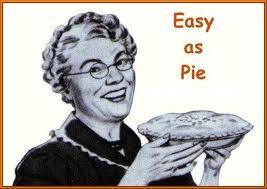
Easy as Pie ClichesThat’s how Merriam-Webster’s defines a cliché — unfortunately, there are still far too many of them around. As writers, we owe it to our work, our characters, and our readers to change these hack phrases and situations around for something fresh. They are, to use a cliché phrase, easy as pie to come up with. And that’s the problem.
The first step, as with an addictive problem, is to recognize that it is a problem. And, yes, clichés are addictive. They pop out easy as easy as that pie from a greased tin, and they slide on by–which it’s why it’s a good idea to read your work aloud. You’ll catch these more easily when you read your own work.
They’ll show up in phrases–those are the easier ones to grab and shake out. The “stalking like a panther” phrases. Or easy as pie, or you’ll find many more over at Laura Hayden’s handout on Suspense.net. These just need a fresh phrase–an image that has not become used up in its overuse.
The harder ones to catch are the clichés situations that come from getting a little too lazy with the plotting. The ones I keep seeing crop up (in unpublished manuscripts) are:
1-Kidnapped heroine. Heroine stupidly ends up on her own and bad guy kidnaps her. Bad guy never seems to have a particularly good reason for this, menaces heroine without doing anything to her really, and ties up heroine for convenient rescue by hero. This is so old it creaks. Come on folks–if you need a confrontation with heroine and bad guy, come up with a better situation. How about bad guy throws a party and heroine is invited? Or what about kidnapping is really a plot to get to bad guy? Or how about a smarter bad guy who is just going to shoot the woman on sight and get her out of his way. This is easily solved with characters who are better motivated and who make sense.
2-Hero and heroine argue after making love. He pulls away, she pulls away, and all for no particular reason. How about letting your characters talk, hash it out, and make everything worse by blurting out the wrong thing at the wrong time? If you find yourself having to contrive the conflict, go back and give your characters deep, good reasons for not being in a relationship. If your characters are not acting in unique fresh ways, time to look at how do you motivate them to be unique, fresh folks.
3-Bad guy is infatuated with heroine. In such cases, heroine is usually hateful, mean, and bad mouths the guy, but somehow he still “wants” her. Another moldy oldy. This often comes along with bad guy wants heroine’s money–and while money is a good reason for a lot of things, it’s also been done way too many times. This is where you need to find better, deeper reasons for actions. Orson Scott Card gives wonderful advice in his book, Characters & Viewpoint, that the first four or so ideas you come up with for character motivation are almost always clichés–that’s why they pop up so fast.
4-Bad guy is just insane, which becomes explanation for everything. This shows up in almost every weak romantic suspense out there–and in more than a few Westerns, too. Bad guys need to make sense–they need motives and in some ways the word “sociopath” has led too many writers to think this is a bucket into which the bad guy can be dumped without any more effort applied. Go watch Dexter to see how a complex character can be created instead of just another crazy killer on the loose.
5-Hero/Heroine experience unexplainable attraction–beauty blinds sense and leads to lasting love, they are just “meant to be” soul mates. This often comes along after characters have been rude and horrible to each other for about 100 pages, but the truth dawns and true love (and sex) wins out. This situation is older than Cinderella, and is overdue for retirement. Give all your characters good reasons for their actions, and look for fresh reasons. Maybe your hero is a sucker for a great pair of legs, and that’s the initial draw–but it’s the fact she has a Cub’s t-shirt in her closet and wears it on game day, and eats hot dogs just the way he likes them (dripping with mustard, relish and sliced red onion), and won’t go outside without smearing every nose in sight with SPF 50 that does him in. Maybe her eye is caught by the broad shoulders, but he is a guy who cooks, loves pasta as much as she does, and he has a southern drawl that does her in, and he’ll do a deal to watch chick flicks with her (in exchange for a movie with stuff that blows up in between).  Its the details that make your characters–don’t get lazy here.
6-Hero’s ex wants him back, and so causes trouble. Usually this means ex lies (and heroine believes her–and, really, you would believe whatever you guy’s ex said over what he says?). This also usually has the ex being so nasty that you wonder how the hero ever hooked up with her in the first place–it really does put him in a very bad light. There’s an easy fix for this one–just remember we are all the hero of our own story. Even the ex has a story that makes her sympathetic and a good guy–make sure you know this story about her (and that you like you as much as you like all your other characters). And keep telling yourself–characters who are one-sided are cliche.
7-The big “MISUNDERSTANDING”. Hero/heroine assume the worst about each other after glimpsing something. This is usually heroine sees ex leaving hero’s bedroom (and or an intimate moment) and heroine assumes he’s back with her (and why she doesn’t go pounding on doors for answers is a mystery), or this is heroine is seen with someone from her past and hero assumes the worst–oh, my god, she hasn’t changed. This is a case where you wonder what are these two doing together. Then you wonder why doesn’t anyone talk. Make it easy on yourselves, folks–when in doubt, put your characters together and get them talking. The talking should make things worse, not clear up misunderstandings. And always remember conflict based on misunderstanding is a cliché.
8-Bad guy has to explain all his reasons for his actions. The Incredibles gave us this present tense verb of monologuing. If you have to stop the story to explain a bunch of stuff, consider the possibility that either the plot is too complicated or that you need smarter characters who can figure out things without having to have stuff explained. The other way around this is to make the information so interesting that folks will sit though this cliché without complaint. But that’s a risky bet.
9-The hero/heroine suddenly has a skill that’s unexplained and doesn’t fit their past. This happens with careless writing (the writer forgot to foreshadow a skill), or when a writer has backed herself into a corner and needs to get out–that’s not usually done gracefully. Just remember to ask if you’ve set up a character who can pull off the skills needed to make the plot work. Also remember that readers are not very forgiving of “luck” factoring into a story unless it’s bad luck (or unless the character has had so much bad luck that the readers are rooting for the universe to give the characters a break).
10-The parents who want to force the heroine into a bad marriage. This one shows up mainly in historical romance, and sometimes in some contemporary romances. And, yes, while there are bad parents out there, this ignores the basic core of most folks, which is that we regard friends and family as attachments of ourselves–we want the best for them because they are a part of us. To go against anything that is core to most people, you have to use strong motivations–this is usually overlooked for the quick form of just having them be greedy folks. That’s a cliché because it’s going for a quick answer instead of really figuring out your characters.
Now you’re going to find all of these clichés in various best sellers. Which goes to show there are no rules. But you’ll find them carried off with either a twist that gives them a little fresh tread on an otherwise worn tire, or you’ll find them stuffed in with so much other good stuff that most folks will turn a bad eye. But how much better to be aware of the clichés and to be ready to make the effort to find characters who’ll take you through a story with a lot more interesting things going on, all because the characters themselves are fresh and new and worth spending your time in their company.

Novelist’s Inc’s Cast of Characters

Cast of Characters CoverNovelists Inc. is the only writers organization devoted exclusively to the needs of multi-published novelists. They’re also doing a lot to innovate these days, and help authors publish–this includes starting to do some publishing too.

Today, April 3, NINC is bringing out  a fiction anthology, Cast of Characters, with twenty-eight original stories, eleven of which are from New York Times bestselling authors that reads like a who’s who.

Contributors include:

CATHERINE ANDERSON
VICTORIA ALEXANDER
JO BEVERLEY
BARBARA BRETTON
JULIE COMPTON
TANYA ANNE CROSBY
CAROLE NELSON DOUGLAS
ROSEMARY EDGHILL
ANGIE FOX
HEATHER GRAHAM
VICKI HINZE
CJ LYONS
KATIE MACALISTER
ASHLEY MCCONNEL
JULIE ORTOLON
LAURA RESNICK
PATRICIA RICE
DEB STOVER
VICTORIA STRAUSS

And, as they say, more. It’s not quite a cast of thousands, but as NINC puts it, you do get “a collection of unforgettable personalities.”

Stories range over all genres–so there’s lots to enjoy, including:

  •   #1 New York Times bestselling author Victoria Alexander delivers her first short story with a contemporary setting – as does New York Times bestselling author Tanya Anne Crosby.
  • New York Times bestselling author Jo Beverley brings back the hero of her novel Forbidden Magic.
  • New York Times bestselling author Angie Fox creates a new Biker Witches story.
  • New York Times bestselling author Katie MacAlister tells the story of one of her most beloved teen characters as an adult.
  • National bestselling author Julie Ortolon tells the beloved Pearl Island story her fans have been clamoring for.
  • National bestselling author Diana Peterfreund offers the origin story for one of the most important magical items in her “killer unicorn” series.

You can buy Cast of Characters from from Amazon, Barnes and Noble, Apple and all other online booksellers. And Novelists Inc. is offering a free e-book of “set pieces” from upcoming member novels. You can get this volume free at the Novelists Inc. website, www.ninc.com.

To read more, head on over to Fiction Studio (Lou’s site — he edited the anthology and is the current NINC president). Or just go buy the book–short stories are a great way to find new authors to love.

The Story Tellling Instinct

Don't Fence me InThere’s a school of thought that there are somethings about writing that cannot be taught. In other words, you can teach grammar and plot structure and the technical stuff, but there’s something about story telling that you have or you don’t have. I’m not sure I buy into this.

Yes, we all have different levels of talent, but if you start fencing some folks out, you’re also fencing yourself in, and that’s never good. To me, this is like saying, “Well some dogs don’t chase chickens.”  If you hit a dog for doing something, that will stop that dog’s instinct to do what it loves to do–but that doesn’t mean that dog was not born to chase and hunt. And folks just like to tell stories–we all love stories.

I’ve taught story telling before–I’m about to teach an online class for Lowcountry Romance Writers on this (because there are classes on so many things, but most folks don’t talk about how to put it all together). And I think if you have a strong desire to do something because you love that thing, you’ll find a way to improve. You don’t get the desire to do something without some level of talent to go with.

Now, American Idol auditions may point to this not always being the case. But I’m willing to bet a lot of those really awful singers are there not because they love music and singing, but because of a desire for fame. This means their desire and talent don’t match: a love of fame is not going to make you a singer. (Or a writer.) You have to love your art enough to sweat for it, and be willing to do it for pennies, for free sometimes, and just because you cannot not do it. You tell stories because you have a story telling instinct. This, like any other instinct, can be developed and improved–or it can be beaten into oblivion. It’s that small, still voice inside that tells you when a story is on track, and it’s the thing that stops you from writing when the story is going wrong. It’s something you have to come to believe in and the more you use it, the better it will get.

And here’s ten ways to know if you have this instinct.

1-You cannot tell anyone about what happened today without embellishing, just to add some interest.

2-If someone’s giving you gossip about others, you always end up asking: “And then what happened?” And it’s really irritating if that person doesn’t know.

3-When you walk a city at twilight, you not only look into the open windows, but start inventing things about the people who live there.

4-If folks start telling you real life stories you want them to put a good ending on it even if there wasn’t one.

5-For any news story you don’t just wonder why someone acted as they did, you can come up with all sorts of plausible reasons.

6-When something bad happens to you, yes you cry–but there’s always some small part of you taking notes.

7-When a friend starts telling you about terrible things that have happened to them, you think about how this would be great in a story.

8-It’s almost impossible for you to walk out of a movie or put down a book–even the really terrible ones–because you always have a hope the story will get better, and you have to see how it ends (even if its obvious, because its cliche, how its going to end).

9-Your pets always have back stories–and you’ll tell them to anyone who will sit still.

10-You’re willing to do stupid things at times just because you’ve never done them and you have a character (or might someday have a story with a character) who is going to do them.

If you start nodding at five or more of these, you’ve got the story telling instinct, but it needs work. If you’re only nodding at a couple, your story telling instincts have been beaten out of you by past teachers who have also killed their own instincts–time for lots of meditation and getting back in touch with your subconscious. If you nod at eight or more of these, congrats–you’re instincts are going to serve you well.

Writers Come out of the Closet

Hi, my Name is Shannon, and I’m a Writer

It’s taken a long time for me to get comfortable with saying, “I a writer.” Part of this is due to the fact that I’ve always written—it’s just something you do…well, something I do. Part of this is due to the looks you get when you say this. Eager anticipation mixes—yes, they really do want to say they’ve met a real author—with half-hidden skepticism, and then you get The Question.

The Question comes phrased one of two ways. It’s either, “Oh, what do you write?” This comes with an implication that maybe you write technical manuals, or non-fiction, or something that means of course you don’t write anything meaningful—as if somehow none of that other stuff counts. (Is this because we’re taught in school that only “literary fiction” is of real value?) Or you get, “What have you written lately?”

Now, no one asks an accountant, “What taxes have you filed lately.” Or asks any other profession to somehow provide credentials to prove your claim. Lawyers do not have to whip out briefs; doctors do not need to show their latest prescription and case file. But a writer…you have to name your books, your stories, and I’ve thought sometimes that I should just carry a resume to show folks who ask. And here’s the thing—you tell them you write romances (or whatever genre, if you’re so lucky as to have a single genre), and you mention your story titles, and you get a blank look back. You’ve kicked their puppy, burst their balloon, salted their punch. Somehow you’ve disappointed. You’re not quite “a name” (or at least not the name they were looking for), yet you’re a writer. You’re not writing what they read, or what they want to tell people they read. The person doing the pop quiz has nothing to take home—no bragging rights for having met “a real author” (of real books, the definition of which changes depending on who is doing the reading).

It’s worse before you publish. It doesn’t get much better after you publish. So you start holding back. You duck the question. You keep it under wraps or wave it off, and you only answer if your significant other brags about you thus forcing you into The Question.

And when it comes time to file taxes, you hover over the words and put either a slash (as in I’m a web producer/writer), or you just put down the day job. Never mind that you’re working at a job that pays way less than minimum wage and doing it for love—those folks used to be admired, and now if you’re not a “professional” somehow you’re not legitimate. And never mind that you’re incurring all the cost of a business (equipment, supplies, training, sales letters, proposals to solicit work). Nope—somehow none of that really counts.

It’s worse before you publish. It doesn’t get much better after you publish. There’s still that edge of guilt—oh, yeah, well a real writer would have _______. Fill in the blank. A real writer would have won awards, been on best seller lists, sold fifty books…it’s like being an alcoholic in reverse. Instead of saying, “Well, I’m not an alcoholic because I don’t drink in bars.” (Or whatever excuse works.) It’s, “Well, I’m not a writer because I don’t write serious fiction.” (Or whatever excuse works.)  The excuse is all about excusing yourself from being a real writer. Meaning you can play around with the craft. Make it a hobby. You don’t have to think of yourself as a craftsman and artist and act that way—you don’t have to own the job.

I did this for a long time—longer than I should have. I had a day job. It paid well. I had a social life. I had family. I had lots of stuff going on. But I wrote at night and sent off manuscripts and took vacations from the writing when it wasn’t going so well. I quit a dozen times and started back at it even more times when the stories wouldn’t leave me alone (and when I got so grumpy from not writing that I couldn’t stand myself). And then I figured out I had to take it—and myself—seriously. If I wanted to be a writer, I needed to write.

I got comfortable with thinking of myself as a writer—still hated to say anything. I hung around with “real writers” who’d sold books. I kept at it. And I sold some books. I won awards. And I still didn’t feel comfortable with the title of “writer.” Author wasn’t so bad—I could do that at book signings because I had the dammed books in front of me so if someone asked The Question (and, yes, they did, even with the books sitting there), I could just gesture like Vanna. Here’s the goods—go ahead and give me that look, I dare you! But the rest of the time…

Well, still struggling. After all a real writer makes her living from books. Well, that’s what I do now, and guess what…I’m almost comfortable with the word. And I’m thinking it’s about time I do more than get comfortable with it. I need to own it. Looks from folks be dammed, it’s what I do.

Nowadays, I can talk about what I write a bit better. The looks still come, particularly when I cannot whip out a book to show someone—eBooks are great for a lot of things, but not so much for ego validation. The comfort zone is widening. I still aspire to more…to best seller lists, and to that ever elusive deal that someone will bring the validation I’ve wanted.

But I’ve figured out there’s never going to be enough of that from the outside. No deal will bring reassurance—I’ll always wonder afterwards if I can live up to it, or if they just got the wrong person by accident. No award will be enough, and no lists will make me into what I want to be. If it’s coming from the outside that means it goes away, too—the outside stuff always does.

It’s got to be an inside job, this idea that you’re a writer. That I’m a writer. It’s got to be grabbed and believed and fought for and defended. It’s got to take root so deep that it’s part of saying your name. It’s what you do—it’s who you are. You’re a writer because you write. Good stuff. Stuff to be excited about and want to tell folks about and grin like a loon when you talk—and make it into more than just a hobby, because it’s part of your soul, your heart, your being.

So…time to jump out of the closet and off the cliff. I’m Shannon, and I’m a writer. Now, what do you call yourself?

Joan Vincent Guest Blogger – Honour’s Debt

Welcome guest blogger, Joan Vincent…

Joan VincentHi, I’m Joan Vincent. I live in Kansas which is a long way from Enlgand and the Regency period. And I have a minor in American History. Who knew I would read over 200 regency romances in a month one summer long ago and decide I would like to take my hand at writing one? Certainly surprised me, delightfully so.

Honour’s Debt is the first book in my Honour series. It started out far different than it is today. It began it as a sweet rather simple regency like all my previous books and then, in chapter five my villian was killed. That rather stunned me. I needed at least 50,000 more words and what’s a story without a villian?  My sister said “find a worse villian.” After ruminating on it a few days I sat down and just starting typing. (I do plot but I’ve found if I don’t let my characters do what they want the story just doesn’t go anywhere. I once thought I created the characters and I’m in charge but something else is at work too) To my amazement a very dastardly villian–a master French spy appeared. Along with him came a young emigré pursing him. When I told my sister I didn’t know who this young man was she suggested i use for a character from an earlier book. The story reshaped itself; it became an entirely different more complex story. And it flowed onto the pages. In a week I had sketches for six more books but that it for another time.

Honor's DebtI didn’t fall in love with my hero but I like and respect him very much. Truth be told I did fall in love with the young emigré. He was six when he first appeared in the first regency I ever wrote –not the first one published. It was very spooky when I learned one of the men who tried to kidnap him in that book was the French master spy in Debt. These two men are in every book in the series.

The hardest part of writing the book was a multitude of research. After years of researching for and writing regencies I am grounded in a lot of regency history. But I had never had a hero who was in the military–much less the cavalry–the 15th Light Dragoons. I chose the 15th after research revealed they were in Spain in 1808. Then the real work began. There was the question of Light Dragoons or Hussars–you can read reams of information and still wonder about that. Also what color was their uniform, and in particular the facings they wore–each regiment’s is different. Once I got the details I needed I knew the hero’s motivation was grounded in what happened in Spain. More research was necessary to find the location where the action would take place in England. The setting had to have smuggling which led me to a study of Martello towers. More investigation followed on cottages. I always sketch out my character’s homes and this story involved several.

I like to be as accurate as possible. Accuracy in detail grounds the story, but plot drives it. Major Quentin Bellaport, Viscount Broyal sets out to redeem a debt of honour but falling in love was not part of the plan. Intent on saving Maddie Vincoer from the maelstrom of a funeral, a wedding, and kidnappings, he can only pray she’ll forgive his deceit. Will she believe she is not a pawn to his Honour’s Debt?

Digital Discoverability

It’s been a year since the article “Digital…Eventually” came out (Novelists INC newsletter) and the digital world is a lot like the dog world—time is compressed. It’s not exactly a seven-to-one ratio, but a lot has happened. This year, the buzz word is “discoverability” as in how does anyone find you, given all the hoopla and noise? The noise has been big stuff, too.

Barnes & Noble began publishing more than just classics, and Amazon became a publisher, which has shaken up New York publishers. Amazon also launched the Select program for lending books, to additional flurry. Amanda Hocking became the 2011 poster girl for digital success. We’ve had existing publishers announcing their digital plans, ranging from Berkley/NAL bringing back Signet Regency romances as e-books under the InterMix imprint to HarperCollins publishing work from their Authornomy writers’ site. Apple launched a new program for textbooks that has a whole lot of fine print. (But NY is still not talking about raising e-book royalty rates.)

You can follow the rest of what’s going on at DigitalBookWorld.com, on Bob Mayer’s Write it Forward blog, and at Publishers Weekly. But that’s all big picture stuff. I’m here to talk about my year in the trenches. It may help with your own digital discoveries.

THE NUMBERS

Let’s start with what everyone wants to know—the numbers. I’ve sold more than 90,000 books this year. Yes, that’s right, more than 90K. These are U.S.-only sales; the number doesn’t include giveaways. Last year, I didn’t pay much attention to international sales from Amazon; this year the numbers are growing fast, so I’ll be watching that. My bestsellers last year were A Proper Mistress and A Dangerous Compromise (one also sold great in print, the other did not, so go figure).

I’ve given away just over 15,000 copies of my Regency novella, Cat’s Cradle, so total e-books out there for me is more than 100,000. That’s respectable—not huge numbers, but not bad. It’s also the first year I’ve made enough to say that I’m supporting myself with my writing—and not starving while doing so. Always a plus.

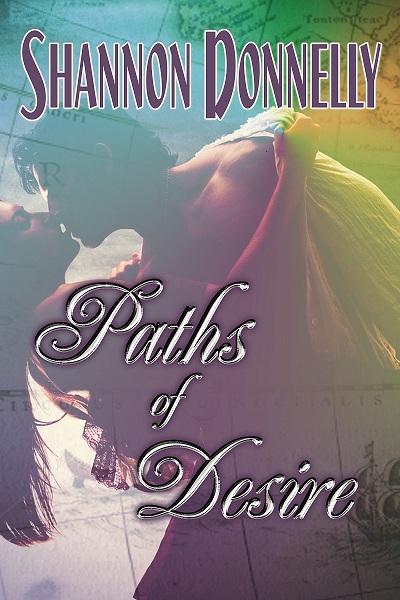
With this in mind, I brought out my first self-published book, a Regency Historical romance, Paths of Desire. Last year, my sales did not start moving upward until after June/July—just after I brought out all eight of my Regency romances, so having a quantity of work out there does seem to make a difference. Sales really took off in September/October, when I dropped the price from $2.99 to $.99. I’ve pretty much left the prices there. Before we dig further into pricing and promotion, let’s step back a bit and talk some basics.

FORMATS

This one’s still a must for any e-book; I see books from the NY publishers that have the same formatting issues. It’s a tricky thing to get an e-book to look as it should, particularly across all the various platforms.

Last year, bringing out my backlist meant getting a very clean Microsoft Word file, setting up a simple style sheet, and then letting PubIt, Amazon, and Smashwords do the formatting to e-book. This year it’s a different story.

A few programs have helped with additional format clean-up, so the books look better. I’ve learned to take my Word files and save them—once they’re in clean, simple style sheets—as “Web Page, Filtered.” This HTML file gets cleaned up with a simple HTML editor; I love Coffee Cup for this.

NOTE: If you don’t know HTML, I recommend learning some basics over at W3school. com–they have some great tutorials.

Once the HTML looks good, I import the file into Mobipocket Creator. Like Coffee Cup, this is a free program. While Mobi has its quirks, it’s pretty easy to use. With Mobi, I add the cover, metadata, book description, ISBN, and suggested pricing, and convert the file into e-book format. I then look at the e-book file in Calibri, a free e-book manager that lets me make sure the formatting is correct. Seeing how the book will look in an e-reader helps me, and I can add additional tags and information to make the book highly searchable.

NOTE: I’d recommend that when you buy your ISBNs from Bowkers, make sure you upload a CSV file, which you can create in Excel, with keywords so searches can more easily find your books. Keywords or tags should include your name, the book title, and any special characteristics or genre information about the book.

In Calibri, I look for odd paragraphs and font formats, weird spacing, and symbols that don’t belong in the text. If I find such things, I go back to the Word or HTML file to sort it out (it’s almost always an issue with the style sheet). I’ve slowly been moving my other books into this new formatting process to give the e-books a cleaner design. I’ve also been correcting typos as I go, and adding promotional information into the back of the e-books, because this year it’s all about how readers find the books.

A NOTE ON STYLE SHEETS

It’s a Technical Thing. Word-processing programs, such as Microsoft Word, provide several ways to format text. You can apply formatting—italics, bold, different fonts, etc.—to individual words, sentences, or paragraphs but in an e-book document, this introduces extra formatting code that can cause issues later. Instead, set up universal formatting using a “style sheet.”

You can work from preset template styles (Word has the option to “change styles,” allowing you to select a template of styles) or modify existing styles by right-clicking on them. For instance, you can redefine “Normal” text to suit you (e.g., 12 pt TNR, first paragraph indented .5 inch, singlespaced, no spaces before or after the paragraph), highlight the paragraphs you want to be “Normal,” and apply the “Normal” style.

Follow similar steps to format styles for chapter headings, scene-break marks, title, and other special text. You can format individual words as needed, but if you have an entire paragraph of italics, it’s worth setting up a style. With your style sheet in place, the file can be converted cleanly to HTML and ebook formats. For more information on setting up style sheets in Word, go to the post on Twelve Steps to a Digital Format on my website.

PROMOTION

“Discoverability” was the word batted around at the NINC conference this past October—how does a reader find your books? I was fortunate enough to get my books onto the top-selling list at Amazon—A Proper Mistress was in the Top 10 overall sellers (not Regency category, not Romance, but overall). So, success does breed success. Sometimes it is just an issue of luck or timing. Other than this, I didn’t do much for promotion. However, I am online.

I blog regularly at sd-writer.com, I’m on Twitter and Facebook, and I do promote my work, but I don’t have huge reach. My Klout score hovers in the high 30s (and if you don’t know what Klout is, it may be time for you to improve your Social Media awareness). I’ve tried a couple of online ads, but haven’t noticed any impact from them. Same with reviews; I’m not sure they do much for a book, but I figure they’ll help with awareness.

I believe awareness is the key.

To help with reader awareness, I put Cat’s Cradle up as a free novella. It’s been on the Amazon Top 100 free e-books list, but I can’t say that the free novella has really helped the other books to sell more. I do think free works best when it’s the first book in a series—I’ve gotten hooked on Bob Mayer’s Atlantis series that way. With the free book promotion, I’m selling steadily, but not at the peak numbers. I’ve left the novella out there for promotion, but it may get a price tag put onto it at some point. Which brings us to the issue of pricing.

PRICING

My sales took off at the $.99 price point. I know publishers complain about this number; in fact, I think they turn pale when this number comes up as a price point for any book. Others think it’s undervaluing your work (and folks seem to forget that paperbacks started off as cheap dime novels). For me, the $.99 price made sense for two reasons.

First, my backlist has already made money. These are books that were done and finished and sold, so it’s all gravy from here. Second, aren’t we all watching the budget these days? The economy is bad, and my book buying budget no longer includes any book that’s over ten bucks. In fact, I really like books that sell for a buck or two. (I can go three or four at a stretch, and that’s about it.) I love the low-cost books because I still read a lot, so what’s easy on my pocketbook is an easy sale. The way I figure it, I’m not the only one looking for a bargain.

This notion showed up, too, at the last NINC conference in the data presented by Carolyn Pittis of HarperCollins. Over the past year, the bestsellers at Amazon have been priced either low ($.99) or high, but not in the middle. I don’t have a household name (or a huge marketing budget) that will make that high price point work for me—and Regency romances aren’t big blockbuster books. This same statistic about pricepoint sensitivity also showed up in a recent Publisher’s Weekly article. So, at the lower price point, I make a better profit in quantity.

Last November, I tried out a price increase back to $2.99, but this impacted sales numbers, so now all my books are priced around $.99 to $1.99. However, I’ve brought my new book out at $3.99, so I can discount it and do specials (it’s on sale for .99 through the end of March 2012).

I’m also still trying to make sense of all the data from the last year. Why does one book sell better at $1.99 than it did at $.99? Is it the cover? The cover copy? The timing of its release? The lunar cycle? Why does a book that did not-so-well in print do great online? What’s the difference? Do the monthly trends mean anything, or is this market in such flux that there are no trends, just an ever-changing tide? Sometimes my head hurts from trying to make sense of everything, so I go back to writing; this marketing stuff is not for sissies.

Which brings us to the next big issue for being discoverable.

EXPERIMENTATION

For me, 2012 is all about experimental promotion. I’ve sent Paths of Desire out for reviews (if you want a free copy and will post a review at Amazon or BN.com, email me). I’m trying cross-promotion with other authors on their blog sites. For additional exposure, I’ve posted my backlist to Backlist Ebooks. I also regularly give workshops. I’ll be speaking at the 2012 RWA conference, and I’ve brought out one of my workshop books as an e-book: Story Showing; Story Telling. I want to experiment more with cover designs, and with bundling some of my books, which should work great given that some of the books are connected.

Most of all, I want to get more books out there.

I’ve had readers asking for Diana’s story, a character from Lady Scandal whose story I’ve always wanted to write, and Jane’s, from A Dangerous Compromise. I’d also love to put out two other Regency romances sitting around that need editing. So, much more writing must be done because I can’t sell a book I haven’t finished. Then it’s time to edit, format, and get the word out there.

But, really, the truth is that no one knows what works.

Some books just sell better than others. Some authors sell better than others. And some books sell better on Amazon than on Barnes & Noble. (I include these two big outlets because, for me, Smashwords does not produce great sales, and I’ve left the prices higher there because the numbers do not justify a price drop.) I haven’t figured out why BN.com is lower for me, but Liz Scheier of Barnes & Noble was at the 2011 Novelists INC conference and was made aware of how many authors (besides me) found their books to be lagging at BN.com but doing great at Amazon. I have seen performance improve at BN.com since last October, so maybe Liz is having an impact. I know Amazon has a lot of great promotion tools, and it’s really hard not to give Amazon the focus when they’re producing the profit.

I’ve put two books into the Amazon Select program. The downside is that the books must be exclusive to Amazon to be in the program. The upside is that Amazon will pay for every book borrowed. This payment may not be enough to offset the loss of sales from other sites, but I do like the idea of book-lending—I got my reading start at a library, so I’m a supporter of book-lending.

Which brings us to…

PIRACY

For me, this is still a non-issue. If you have a huge brand, maybe this is something you need to look at. But Digital Rights Management (DRM) still sucks, and even Amazon has started moving away from it, with their changes to allowing authors to set DRM in 2010 (see the article on Amazon’s change for DRM management), and with their Amazon Select program to lend books. As noted in a recent article in Publisher’s Weekly, calling for publishers to become sane about the DRM issue: “…a study last year by Rice University and Duke University contends that removing DRM can actually decrease piracy.”

Fighting piracy has just about killed the record industry. I have neither their resources nor their interest in this battle. I still maintain that if you post your work for sale at a price buyers consider reasonable and it’s easy to buy, most folks will opt to purchase it.

RESULTS

When I wrote the article last year, I’d started down the digital path in November 2010 and wrote the article in mid-December, when I was putting my third book online. At that point, the three titles (Under the Kissing Bough, Proper Conduct, and A Proper Mistress) had netted $201.96 from Amazon, $147.70 from PubIt, and $57.09 from Smashwords.

In other words, this time last year (in 2011), I’d made about $400 for the previous year. My total budget for covers, ISBNs, and some online promotion was $5,000. At that time, I’d noted:

  • Sales of Kindle and Nook are anticipated to explode (they did)
  • Digital media consumption is on the rise (it still is)

In fact, the Kindle Fire is reported to have sold over six million units. BN’s Nook sales are up 70% this year over the previous year, but are still behind Kindle sales. All of this means that while you may not see your book hit the bestseller lists, your sales numbers could still go up (a larger market means more sales are needed to hit the tops of the lists).

So what’s ahead for this year in the trenches?

For me, more books, more experiments. The noise is going to be noisier this year. By next year, I’ll let you know how the self-publishing is going. And I hope to have a couple of more books out and available. Would I say no to a NY deal? Maybe. Or maybe not. But the NY deals are no longer the only path, and a lot of times, they’re not a great deal, either; not with lower advances and royalties than you can get from doing the work yourself. The world has changed in the last year. It’ll change even more—that’s one prediction you can bet on. And it’s no longer digital eventually…it’s become digital inevitably.

This article was originally published in the NINC newsletter as a follow up to the “Digital…Eventually” article. For more information, see also the post on “Setting up for Digital.”

Gretna Green and the Runaway Regency Bride

Eloping

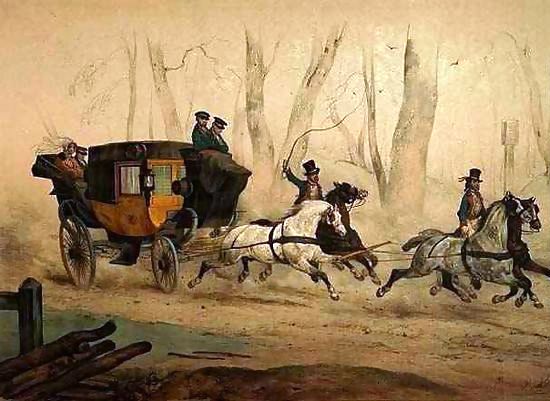
A forbidden young love.  A frantic carriage chase across England.  A hasty wedding ‘over the anvil’ at Gretna Green.  Such a scene is a staple of many a Regency romance.  In fact, it’s with such a mad drive to the border that I chose to end my second Regency, A Dangerous Compromise.

But why might a young couple have to elope to Scotland to marry?

A chance of geography and an act of Parliament led Gretna Green to become famous as a haven for young lovers who could not win their parent’s consent.

In 1753, Lord Chancellor Hardwicke’s Act for the Prevention of Clandestine Marriages passed.  The law took effect on the twenty-fifth of March in 1754.

The act had been passed, after a good deal of debate and struggle, to regularize marriages and to protect wealthy families from having their underage offspring preyed upon.  Prior to this, London had become infamous for it’s “Fleet marriages” where disreputable ministers would perform a wedding within the Rules of the Fleet Prison.  Clergymen who had been imprisoned for debt could live in the Rules, an area just outside the prison, meant to provide them a sanctuary.  Since they were already here for being in debt they could not be fined for performing irregular marriages, and so were effectively beyond the law of the time.

By the 1740’s, it is estimated that around a hundred minister had set up in business to marrying anyone who had the money for it.  They could even provide a groom if a pregnant woman needed legitimate status for her child.  The bride and groom exchange vows, coins exchange hands, and the couple was married.

These Fleet weddings had been the bane of many a rich family.  Stories circulated of underage heiresses who had been tricked, or kidnapped and forced, into such marriages by unscrupulous men.  And fathers complained of sons who had married unsuitable brides.  Two dukes even saw their sons married in such secret ceremonies.

In 1754, the informal wedding was swept away.  The new act required that the groom and bride must each be 21 years of age, or have the consent of their parents or guardians.  The wedding had to take place during daylight hours in a parish church ceremony within the Church of England.  For “three several Sundays” prior to the wedding, the banns had to be posted–meaning that the curate would ask “after the accustomed manner” if anyone knew any reason why these two could not marry.  If the couple lived in separate parishes, banns had to be called in each.  Finally, a license had to be obtained and the marriage had to be recorded in the parish church.

To avoid these conditions, a Special License could be bought, so that bans did not have to be posted and the marriage ceremony could take place anywhere.  But such a license had to be obtained from the Archbishop of Canterbury’s offices, and the names of those to be married had to be written on the license.  With these constraints, it did not help young couples who were trying to wed against the wishes of their families.

By requiring parental consent, the act gave parents the right to invalidate any marriage they considered undesirable.  A clergyman who preformed an illegal marriage could be transported for up to fourteen years.  English legislators expressed relief at having done away with foolish notions of romantic love in favor of more practical statutes governing the institution.

However, because Scotland and Ireland were separate countries, the act applied to only those marriages contracted in England.  It also did not apply to Quakers and Jews, who wed outside the Church of England (and who also stood outside the power and wealth structure that the act sought to protect).

Ireland had already enacted laws with heavy penalties to do away with clandestine marriages.  However, in Scotland, a couple had only to be 16 years of age and had only to declare their intentions to be husband and wife in the presence of two witnesses, and their word was law.  So Scotland became the place to flee to for a quickie wedding.

On the west of Scotland, at the most southerly point of the English border, the main road between Carlisle and Glasgow passed through the small village of Gretna Green.  A half-mile from Gretna, the road crossed the Sark river which marked the border itself.  The closest village on the English side, before you reached Carlisle, was Longtown.

Near the Solway Firth, the Greta Green of Regency era is described in Gretna Green Memoirs as, “…a small village with a few clay houses, the parish kirk, the minister’s house, and a large inn…from it you have a fine view of the Solway, port Carlisle and the Cumberland hills, among which is the lofty Skiddaw; you also see Bowness, the place where the famous Roman wall ends.”

Within Gretna, at the Headlesscross, is the junction of five coaching roads, and here lay the Blacksmith’s Shop.

Marriage over the AnvilIn coaching days, a blacksmith’s shop was an obvious stop for any carriage.  And it became a prime spot for many eloping couples to stop and wed before parental pursuit caught up with them.  An elopement to Gretna soon became known as a ‘wedding over the anvil,’ and the ‘blacksmith priests’ were the ones to ask for to perform the ceremony.

In fact, however, many couples wed at the inn, or at other Scottish villages, and any man could set himself up as an ‘anvil priest.’  It could be a lucrative trade, for a fee had to be paid, along with a handsome tip, which could be upwards of fifty guineas.  According to Romances of Gretna Green, “…the man who took up the trade of ‘priest’ had to reckon on the disapprobation of the local Church authorities…” but that was the only requirement for the job.

Between 1780 to 1790, a second village took shape about a half a mile from Gretna.  Springfield was built on land leased from Sir Patrick Maxwell.  Small, with one-street, it was a weaving town, but David Lang (or Laing) soon set up as an anvil priest to marry couples at the Queen’s Head Inn.

But Gretna had another anvil priest and, as the first in the wedding trade, he kept most of the fame and business.

Joseph Paisley had began marrying eloping couples in Gretna in 1753 when the Hardwicke Act had passed but had not yet taken effect.  It is said he continued to wed couples until his death (which Robert Elliot reports as 1811, but other sources give 1814).  Paisley had been a smuggler, and reports paint him as, “grossly ignorant and insufferably coarse…an overgrown mass of fat weighing at least twenty-five stone….who drank a good deal more than was necessary to his thirst.”  He had been a fisherman, and it is reported that he kept “…a store for the sale of groceries and odds and ends…,” but his main trade was in weddings.  He is also said to have drunk a Scotch pint (or three English pints) of brandy a day.  He must have reeked like a distillery.

Paisley, however, had a comely granddaughter, Ann Graham.  In 1810, Robert Elliot courted Ann, and they wed a year later, and Elliot stepped into what had become the family business of wedding lovers who came to Gretna or Springfield.

Robert Elliot began marrying couples in 1811.  The son of a Northumberland farmer, Elliot had worked at various trades–most of them involving coaching work.  When he went to work for a Mr. Wilson, keeping his coach-horses at Springfield, he met Joseph Paisley.

Elliot quite liked his grandfather-in-law, and says of him, “He was an upright, well-disposed man, beloved by all his neighbors, and esteemed by all who had his acquaintance.”  But he also reports, “Over a mixed glass of mountain dew, or good smuggled cognac, would our village patriarch relate…the most remarkable events he remembered.”  So perhaps Elliot found nothing amiss with a man downing a Scotch pint of brandy a day.

Elliot continued to perform weddings until 1839.  In 1842 he published his memoirs, which sold in private subscription of one guinea each, and this is all we have of the records of who he might have married.  The story goes that Paisley and Elliot’s records were stored on a bed canopy, and were lost when Elliot’s daughter set fire to the bed, killing herself and destroying the records.

All tolled, Elliot laid claim to having married almost 4,000 couples, from 1811 to 1839.

Some famous couples who eloped to Gretna include John Fane, the tenth Earl of Westmoreland, who ran off with Sarah Anne Child.  As the daughter of Robert Child, of the famous Child’s Bank, Sarah Anne stood to inherit a fortune.  But when the earl went seeking Mr. Child’s consent, the banker is said to have replied, “Your blood, my lord, is good, but money is better.”

And so the earl talked Sarah into running away with him.

They were chased to the Scottish border by an irate Mr. Child and barely made it across to be wed.

Child never forgave them.  He changed his will so that his wealth passed to Sarah Anne’s second son, or to her eldest daughter, so that no Earl of Westmoreland would inherit.

But, as in a good romance, Sarah and Westmoreland were happy enough, had six children, and the eldest daughter, Sarah Sophia, inherited Child’s riches.

Interestingly, Sarah’s granddaughter, Lady Adela Villiers (Sarah Sophia’s daughter), also eloped to Gretna, to avoid her mother’s matchmaking and wed her beloved Captain Charles Parke Ibbetson.  Runaway marriages seem to have run in the family.

The trip to Gretna from London could not have been pleasant, even in a well-sprung coach that would absorb most of the ruts and swaying.  It was some 300 miles or so from London to Gretna.  The trip would be longer if a couple, in fear of pursuit, chose to stay to side roads in an attempt to throw anyone following off the scent.

To travel fast, the horses would need to be changed every 10 or 20 miles, meaning at least 16 stops along the way.  And the cost of it!  A post chaise and four might cost as much as 3 shillings a mile.  Plus there’s the hire of fresh horses, tips to encourage fast changes, food and drink to be bought, plus a room and the wedding in Gretna.  And there is the return trip home to be paid for as well.  A man might spend from £50 to £100 for his elopement if he were in a great hurry.  But such expense would seem as nothing if the bride came with a fortune attached.

The trip would also be tedious.  Horses can average 8 to 10 miles an hour, with the occasional ‘springing them’ for short bursts that might net you 14 to 16 miles an hour for perhaps a quarter hour.  With this in mind, the trip might take as little as 25 hours, with very good horses and frequent changes.  But there were the potential delays of a horse going lame, a wheel falling off, muddy roads, snow, or other bad weather conditions to slow the pace.

To give a more exact time estimate, the Royal Mail left London for Carlisle at 7:30 PM and arrived at 10:00 PM on the second night.  That’s two full days on the road.  But a private coach could make better times–it would be lighter and therefore faster.

After such an ordeal, if a couple arrived still inclined to wed–instead of kill each other from exhaustion and too much of each other’s company–that would seem to bode well for a long and happy marriage.

To wed in Gretna, a couple had only to find one of the anvil priests.  He would call on his neighbors to have the necessary two witnesses.  The ceremony was brief and went like this, according to Elliot’s Gretna Green Memoirs:

“The parties are first asked their names and places of abode; they are then asked to stand up, and enquired of if they are both single persons; if the answer be in the affirmative, the ceremony proceeds.

“Each is next asked:– ‘Did you come here of your own free will and accord?’ Upon receiving an affirmative answer the priest commences filling in the printed form of the certificate.

“The man is then asked ‘Do you take this woman to be your lawful wedded wife, forsaking all others, kept to her as long as you both shall live?’  He answers, ‘I will.’  The woman is asked the same question, which being answered the same, the woman then produces a ring which she gives to the man, who hands it to the priest; the priest then returns it to the man, and orders him to put it on the forth finger of the woman’s left hand and repeat these words, with this ring I thee wed, with my body I thee worship, with all my worldly goods I thee endow in the name of the Father, Son and Holy Ghost, Amen.  They then take hold of each other’s right hands, and the woman says, ‘what God joins together let no man put asunder.’  Then the priest says “forasmuch as this man and this woman have consented to go together by giving and receiving a ring, I, therefore, declare them to be man and wife before God and these witnesses in the name of the Father, Son and Holy Ghost, Amen.”

In 1856, and with railways coming into being, a bill finally passed to make a Gretna wedding ceremony illegal, and that effectively ended the days of a runaway marriage.

Since then, wedding laws have relaxed somewhat and Gretna Green is again a popular spot for weddings, but for romantic rather than legal reasons.  Gretna’s Blacksmith Shop now houses a museum, with a collection of 19th century coaches, including the State Landau used during King William IV’s reign, and a stage coach that ran between the Lake District and Scotland.

While legislation has done away with the need for couples to flee to Greta Green, the village thrives by playing on its association with star-crossed young lovers and desperate romantic rides through the night for a happily ever after.  And what more could any romantic wish for?

Sources:

The Gretna Green Web site at http://www.gretnagreen.com

The Family, Sex and Marriage: In England 1500 – 1900 by Lawrence Stone

Road to Divorce by Lawrence Stone

Romances of Gretna Green and its Runaway Marriage by Lochinvar

Gretna Green Memoirs by Robert Elliott

Great Britain Post Roads, Post Towns and Postal Rates 1635 – 1839, Alan W. Robertson


Egg-cerpt Exchange – Susan Wingate

“Spider Brains” by Susan Wingate

Information from Susan:

Spider Brains by Susan WIngate

Susan Wingate’s Debut YA Novel <> Available May 15, 2012

If you would like to read SPIDER BRAINS on my blog, I’ll be posting this story daily (with the occasional break by some amazing guest author postings) and chapter-by-chapter. Press Here to Read an Installment of SPIDER BRAINS.

A Short Synopsis of SPIDER BRAINS:  If one were to bake the story SPIDER BRAINS into a cake, they should sprinkle in Charlotte’s Web, toss in one Jellicle Cat, then stir in a little Spiderman—but as a girl and not in that goofy latex outfit! A tale of hope, transformation, transition and inspiration.

After her father’s death last year and, now, in the throes of a gnarly teacher’s whim as she thinks ahead to college (or really just dreams of getting into college), a small black arachnid bites fifteen-year-old Susie Speider on the finger. The bite sends her nights into fantastical dreams about taking revenge on a teacher who, ultimately, holds her college aspirations in the palm of her cold calloused hand. But, after Susie figures out the dreams are real, she ups the ante by visiting the teacher regularly… as the spider! And, oh, by the way! Who is that boy spider munching on flies, hiding over there in the corner? A story of loss and forgiveness, tolerance and kindness, Susie Speider deals with the death of her father while Matt Ryder–the new neighbor boy–has just lost his mother. Ultimately, SPIDER BRAINS poses some important questions about how to treat Attention-Deficit-Disorder.

“Simply put, Susan Wingate is a master of the written word.  In SPIDER BRAINS, she weaves a heart-warming tale full of wit and intrigue: a nod to Kafka’s Metamorphosis in a quirky blend with The Princess Diaries.  There are laugh out loud moments with the teenage protagonist, Susie Speider, whose voice was well executed and credible.  But there are also moments that tug at the heartstrings and even bring a tear to the eye, as we see Susie’s angst when she faces pain from the past, as well as redemption through the relationship with her mother. Whether or not you’re a fan of YA literature, you’ll love SPIDER BRAINS.  But don’t expect anything ordinary!” ~Joshua Graham, award-winning, no. 1 Amazon & no. 1 Barnes & Noble bestselling author of “Darkroom” (S&S/Howard Books) and “Beyond Justice”)

“A heartwarming story full of laughs, great friendship, a touch of romance, and lots of fun facts about spiders and more. Every now and then a wonderful book like this one comes along that entertains while it teaches. I look forward to reading SPIDER BRAINS with my kids!” ~Ann Charles, award-winning author of the Deadwood Mystery Series

Pre-Sale Orders Now Being Taken Thru

Barnes & Noble

Roberts Press

 Read more about #1 Amazon Bestseller & Award-winning author, Susan Wingate at: www.susanwingate.com.

Related articles

What’s the Book About?

I’m doing my “Sexy Synopsis” workshop for Outreach RWA Chapter this March — link here — and the workshop always has me thinking about how most writers dread the synopsis, but it really is a great tool. The two big dreads seem to be:

1 – If I write a synopsis, I won’t want to write the book, and

2 – How can I possibly condense my great, big wonderful book into a couple of pages?

(Yes, folks, a synopsis really should be only about 2 – 3 pages — anything more and you’re talking a detailed outline, which is a different animal.)

I started calling this workshop the “sexy synopsis” since a synopsis really should be short, stylish and cover the basics — you want to sell the book. And it’s not just about selling the book to editors and agents.

You’ve got to sell your book to readers, too.

In other words, the synopsis is really just slightly longer back cover copy. It answers the basic question–what’s the book about? (And you cannot flippantly say, oh, about 200 pages.)

But how do you answer those two basic dreads?  Well, you can take the workshop, but here’s some quick easy tips.

1 – Start with the big stuff — like theme and the core conflict. Bob Mayer does a great workshop on core conflict, and he’s teaching this soon, so I recommend it highly. This will get your idea down to just a single line, meaning you’ve got a lot of the work on your synopsis done right there.

2 – Focus on only the main character and main plot.

3 – Know what’s your selling point, and make sure that’s there — as in, if the book is funny, make sure the synopsis has a light tone, too.

4 – Be sure to include the ending — this is where a synopsis is different than back cover copy. The synopsis must have the resolution so that it shows the book has a satisfactory ending.

5 – Cut extra words.

6 – Read your synopsis aloud. Preferably to a friend whose never heard this story or ideas — that will tell you if you’re telling a story that makes sense.

7 – Think of your synopsis as the “bedtime story” version of your story — hit only the ‘good parts’, but make sure you do have good parts scenes mentioned.

8 – Shorter is harder — know this is going to be work going in and you won’t be so frustrated when it takes ten drafts to get even close to anything approaching ten pages that make sense.

9 – If all else fails, tape record yourself telling the story to a friend, and make sure you set a time limit of getting the telling done in less than five minutes.

10 – Don’t take it too seriously. The book still matters more than the synopsis. But, here’s the thing, if the synopsis comes out bad or flawed or with big holes in it, time to look at your book structure. The synopsis can be an early warning that you really have not fully thought out your story — make sure you pay attention to what the synopsis tells you. It can save you lots of headaches in revisions.

Most of all, remember that a synopsis is a guide–not a bible. Leave yourself room to diverge, and leave your characters room to grow. Let the story surprise you. And if the story wants to go in a new direction, let it. You can always change the synopsis later.

Also keep in mind that if you get stuck or lost, go back to your synopsis. Sometimes those few pages can be key to guiding you out of the woods and into finishing your story.

Egg-Cerpt Exchange – Tina Gayle’s Book

The Executive Wives’ Club SeriesFour women…One fatal car wreck…Everyone’s lifes changes…

Blurb for “The Unwilling Widow”:Jennifer Larson, having lost her husband, friends and the perfect life she’d had plan, now faces the biggest challenge of her life, moving into an unplanned future. While the rest of the Executive Wife Club is still wallowing in the past, Jen is tempted into the future by a sexy chiropractor, Hagan Chaney.But does he really love her or is he only after her money like everyone else?Excerpt:Friday night sitting at a booth in a nice, romantic restaurant, Jen silently wished she could enjoy the subdued atmosphere, and order a rib eye steak. Instead, her hands shook and her stomach churned with doubt. The survival skills, she’d learned after becoming a real estate agent demanded a calm composed front, but she couldn’t pull it off.

Hell, who was she fooling?

After ten years without a date, what made her believe she could do this again? She stared at the menu. Could she even swallow a bite of beef? And if not, what should she order?

She lifted her gaze to the drop-dead gorgeous man on the other side of the table. Hagan Cheney, a Greek god incarnated, had strawberry blonde hair glowing like gold around his head. Wide shoulders and strong arms encased in a hunter-green cashmere sweater. Apollo, himself, wouldn’t look any better.

Why in heavens name did he ask her on a date?

And why did she care?

She had no plans other than a casual dinner for two.

He glanced up and a pretty-boy grin crossed his lips. The twinkle in his hazel eyes softened the square line of his jaw. “So have you decided what you want?”

Heat simmered low in her belly. Oh, yeah, answering that question the wrong way could get her into a world of trouble.
Find out more on

Tina’s Book Page
Visit Tina at
www.tinagayle.net

www.tinagayle.blogspot.com