Book View Cafe

Book View Cafe

Today I’m bringing some of my older Regency romances over to Book View Cafe. It’s a great place to be, plenty of other authors, and it’ll provide me a platform to bring out some new fiction, too.  And I’m hoping to do some more anthologies–I love novellas. There’s no room for mistakes, so the story has to be solid.

Wednesday will be a regular blog day for me at the Book View Cafe blog–I’ve a post live today.

So keep an eye out for more news — as with any new venture, there’s great possibilities, and lots of learning opportunities (that means changes for stuff to go wrong).


It’ Don’t Mean A Thing…

First published at Savvy Authors as “Emotional Writing”. Now revised and update.

As the song goes, “It don’t mean a thing if it ain’t got that swing”…meaning you have to have more than words on a page.

There’s a tension in every story between what’s logical and what’s going to get the reader emotionally invested. That can be a good thing in that tension always adds to a story—if you can get that tension you’re feeling onto the page, you’re ahead of the game. But that’s the art of writing, too. Getting the feeling onto the page. And the truth is, no one can teach you this.

The good news is that you can learn everything else. Structure is structure, be it a short story or a novel. You can learn pacing, scene structure, putting together chapters, building a story, how to add conflict, how to create a character arc, all about plotting and subplots. All of that is technique that can be taught, and all that will serve you well. With that you can move into becoming an excellent wordsmith.

This logical part is also the easy part for some writers—some folks just love making puzzles and putting them together. And, if you do this brilliantly, you can get away with only doing this. The characters and the emotions take a backseat to the intricate plot. If you’re not utterly brilliant, however, this doesn’t work because most folks read for characters. And emotion.

Getting the emotion on the page is where you’re on your own as a writer. It has to come from within you—and it has to be real and honest. This is where that saying comes from that writing is easy—you just have to sit down and open up a vein. If you don’t feel the emotion, the reader’s not going to either. If it doesn’t cut into you, it’s not going to touch a reader.  It don’t mean a thing, if it ain’t got that swing—and you can’t fake it. Because the fake always shows up as fake—the reader always catches you out on the inauthentic.

This is where, too, I see most young (in experience, not age) writers having trouble. They either have not mastered the technique, so they’re tripping over their words—you can sense great stuff, but it’s a stumbling effort. Or they have great technique, but haven’t found a story that strikes their heart—they’re writing a story similar to what they’ve read, not their own stories.

Technique does need to be mastered—an awkward sentence or an unclear paragraph will get in the way of the emotion. It’s like watching an actor trip on the stage and forget his lines—you’re immediately pulled out of the fiction. There’s no faster way to lose the emotional moment. The technique has to flow. But once it’s out of the way, it’s time to invest yourself in the story.

And the story telling has to be there, meaning pace control, scenes that build conflict and characters that come across as living, breathing, irritating, vibrant folks.

Sometimes I wish this was extra “something” that a story needs could be taught. I’ve seen work from very good wordsmiths which just lacks this magical something—this emotion. And it’s something I struggle with in every book. It’s too easy to get caught up with the clever phrase, or the scene I “think” is good because it’s such a great twist. And I forget, once again, that it’s not about me being oh so smart. It’s about me needing to be honest, and digging down in my own emotions. It’s about making myself laugh and cry over the scenes I’m writing. It’s about being true to my characters and getting as deep into them as I can—it’s cutting open that vein.

I struggle not to be a clever writer, or a smart one. I’d rather be someone who opens up my own heart so that maybe the writing will touch someone else. And that’s where it is an art. That’s where you have to practice your craft and practice and practice—and then let go and take a flying leap into what matters most to you. When you write from your own heart, you start to be a writer, not just a wordsmith. That’s when you start to learn how to get emotion into your stories.

And now I need to go off and practice what I blog.

Writing Workshops – How to ?

A friend recently asked about how to do online writing workshops.  So it seemed a good idea to put down what I’ve learned from teaching writing for about ten years now online.

Writing workshop

I’ve taught both workshop classes and online workshops, and there are some big differences. In person workshops give everyone a lot more interaction—you get to see the faces of the people in the workshop, so you can see if there are blank stares, or if folks are getting it. And those taking the workshop can direct some of the information with immediate questions.

This is not to say you can’t ask questions in an online workshop, but so often the question you send in an email or post to the workshop group might not actually be the question you need answered. Communication is an art. But that’s one of the advantages of online—you have to write down your questions, and your assignments.

I’m a big believer in assignments, or exercises. I like the interaction it spawns—when you’re teaching, you get to see if folks are really getting the information, or not. And there’s nothing like practical application to stretch your writing skills.

I also think it’s great to try new things—I like to do that with my own writing skills, just to keep them sharp, and to make sure I keep learning.

Which is a big part of teaching workshops—everyone learns, the instructor included, in a great workshop. There’s an exchange of ideas, approaches, and information. To me, a bad workshop—either online or in person—is one where that exchange, for whatever reason, doesn’t happen.  If students don’t put in, or give back, to the workshop, the whole thing becomes a dull experience—for everyone.

This means the best online workshops have a mix of participants—a few who ask tons of questions, do every exercise several times, and basically throw themselves into it, a few who do some of the assignements, but basically absorb the information, and then a few who lurk, pulling in the bits of information they need.  In person, you often have this same mix, but online, it’s somehow stands out more.

As to structure, the beauty of online is the flexibility. With an in-person workshop, there’s always the limitation of distance and time—the workshop has to be close enough to get to, and it can only last for as long as the room is available. While online workshops always have some time element to them—as in they might last a week, or two, or even a month—that’s more than enough time to cover the subject matter and allow for lots of participation. Time is extended, and since the room is a virtual one, there’s no worrying about ‘driving’ to get to the workshop—or about being late. That’s a luxury for me, too, since I can logon at any time to see questions, post a lecture, or add notes.

I’m also now developing books to go with the workshops—one of the things I’ve found is that folks want to keep and refer back to the material, and with ebooks becoming so popular, it’s going to be easy enough to have ebooks with the material available for those who would like them.  I know I’ve several writing books on my shelves and I refer back to them when I need a refresher course back—that’s what the books will do, and they’ll be a logical extension of the course.

The one thing I’m always trying to get write, too, is the amount of information taught. It’s great to have a workshop with lots of great info, but I’ve taken ones where the information is just too much—I can’t absorb it. Too little information and I start to wonder what I’m doing in that workshop. But the balance is a tricky issue in that what’s too much for one person might be just right for the next. And there’s always the experience issue.

When I taught horseback riding, you’d find great teachers who had gone past the ability to teach beginners. They no longer had the patience for beginners—and they also had been doing this for so long that what seemed obvious to them wasn’t obvious.  The level of experience a writer has can be a big impact in any class—online or in person.  A workshop has to be able to bring the least experienced writer forward with the class—but it cannot drag so much that the most experienced writer is bored. That’s a difficult task.

A range of information can help with this—as can good explanations that more experienced writers can skip past but which will help the less experienced writer keep up.

But I’m always looking for ways to improve the workshops I give—I’ve several set up for the rest of this year, and some already booked for next year, too.

So what do you like most in the workshops you’ve taken online? And what could you live without?

The Dicipline of Time

We’re always stuck with one fact — there’s only so much time. And it’s too damn easy to waste what we have, because, let’s face it, goofing around it easier than writing.

Heck, blogging is easier than facing the blank page.

But, the good news, it’s a habit. Or it can be.

Dawn

Dawn on the ranch

My current habit is two hours every morning.  I’m up with dawn (and my coffee), and even with the move I made recently, the two hours get done because that’s my habit. I used to be a night owl, and I’d do two to four hours, but these days I find I’m fresher in the morning. I do take some time to do edits instead of fresh draft — you have to ease into writing. But no email is allowed until the hours are spent.

There are distractions — the dogs must go out, these days the horses want to be fed. And yet, I get itchy if I don’t get my hours in.

Two hours can go into revisions — such as on getting my books into e-book format (and I’ve just finished up A Dangerous Compromise, so I need a cover now).  If I’m on a roll, and the time allows, it might be more like six hours (or even more). I do like those sprints to the finish. But I don’t think I could do those without the habit.

However, there’s still only so much time and so many ideas, and there are times I just want more time. In truth, I think if I had too much time I’d fritter it, the same way one dollar bills spend easier than hundreds. And I still have other things to do — tend solar panels, these days, and walk to the well for the water.

But it’s still a good question to ask each day — what did I do with my day, and do I have pages to show for my progress? And can I get my hours in tomorrow for sure?

Workshops – Teaching and Taking

I’ve been teaching online workshops now for a few years, and I’ve one coming up for the Show and Tell: An Interactive Workshop course with the Lowcountry Romance Writers, and every one of these is a different beast from the others. There are advantages to online workshops, the best being that you don’t have to drive, and with winter still hanging around, that’s a huge plus. But the other big plus is that, for writing, it’s all about the writing and getting the words down and communicating. That’s a challenge with just text, and so it’s why I’m always adjusting these workshops, and adding new things I’ve learned from my own writing.

Up, up and awayThere are times I feel a lot like a balloon — filled with hot air and not much else, something worth a glance. But the view is always better from up in the balloon. And while maybe I’ve covered the same material before, it only takes one questions that puts everything into a new light and makes it all fresh again.

I’m also a believer in covering the basics over and over again — you do the same thing in dance, you drill. It’s the repetition that actually leads to strong technical skills. That’s true for writing too — you really cannot cover the basics enough.

But all this leads me to think about what someone should expect from an online workshop — what is it possible to get and what is it possible to give. And since I’ve taken a few courses I have opinions about both sides of workshops.

The first job of any teacher is to engage. This means workshops shouldn’t bore. This one can be tricky online because you’re trying to balance conveying a lot of great information with trying not to overload the workshop participants — and everyone has different levels of processing. “The mind can’t absorb what the butt can’t endure” — in a classroom, you can only keeps folks sitting for so long unless you are utterly fascinating. Online that changes. Some folks read faster and some don’t; some folks retain more from what they read, some don’t. So there has to be a fair bit of repeating, balanced with the new information.

And sometimes it just takes saying the same thing several times to make it click. Short sentences help. A lot.

The second job is to inform — and my own criteria is if I get one gem, one golden nugget out of any workshop, it’s worth the price of admission. (And, yes, I’ve had a few workshops where that was missing, but almost every workshop will give you one good bit of advice — everything after that is gravy.)

With the entertaining, and the information snuck in, that covers the basic for any workshop for me. But I do think the best workshops have one more vital element — they’re fully interactive. Teaching has to be a dialogue.

I’ve lurked in workshops and I’ve participated — I always get more from the ones where I dive in and try out new things. I have more fun if I get my hands dirty. And workshops should be a place to fool around and try new things.

I also like teaching workshops more when those taking the workshop are willing to play — give and take is always more fun that either just giving, or just taking.

Which, actually, leads us back to the “show and tell” workshop — fancy that — because stories that both show and tell are also more fun that stories that just show or just tell. It’s all about balance really — in a workshop, or a story. A balance of information and engagement. A balance of give and take. A balance between showing folks how it’s done and telling. And that’s the thing about balance — it’s something that must be maintained. And I think that’s what I’m always looking for in a workshop — a well balanced flow of information.

But what’s your criteria for a great workshop?

Persistence, Polish and Promo Copy

There are two things I regularly forget — just how much a tattoo hurts to get, and just how really difficult it is to get a book done and out the door.

Lady Scandal is now out for Kindle, Nook and on Smashwords. And somehow this ended up taking more time and effort than I thought it would. But it always does.

Lady ScandalThere’s the copy to get right–even though the book has been edited, you can always use yet another edit. And then there’s the cover, and the text formatting. And the promo copy to revise.

I’ve a love/hate relationship to promo copy. Short is much harder to write than long where you can wander. That’s why songs and poems are so damn difficult. And promo copy to encapsulate a book–you try to distill the story down to the core elements, to intrigue without giving too much away. Of course, the good thing about digital is that you can keep fussing with this.

And the bad thing about digital is that you can keep fussing with this.

Years ago, when oil painting, I got a great lesson about that. Unlike with watercolors, where each stroke must be right, with oils you can layer and build textures. I was doing this — until I put that one-too-many brush stroke on the canvas. My persistence for perfection killed that painting. That’s the writer’s dilemma.

What’s enough persistence to get the work done? What’s so much that you’re now going past the point of putting the thing down and getting it out the door? What’s so much polish that you’ve edited the life from the work–what’s needed to get it to the stage that it’s a smooth, easy read?

Persistence means not just doing, but also rechecking yourself at every phase –writing, editing, revising, and yes even putting the book out there. At least with digital you get immediate feedback (you see it selling or not, you get emails or not).

And I think, for writers, it means a pathological optimism to start with–you really do have to start off thinking it won’t be that much work. Now, excuse me, I’ve got some edits to do on the new book, and another digital copy to get out–shouldn’t take me more than a week or two to get it all done, right?

Sustainable…worlds, careers, businesses, lives, arts, etc.

So, I’ve been thinking — a sometimes dangerous thing (yes, I once thought tuna and PB sandwiches would be a good thing — on a hike…I am surprised at times that I made it home from summer camp). But thoughts of late are of how do you keep things sustainable — worlds, careers, lives, etc, etc, etc.

The works usually applied to green living these days — a very cool, hip in-thing, and let us hope it stays cool and hip and in long enough to make a dent in changing excessive living habits. But even this seems difficult when you have folks wanting to gut the EPA which cleaned up the air, and BP trying to pretend all that oil has magically gone away. It can be difficult, too, to sustain your art…sustain a writing career…which is always a struggle, since need books must be thought of and marketing a book is as vital as writing it. And the current publishing model is not sustainable.

Fellow author Stephanie Laurens has come up with a blog Of Dinosaurs and Daffodils which speaks to this same point, with publishers taking the dino part of the analogy. And we all know what happened to them — some of them became birds. More of them wound up creatures no longer able to sustain themselves. This is very bad for writers whose work is attached to those bones.

And the main thing is, a writer used to be able to make enough from a few books to keep writing books, to keep improving craft. A writer could start out and work a career path. Publishers could and would work with writers, grow talent, help writers get past that occasional stumble. I’ve known writers who did this–heck I’ve watched Stephanie grow as a writer. But I don’t know anyone who has done this of late with a NY publisher. It seems more like authors hit, or the starve. And the middle ground is what’s fading into memory.

I know a lot of midlist author friends who can’t even think about writing for a living–and they are getting what’s considered a decent advances. But that’s all they get. The print runs are shrinking, and with Borders on the edge of dino-land, that’s going to get worse. There’s no real promotion for a book that’s expected to do okay. And with distributors ordering based on an author’s name and waht the last book did, good luck getting growth in that career.  It’s just about getting the next book out–oh, and keep them coming.

Now it’s true that not everyone can be a bestseller. There are factors that have nothing to do with talent–and sometimes nothing to do with the book. Sometimes things just hit. But the publishing business is starting to look like one that only wants the hits–and doesn’t want to spend money building its future (and future talent). This may well be due to the debt conglomerates carry–or it may be that the world is changing too fast for them. Adapt or die still holds true.

And one thing the Internet does really, really well is to satisfy niche markets. (Yes, there are horse shows for folks who customize model horses and take pictures of the outfits and settings and compete with these — something I find fascinating, and no way would this happen without the Internet since how else would you find a fellow horse model shower?) So, actually, the Internet does better with niche books — and it doesn’t do so badly with mass market either. This gives it an evolutionary edge.

There’s another big advantage to digital publishing — we’re coming back to the author being in full control of the publishing.

Back in the day…way, way, way back, before New York publishing became mega corporations, publishing started off a much more intimate affair. Someone put money on the line to print and publish books–that someone might be the author, or it might be the individual printing the books (the publisher), or it might even be fifty-fifty for them, and they’d split the money. I’m not advocating we go back to that model — I’m not even sure that’s possible. But it shows that change comes to every business. So what you have to look at is what’s sustainable and what’s not.

And what sustains your own self and craft.

I’m biased here. I think artists need to step out on edges, to be daring, and sometimes stupid (see earlier note re tuna and pb — which has since evolved to a much better, and more sustainable tuna curry). One thing that sustains art is trying new things — coming up with new things. That’s not something big corporations do very well, not unless they’ve structured and built themselves around the idea that their job is to innovate.

The next big thing to hit publishing already has hit — Kindle and Nook and they didn’t come from publishing houses or New York. The next ones after that aren’t going to either. Meaning time for authors to look at all options for what really does sustain a career, or a life, or your art.

What gets you going and keeps you going?

And what puts food on the table and a roof overhead and a computer, or pencil and paper, in your hands to give you time to keep writing?

Compromises

Finally, my first published book is back in print–digital print.  A Compromising Situation came very much from a dream of the opening scene. But the theme of compromises–what’s too much or too little–is a reflection of my experiences then and now.

A Compromising SituationWhat is too much of a compromise?

I still have to ask that question. Back before I made my first sale, I tried a lot of things. That’s not a bad thing, but I could see compromises starting to slip in. Now a little of that is kind of needed if you’re writing for a market or a publishing house with guidelines: it’s not just yourself you have to please. Too much, however, and you end with both a hot mess on you hands and the loss of what makes your work unique. Voice is a tricky thing–no one can really define it, but we all know when it’s there. It’s part style, part personality, part experience, part technique, and part something extra. If the voice is gone, the work’s going to be ordinary.

And if you can see ordinary creeping into your work, time to freak out.

Which is why this book was written. This book’s all about when do you have to plant your feet down and say, “This is what I am, this is who I am.” It’s about taking a clear-eyed look at compromises, so you can know which ones you need to make to keep a relationship (or a career) alive, and which ones push too far and take too much away.

The book went on to win the Golden Heart.

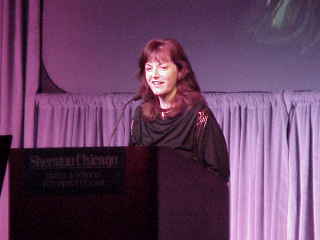
(Which I didn’t expect to win–I’d been a finalist before and hadn’t won–and my friend Kathi and I went out for a beer, instead of getting all dolled up for the awards, and I didn’t know beers in Chicago could come in yard glasses.  I arrived happily buzzed, in a borrowed dress, and somehow managed not to fall on my face getting up the stairs. I think I was reasonable coherent. I was more than delighted to receive the award from Jo Beverley one of my heroes.

At the RWA Awards Chicago

Better yet, the book went on to win me a publishing contract.

And I’m delighted it’s back in print.

Winning the RWA Golden Heart in Chicago

Setting up for Digital

Some things just seem simple–digital publication is one of those. Upload a file and presto, right? But there are a few things that you want to figure out first—it’s another case of a little planning going a long way.

ISBNS

The ISBN is an industry standard for identifying a book. If you want full control of your book listing, buy your own ISBNs, which you can do through Bowkers at myidentifiers.com

You can buy a single ISBN for $125, or a premium one for $185, or buy 10 at a time for $250. Assigning them is a bit of a pain.

The ISBN is not actually in use until it is applied to a book. To do this, you’ll need the book cover, your bio, your book description, a PDF of your book, and an Excel file saved in the CSV format with the Search Engine Optimization (SEO) terms you want to use.

After you buy your ISBN, login to myidentifiers.com and follow the tabs and fields to set up all the information. You can also replace an older print ISBN if that print edition has gone out-of-print.

Include pricing and sales areas (countries where you’re selling), and check back in a few days to confirm your ISBN has been activated for that digital publication. It usually takes only a day or two to get this set up.

Then you can do that “easy file upload” for digital publication on Amazon Kindle, B&N Nook, and Smashwords.

Smashwords

Smashwords.com is both easier in some respects, and more difficult in others. They do provide a lot of information readily available on their site. The first step is to sign up and set up an account. Set up payment methods and create a profile. Click on the PUBLISH button to start the publishing process.

Fill out all the forms. Set your price (and Smashwords offers a cool graph to show what you’ll be making on any book for each price point). Be honest about if your book contains adult material (explicit sex or graphic violence). Upload your correctly formatted book and your cover. And remember to include the wording that Smashwords requires at the front of your book.

IMPORANT: Always take a look at the preview to make sure your book appears as you want it formatted. If you need to, adjust the text in the file and upload that again to correct any formatting errors or typos.

With the ISBN manager at Smashwords, you can add your ISBN or let Smashwords give this to you. If you’re having Smashwords do your ISBN, but you’re doing your own Kindle and Pubit uploads, set up Smashwords first so you have the ISBN to add other places.

Before you do that final submit, read the legal stuff (the Terms). This is a contract you’re signing with your mouse click.

It can be minutes to hours to actually have the book upload. It will then show as pending approval (that’s okay).

In Smashwords, select DASHBOARD, and now set your distribution for this book with the Distribution Channel Manager.

You can let Smashwords distribute to all formats, including Kindle and Nook. However, you’ll make higher royalties if you do your own Amazon and BN distribution. For Smashwords, I opt out of Amazon and BN formats. I opt into Apple (which requires an explicit opt in selection).

NOTE: Your book will appear in Smashwords right away, but will not be listed there as “premium content” until it’s approved. Check back every few days to make sure it is approve, or if the format needs to be adjusted (and also to see how you’re sales are doing).

UPDATE TO SMASHWORDS: They now allow both short descriptions, and long descriptions of up to 4000 characters. If you have books on Smashwords, you may want to update your descriptions. I’m using the short descriptions for review promos, and then adding in more details about the story in the long descriptions.

B&N PUBIT

For uploading to the Nook via Pubit, this again starts with reading up on the process on their site, and creating an account, this time at pubit.com. B&N requires a credit card to create an account. This is in case a book is returned (for example, you’ve sold 20 books, but one person decides to send it back, but B&N has already paid you for 20 books; they use the credit card to account for that one return). Some folks don’t like this but I had no issues.

When your account is set up, head to Add a Title.

One nice thing about PubIt is that you can save your work as you go (very handy that). So you can add some info, go away, fuss with promotional copy, and come back and add that.

As with all other formats, once you upload your book, make sure you check out how it will look with the preview option (PubIt automatically brings this up for you to view, which is a nice feature). You can also mark if the book is part of a series.

You can add up to five reviews, including reviewer names and quotes. You can post excerpts from the reviews, but you should get clearance from the reviewers before you use their copywritten work.

NOTE: While BN’s PubIt doesn’t require you to have an ISBN, I’ve found it’s easier to add this up front, instead of trying to update the ISBN at a later time. Everything else is much easier to update (cover, copy, reviews, descriptions, even pricing).

Amazon Digital Text Platform- Kindle

UPDATE: Amazon has renamed this to the “Kindle Direct Publishing”. They’re also now putting out a newsletter with useful tips and advice. The old link below still works, but the new link is: https://kdp.amazon.com.

The options at Amazon can be confusing: they have Create Space, and Kindle, and their Associates Program. To actually sell a book on Kindle, you want to head to: https://dtp.amazon.com. If you don’t have an existing Amazon account, you can create it. Again, Amazon provides a lot of information about the process on their site (including a video). The details can be a little overwhelming, so you may want to tackle the basics first, and then improve your publishing and promoion.

NOTE: To help promote your book you’re also going to want an Author’s page at https://authorcentral.amazon.com.

As with PubIt and Smashwords, you’ll need to set up all your account information so you can get paid.

Again, you enter your book title, cover, and upload your book. Make sure you spell your name as the author correctly. Again, make sure you preview how the book looks on Kindle.

You can mark if this is a series (same as for PubIt). You can set your pricing and opt out of DRM. Add in your ISBN if you have one. When you save your information, the book will go into a pending mode. Once approved, the book will be listed for sale.

And there you have it – the easy (or almost) steps to digital publishing.

Twelve Steps to a Digital Format

There’s lots of information out there about eBook format. But in converting my print books, I’ve streamlined this to a simple twelve steps. You can get fancier if you know what you’re doing. My choice is go to for a clean format. So, here’s the twelve easy steps.

Twelve Steps to a Digital Format

STEP 1 – Put your book into a single file in Microsoft Word. I had my chapters split into multiple files, so the first step was a lot of cut and paste. I did have electronic versions of my work, but not the same ones as in print. This meant either scanning the books or manually inputting my edits. I went with the latter and made this part of my editing process.

Other ways you can do this might include a search the Internet to see if someone’s done the work for you and you can grab an electronic version (yes, those pirate sites have a use). You can invest in a scanner and OCR software that converts the scanned image into text—the cost will be about $300 – $400 for a full setup. Or you can pay for a print book to electronic conversion: about two to three dollars a page to get all the work done for you. If you’re still going it on your own….

STEP 2 – With your book file open, use the SELECT function. Select ALL and set the font to Ariel or Times Roman. Electronic readers like consistency and these are about the most Web-safe fonts around. I use Times Roman for the bulk of the book, but I put the title and front copy into Ariel.

STEP 3 – Set the font to 12 or 14 point, no smaller and no larger.  I like to set the title and chapter headings to 14 point and use 12 point for everything else.

STEP 4 – Remove all TAB marks. To do this, use the REPLACE function, select MORE and SPECIAL CHARACTERS. Put the tab mark in the field to “find” and nothing in the replace area and that will remove them all.

STEP 5 – Use the REPLACE function to search and replace all double spaces with single spaces (do this a couple of times to catch all of them).

STEP 6 – Set your paragraph indents with the PARAGRAPH function. Set INDENTATION to SPECIAL, FIRST LINE, with LEFT set to .2″ or .3″ (you can go up to .5″ but I think the smaller option looks better in the electronic readers).

STEP 7 – Use the PARAGRAPH function to set spacing to single space.

STEP 8 – Remove all headers and footers—deleted them.

SEPT 9 – Remove any page breaks between chapters.

STEP 10 – Center your chapter headings and number chapters as in “Chapter One” – that’ll help to automatically generate a table of contents. Put only a single blank line space between chapter headings and the text – that’s both before and after.

STEP 11 – For breaks within a chapter, use a simple mark such as the asterisk (*) which electronic readers can handle.  Center this and put a single blank line space before and after.

STEP 12 – Put dedications and reviews up front since this is free preview content.

Your format should look something like this (without the blue text which is just here to make the book text stand out)…

Opening Page:

A PROPER MISTRESS

Shannon Donnelly

For Marsha —
may you always find the courage to choose happiness

Bookseller’s Best Finalist, Golden Quill Finalist, Orange Rose Finalist

“With its excellent characterization, polished prose, and humor, Donnelly’s latest Regency is a supremely satisfying, deftly plotted delight.” – Booklist, American Library Association, John Charles

“…delightfully offbeat romp with an engaging set of young lovers and a good cast of supporting players…highly enjoyable” — Romantic Times Top Pick – 4½ Stars

“I highly recommend A PROPER MISTRESS, and can’t wait for Ms. Donnelly’s next book….” — Five Roses – Escape To Romance, Marlene Breakfield


CHAPTER ONE

“Beauty ain’t required, but she’s got to catch the eye,” Theodore Winslow said, striding across the small salon, one hand fisted behind his back and the other gesturing in the air. “I mean, I’m supposed to be smitten. But she can’t be at all acceptable—only she can’t be too coarse, either,


A chapter break will look similar to this:

“Why, you’re hardly more than a boy yourself! Why ever do you want to go hiring a woman from this house to act as your bride?”

CHAPTER TWO

At the sight of a short, curvaceous redhead being thrust into the room, Theo started to smile. But those tempting, full lips parted and her words cut into him like a butcher’s knife. Hardly more than a boy!

And a scene break will look something like this:

“Well, you want to make sure you ain’t a trout with your mouth gapping open to be hooked by this flash gent, or any other. Remember that, or you’ll be agreeing to more than you think you will now. And just you remember, too, every woman may have her price, but every man has his limits. Most of ’em start with his purse. Now, let’s see how those dresses look. You’re going to have to be dazzlin’, ’cause it’s going to take us longer than a quarter hour to turn you out in style.”

#

By the time Sallie finished, Molly no longer recognized herself. Nell and Harriet, seeing the door open to Jane’s forsaken room, had poked their heads in—eyes sleepy and hair tumbled and still in their night wrappers. Sallie’s house kept late hours and late mornings. Sallie bustled them out, saying to Molly afterwards, “Never does to stir up jealousy, and you don’t want them thinking you’re stealing their trade.”

———————-

If you know what you’re doing, you can get fancier about the formatting. Or if you pay someone to do this for you, they can do the fancy stuff.

While this may sound like a lot of work, I found it to be not all that difficult, it just takes some time. I’m averaging two to three weeks to get a book formatted and that’s working only weekends and evenings and doing all the edits. It’s going faster the more I do this (I’m getting a process down). Basically, this requires patience and persistence, something every writer needs in buckets.

Save your file as both a standard word .DOC or .DOCX.  Also save the file as a PDF version (this will allow you to give away free PDF copies to readers, and you’ll need this format, too, if you set up an ISBN).

NOTE: Smashwords also requires specific text at the front of your book about being published at Smashwords, so you want to set up a separate file with this info:

Published by Shannon Donnelly at Smashwords.com

Copyright 2010 Shannon Donnelly

Discover other works by Shannon Donnelly at Smashwords.com


That’s it. Twelve steps. The part that really takes the work is getting the writing done in the first place.