Archives

What’s Not to Like?

HHRW-slider11I’m doing a workshop this June on Creating Likeable Characters for Hearts Through History.

The workshop came about because I kept seeing a classic mistakes that is often made. The writer gets caught up in creating a character with problems—with challenges. Yes, you want there to be some conflict and you want a flawed character. But go too far with that and the character comes across on the page as someone that’s not likeable. End result is that the reader bails on the story because the reader doesn’t want to identify with that character.

Why does this happen?

Look, if you have a choice, are you going to spend the evening with folks you like or with people who make you grind your teeth? I’m going to bet on the former unless you are being forced to be there by blood ties or a job. This holds true in a book, too. Readers (all of us) want to spend time with folks we like.
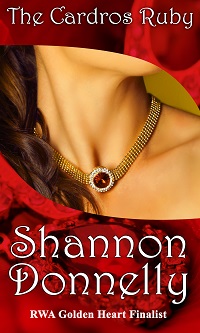
The Cardros RubyThis is a huge issue in any book—it was one I faced in A Cardros Ruby. In an early draft, the heroine came off as too cranky and hard-edged. She was not likeable. Now, she had her reasons for being how she was, but she wasn’t someone you wanted to root for. That meant she needed major work to bring in some things to make her likeable. I had learned about this when I wrote the heroine of A Dangerous Compromise.  She’s a spoilt girl who eventually redeems herself—or at least shows a good side—but that came too late in the story for many readers who just didn’t warm to her. And I can understand that.

If I’m going to pay money and spend my hours with some folks—even fictional folk—I want to have fun. I want to be with people I like. If your characters aren’t likeable, you’re not going to sell that book. That’s the voice of experience talking.

As a reader, I want characters I can root for, characters I can laugh with and cry with, characters with whom I sympathize. I want to spend time with folks I like.

Which brings up the question—what is likeable?

This is where subjective opinion gets into it. Even the most beloved characters have their detractors. And good characters are like people, or they should be. This means not every character will be liked by every reader. However, there are some basic things you can do give a character a better chance of being someone that a reader wants to spend hours with, as in give your characters:

Mad Skills – We tend to like folks we admire. We like people who are good at what they do. This is why we like sports figures at the top of their game. We like to see folks doing amazing things. Think of Indiana Jones—we like him because right off, even if things don’t go his way, he’s shown to have extraordinary skills. This is something I use in The Cardros Ruby—the hero’s shown as being able to handle a tough situation right off.

Good Intentions/Actions – We tend to like folks who mean us (and the world in general) well. We like characters who have good reasons for what they’re doing—as in a mother who is out to protect her child. She may do bad things, but if she’s got really good reasons (as in Sarah Conner of The Terminator) we’re going to be on her side. We like folks even more when they do good thing. The guy who rescues a stray dog is likeable. The woman who goes without movies for a month to buy her niece the prom dress the poor girl has been longing for and can’t afford is likeable. Little acts of kindness can mean a lot to a reader—and will put the reader on the character’s side. This is another one I use in The Cardros Ruby—even though the heroine’s heard bad things about the hero (and some of the gossip is deserved), she stands up for him because she recognizes she owes him and that helps put the reader on her side.

Underdog Status – We like characters that don’t start out with everything going their way—folks who are behind the eight ball and have had nothing but bad luck tend to stir our sympathy. If the main character has everything else stacked in his or her favor, that’s not someone who is earning our praise and sympathy. This is another one I use (and notice that you can layer these on—just don’t go heavy handed with this). However, the important thing is we want to see a strong underdog. That means someone being strong against overwhelming odds. Make your underdog whiny or weak and you’ll lose the reader’s sympathy—most folks just don’t like weaklings.

Grit – This could be called strong moral fiber—or even just stubbornness. These are folks who don’t quit when things get tough—characters who preserver, because it’s nice to see that works (even if only if fiction at times). This is a trait most admire. Again, don’t take it too far. If this turns into someone being stupid, you can lose the reader.

Humor – Let’s face it, we like folks who make us laugh. This is what keeps comedians in business. These are the witty types, folks we admire for having a fast mind and a way with words.  I actually try to have all my characters be funny and quick because I love people who are sharp—so that’s a personal choice. A wry wit has turned many a bad guy into someone we love (as in Loki in the Avenger movies).

Quirks – Every character needs some flaws. No one likes perfection. A few quirks and a character is both more memorable as well as more likeable. An odd physical trait—a scar, or a handicap overcome such as being very, very short. Or a metal quirk, as in Monk, the OCD detective. Again, if you go too far, the character may come across as just crazy, and most folks shy away from that. Even Monk has mad skills to balance out his oddities.

Empathy – Characters don’t exist in isolation. They need to be aware of the world around them. Characters who demonstrate empathy for others earn our empathy—we are prone to like these folks. This means you do not want a character who is all about me…me…me.

Now this is not to say that all characters must display all these traits. That would be too much for any reader to believe. But pick three or four things. Or even a couple. Demonstrate that your main characters—your protagonists—are likeable. This means you do not tell the reader others like this person, you SHOW the character DOING things that make the reader think this character is likeable.

Keep in mind that if a character is going to have to do bad or stupid things in the story, that character needs the reader on his or her side early and to a great degree. Even give some of these likeable traits to your antagonists. They need to earn the reader’s sympathy, too, if the conflict is going to be strong. Even Hannibal Lecter has the admirable traits of being a cultured man—and mad skills (emphasis on the mad there).

Let your readers get to know and like your characters before you start having your characters do terrible things—and then think long and hard about if a reader can forgive that character.

Think about making sure your character demonstrates he or she is likeable—it’s not enough to tell the reader these things. The character has to be shown doing things that are worthy of the reader. (If you’re not sure about this, read Dick Francis, he’s a master at making you like a character in less than a page.)

Use viewpoint to your advantage—not to your character’s disadvantage. If a character thinks about her long, raven hair, she comes across as vain. If a guy is eyeing another guy and thinking about that other guy’s muscles, the character comes across as gay. Now all of that is fine if you want the reader to believe one character is vain and another is gay, but KNOW what you are conveying to the reader with those internal thoughts. Don’t just stuff description into thoughts because it’s easy—you may be sending the wrong signals to the reader.

Above all, remember you’re asking a reader to spend time in your world. Make sure readers want to stay, want to root for your characters, and start to like them. It all starts off with creating characters you really like—and making sure they show up right off doing some admirable things.
Horse Sense

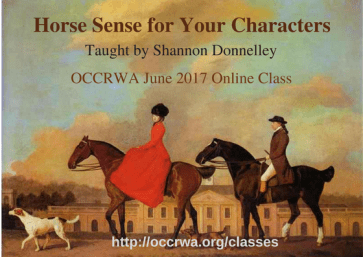
Horse Sense for Your Characters-OCCgraphic2I’m teaching a workshop for OCC RWA starting June 1 on Horse Sense, so it made sense to talk a little about my experiences with horses. This blog might also have been called ‘horse mad’ for as the family story goes, when I was two, and before I was doing much walking, I crawled over to my brother’s rocking horse, and Pony Gray instantly became my first horse.

Now, I’ve got the excuse it runs in the blood—my grandmother never forgave, or ever stopped talking about, my grandfather trading her good milk cow for a riding horse. Back then a plough horse was a different thing than a riding horse, so you had to make that distinction. Long after Grandpa Erickson was in his grave, grandma was still bemoaning this loss. It always seemed a good trade to me.

My first memory of being on a horse was somewhere around the age of four or five when we took a trip to visit relatives. My mother rode—she grew up in rural Utah—so she got on a half-broke young Appaloosa just in from winter pasture and we went for a gallop. I do remember loving it. Mother always said I kept saying to make it go faster—that part I don’t remember.

When I was seven, my parents deemed me old—and tall—enough to take riding lessons, so the weekly trips to the stables started up. I learned on a wonderful, patient old fellow named Sunny who had two speeds—stop and walk. I have vague memories of getting him up to a slow trot at one point, but I’ve always had a “slow” seat for horses, so Sunny mostly just helped me into the saddle.

drakeAll this means horses have always been part of my life. My aunt—also a horsewoman—taught me to ride side saddle. I went to England to get my riding instructor’s certificate and learned to drive carriage horses—and I got to hunt (meaning vast amounts of time standing about, then galloping to a new cover and more standing about, but it’s all on horseback, so not a bad time at all). I’ve shown hunters, jumpers, dressage, three-day, and did a year of western riding, and now only ride the trail for fun—my show days are behind me.

woodyI’ve also been bucked off, rubbed off on a tree, had a horse fall with me, dealt with barn sour, rearing horses, dirty stoppers, and a load of other problem horses. I’ve galloped race horses (and you really do have to get up all too early for that), and then I’ve had wonderful horses who would do anything for me–including the splendid Drake shown in the photo above (who hated to be left out and insisted on always having his stall door open so he could join in the fun), and the handsome Woody (the photo on the left) who was a perfect hunter, but never got the hang of fast turns in jumper classes.

But I finally have my ranch in New Mexico and horses in my backyard—my earliest dream come true. And I’m going to be teaching a workshop on horses for writers because these days most folks are more familiar with their automobile. The lack of a horse in your life to me is a terrible thing—I’ve always ridden, even if I had to beg or borrow the horse.

Now the subject of horses is a big one, going back thousands of years. But let’s hit a few highlights from the workshop:

Common Myths and Mistakes

  • Side saddles are uncomfortable and insecure so any woman would rather ride astride. Wrong. If you know how to ride aside, it’s comfortable and the preferred choice. I adore my grandmother’s western side saddle, and would rather have that for a day in the saddle any day.
  • It’s easy and safe ride double on a horse and the horse won’t care. Nope. Most horses have no ribs over the loins, meaning someone sitting there is not comfortable. The only way to really ride double is with two kids (or really skinny people), or on a really big horse.
  • A six foot tall man can ride an Arabian stallion. This one is a laughable mistake—picture his feet dragging the ground and you start to get the picture. This has ruined more stories for me.
  • A rider can grab an unsuspecting person on the ground and drag them up to be carried off. If you really, really practice this a lot, you can do this with someone who is ready and willing to be grabbed. Otherwise, you’re likely to end up on the ground yourself.
  • You can tie a horse by the reins to a stationary object. Some horses are taught to ground tie—you just drop the reins. Some horses will stand if you loop the reins over something—you’ll see this in Western movies all the time. However, most horses, if you give them the chance, will get themselves into trouble—meaning tug back on the reins, break them, get loose and wander off.
  • Stallions are the most dramatic and dangerous of all horses. Well, they are pretty, but you want tough and mean, pick a mare that has a bone to pick with you.
  • An experienced rider isn’t able to stop a runaway horse. Been there, done that. You put them in a circle and make them keep galloping. Do that once or twice and they stop running away with you. The only runaway that’s tough is the habitual one, who also will usually try to scrape you off under a tree.
  • You can kiss another rider while on horseback. There are a lot of You Tube videos of the ‘romantic’ wedding with the bride and groom on horseback—a sure recipe for trouble if these horses have not been through rehearsal about a thousand times. If the veil doesn’t spook the horse, something else will. And if that’s not enough, lean in for that kiss is an invitation for the horse to step the other way, leaving you dangling. Even Roy Rogers and Trigger didn’t go for this one—but Roy did let Trigger kiss him!
  • You can ride a horse and not come away smelling of eau de equine. If anyone’s ever managed this, I’d like to learn their secret.

And there is another of my favorite mistakes, the obvious one that horses aren’t cars. You can’t really park them and expect them to stay put—they tend to see grass and go for it. You can’t park them—again, they have their own mind about things and a bored horse is one looking for food. And you can’t drive them 24/7—they need food, water and rest, just like the rest of us.

For more horse tales, come and take the workshop. Or get yourself to a local stable and start having some horse fun for yourself.

Developing an Idea or Characters?

proper-conduct-01I’m in the middle of teaching my “Plotting from Character” workshop and what always happens is that folks get frustrated. Which is actually quite normal. Learning something new is hard, and most people don’t want to really spend the time to break old habits and to the work to learn (or relearn) new ways of doing things. It takes not just persistence but also patience–with yourself and with the process. A lot of times you just have to do something over and over and over again.

I was reminded of this the other day–I’m learning something new. I’m struggling to learn how to play the mandolin. Now, the fingerings are the same as for a violin, which I used to play. But you have double the strings–and you have to pick (not bow). And eight frigging strings means one of them is always going out of tune. Took me an hour to tune it, then I broke an E string and it took me another hour to change it. Patience and persistence got be back to where I could do some chord and scale practice. It’s going to take longer before I don’t suck at it.

And that’s where I think a lot of writers have trouble. It takes patience as well as persistence to develop characters. I’ve had a few characters just show up on the page ready to go. Most of them take time and repeated work to really get them fleshed out and figured out. I had that problem in Proper Conduct–the heroine just took forever to show up. She was a difficult character all the way along, but after 100 pages she finally settled down and I was able to get her onto the page.

That’s where I see writers with less experience struggling–they jump into an idea and develop the heck out of the idea. But the characters don’t get development. It’s too easy to fall in love with an idea and forget the story is really about your characters. A great story won’t carry a book. And that’s where you end up with good writing and weak stories–and I see a lot of that in contests where there is a lot of cleverness but the characters are what my mother used to call ‘unbaked cookie dough.’

Now it is possible to overdevelop the characters–to spend too much time on details and not enough time on the main conflict and story arc. I used to do that and my characters came out flat. I’d written the life out of them. So it does take a balance.

And a lot of patience to go along with the persistence.

What’s Showing and What’s Telling?

cropped-top-bar.jpgI regularly teach Show and Tell: An Interactive Workshop and I’m about to start it again, and two things always come up:

1-Folks want just to learn to show more in their stories.

2-Folks don’t really know what is showing and what is telling.

Now both showing and telling have a place in any writer’s toolbox. However, what I’ve noticed is that writers just learning their craft haven’t figured out how to show more, and their telling is just awful–they haven’t learned that good narrative takes a lot of work.

I don’t think any writer is really lazy–the work is just to hard to attract someone who wants to take it easy. But writing is more than hard work. It also needs smart work.

So, quick tips here:

Showing means you SHOW the character in action. Action includes someone who is talking as well as doing things. Any actor knows this–an actor cannot just stand around spouting lines. An actor must express emotions by what they do–and that means they need bits of business. So the writer must become the actor for every character and think up how that character expresses emotion (and not just with cliches of shouting or thumping).

Telling means you TELL the reader what the character is feeling. This can be done with phrases like ‘he felt’ or ‘she was angry’. The trouble with telling the reader this information is the reader doesn’t get a chance to SEE the character–there is no reveal through actions. So the reader tends to feel cheated.

Now the confusion comes in that all of this showing and telling takes description–also, showing and telling are not absolutes. You can blend them. It’s a matter of balance. Too much telling will flatten a scene. Too much showing if you’re trying to do a transition (not a scene with emotion) makes the story drag. So you have to learn when you need to show more and when you need to tell better. And all this takes practice and awareness. It also take reading the work of others with awareness so you start to understand the techniques–if you don’t know your tools it’s hard to use them like a true master craftsman.

And a few acting classes can also help any writer better understand the need to get a character on the page by giving that character more bits of business to reveal the character’s inner nature and emotions.

The Importance of Showing–and Telling

casI’m starting my Show and Tell workshop Monday and it always kicks off with everyone focused on showing more and better. Great stories do need great scenes with lots of showing, which has the characters on the page and expressing emotion. However, there’s a place for the narrative in any fiction–a writer needs both these tools.

(Oh, and, yes, Cas–our dog–will be  napping during the workshop in his favorite chair.)

Now, I like to say that what most writers really need to look at is how to tell better in the right places and show more of the character expressing emotion. It’s usually emotion that gets left off the page (and out of the scene). How do you do this?

There are some technical tricks that can help. (Cas doesn’t care about these, but he does like a good bone to chew on.)

1 – Tell when you need to get some quick information on the page—or to shorten what you need to convey to the writer. Telling is a great way to compress time, handle a transition to a new scene, or simply put some info that on the page that you need for the reader. Nothing is worse than exposition put into a character’s mouth. That makes your dialogue stiff and often makes the character sound stupid for stating what is probably obvious.

2- Show more by eliminating ‘telling’ dialogue tags. She exclaimed, he smirked, she pouted, he expounded, she tossed back, he leered, she sighed…all of these are telling the reader an emotion. You want to show how your characters express emotion on the page—that’s where you need to show more.

3 – Use telling to alert the reader that the character is relatively unimportant. This is where a lot of writers get it wrong by telling too much about the main character, which makes that person seem unimportant. This sentence makes it clear that the cab driver is not a main character: The cab driver dropped her off at the train station. If you spend three paragraphs describing what that cab driver looks like, how he drives, and how he acts, you are showing that character is important. Keep things clear for reader—what you give pages to matters most.

4 – Show you character in action right away to get a reader’s interest and sympathy. This is key to creating likeable characters, or at least character that a reader is willing to settle down with for a few hours. If your main character is supposed to be smart, show that person doing something smart. If your main character is an ace magic user, show that character using that magic in an amazing way. A lot of writers feel like they have to show the character in a tough situation—that’s fine. But really look at what you have shown—is the situation all that tough or is the character just being stupid? You may get the reader’s scorn instead of sympathy.

5 – If you tell, you don’t need to show; if you show you don’t need to tell. This is about trusting your readers to ‘get it’. You do not need to hit the reader over the head. You don’t need to say: He was angry. And then show that character being angry. Repeating information can blunt the impact on the reader—your writing starts to feel dull and the scene sags. Sometimes repetition can be used for a certain impact, but use this technique carefully and with intent.

6 – Do remember to get the emotion onto the page—either show it or tell it but put it on the page. It’s easy when you’ve got a lot of action to get lost in getting that sorted out and forget that the reader really wants to know what the character is feeling. This is something I see a lot of in contest manuscripts. The writing is good, there’s plenty of action, but I have no emotional involvement because I have no idea if the character is frightened, amped up on adrenaline, angry, or covering up feelings. Know your characters, and get their emotions on the page!

7 – Cut the clichés in both your showing and your telling. Readers want a familiar read, but not a duplicate of something read a hundred times before—cliché actions and reactions flatten your story. Cut or change every cliché. This means no stalking into the room like a panther. No gazing into a mirror and doing an inventory of hair, eyes, and the standard description. No women (or men) who had their hearts broken once and so that person has vowed never to love again. Put a fresh spin on every cliché—whether it is narrative or a reaction to a situation. To do this, you need to know every character and your character must react in character—this means no making character take actions to make a plot work.

Work on your telling so it’s tight, brilliant writing—no one’s going to tell you to cut writing that is wonderful, even if it’s all telling. And then in scenes get more emotion on the page by showing how your characters express emotion. It’s that simple—but simple is always hard work. (Harder than burying a bone, according to Cas.)

For more about this–and some great exercises, check out the workshop.

Is the Narrative Voice Dying Out?

title1I’m teaching my Show and Tell workshop in October and that got me thinking about the narrative voice. The two things that always happen with this workshop is that everyone comes in wanting to know more about “showing”–as in they’ve been beaten over the head in various critique comments to show more. The other thing is that I try to convince folks that good narrative is as important as good showing–each has it’s place in fiction, but I do worry that writers are being pushed into too much showing. What–is such a thing possible?

My answer is yes, and here’s why showing can be a bad thing at times.

1-Narrative can set a reader into the world. Too often I’m reading manuscripts and the description is more than sparse–it’s nonexistent. As a reader I want to know where I am, when I am and I want to experience the world. This means weaving in details to make the world vivid–sights, sounds, textures, tastes, smells. This can be done through a character’s viewpoint to show the world, but sometimes narrative can be a lot more effective to set your scene and put a reader into the story.

2-Narrative can weave in backstory. Yes, you can clog the opening of any story with too much–but too little can be just as bad. It’s like throwing someone into the deep end of the pool–the reader is left struggling. Too little information and the story becomes confusing and right after that the reader is going to check out of the fiction. Telling the reader a few things can keep the reader interested, particularly if you bait the hook with interesting bits of background so the reader wants to know more. And narrative can keep the backstory clean and crisp, so there’s no clunky exposition in dialogue.

3-Narrative can help introduce new characters. Again, this can be overdone, but a few bits of telling can help a reader “see” a person and helps keep the cast of characters sorted out. This can be done in a character’s viewpoint, but a lot of times a little bit of telling the reader something important or “telling” about the character is a better way to keep the pace moving and keep the reader involved.

4-Narrative can help the writer’s voice stand out. This is perhaps the most important part of the narrative voice–of telling. Beautiful writing is a wonderful thing. Again, this can be overdone and the writing becomes “writerly” or so self-conscious it throws the reader out of the story. You don’t want to step all over the story–and your characters–to leave thumbprints, but a lovely turn of phrase here and there is not a bad thing. It adds to the overall experience.

Notice with all of this, the important elements of telling are to not overdo it, and to use the narrative voice to help the reader into the story. I like to say it’s about showing more in scenes that need emotion, and telling better between scenes. The narrative voice has it’s place in fiction–I just hope writers will continue to learn how to use it better.


Better Stories

cakeI read a lot of manuscripts as contest entries and a lot of them have the same basic problem–the story doesn’t start on page one.  It’s far too easy for a writer to get caught up in the details. Those details are necessary to make the fictional world come to life. You can focus so much on the right word or the right sentence or fixing the paragraph that you forget that readers want a great story. That’s the most important thing.

A few years back I noticed there were workshops on all parts of writing–dialogue, pacing, showing and telling, viewpoint. I teach a few of those and they’re important. But even more important is how to make all of this come together in a way that makes for a great story. Think of it this way–you can have flour, sugar, eggs, milk, salt, baking powder and still make a terrible cake. It takes knowing not just the list of ingredients, but how much do you need and when these should be added, and how to mix and bake them–you can’t just throw them all in a bowl and expect something wonderful.

That’s why I do a workshop on storytelling. I’m teaching it again this September for RWA’s OCC. It is a dense class with a lot of information but the focus is on story–on getting a great story onto the page. Meaning it’s about looking at the list of ingredients–viewpoint, dialogue, pacing, showing and telling–and how to mix them together into something tasty.

So…are you focusing on story? On your characters? Or are you too focused on details?

Workshops to Learn

wpaI’ve been teaching various writing workshops–and taking them, too–for a number of years online, and I’ll be starting a new workshop on Writing Women’s Fiction next week. Over that time, I’ve found a number of things help some folks learn more than others–and I’ve experienced that as a student. So how can you get the most from any workshop? Here are some tips.

1-Make time to participate. This is so important. Yes, life can get in the way–and I’ve lurked my way through a few workshops. The workshops where I’ve been passive, I’ve never really absorbed the lessons–they didn’t stick. Or I filed the lessons and never really got to them. When I’ve taught, the writers who do the assignments do learn–I can see it in the work.

2-Stay on topic. There are so many things to learn about the craft of writing–viewpoint control, pacing, dialogue, when to use narrative, punctuation, and more. If you try to tackle everything at once, you end up with scattered efforts and not really getting a firm control of one specific thing. Focus also help you refine your skills–you may have some skills, but really working on a technique will improve anyone’s writing. I often see writers who get distracted–by ideas and by other topics. Resist this urge and start developing the discipline that will also help you focus on your stories.

3-Ask questions. This is another way to participate. Try and give some thought to your questions so they are clearly framed–it can be difficult to make yourself understood in just text, but you may spark a discussion that leads to new ideas for you.

4-Respect the teacher and the class. I’ve taught workshops where it seems like one person is ready to dive in and take over the class. This is frustrating to me. I want to encourage interaction, but if someone is hijacking the workshop and taking it off topic it means I have to spend more time pulling the workshop back on track instead of teaching and working with others. Think about what you post before you post. It’s fine to give a few comments, but do not treat the workshop as if it’s Facebook where any comment can be posted.

5-Respect your work. You want to develop the habit of always reading your work aloud before you share it with anyone else. This is particularly important if you are writing new work for specific assignments. Proof your work, then proof it again. A few typos is not bad, but a lot of them makes it seem as if you don’t really care about your own work–and as if you don’t respect your writing. Make every piece of writing as good as you can–work hard to master all the basic techniques such as verb tense, commas, dialogue punctuation, and capitalization.

6-Write specifically for the workshop. This goes back to the participation issue. Yes, you can copy and paste parts of any manuscript for any workshop assignment, but you’ll probably learn more by doing work specifically for the workshop. This also has the benefit of getting you writing. To do this, look carefully at your schedule when you plan to take a workshop. If you sign up for any workshop, clear a few other things off your calendar and set aside specific time to both read lessons and do assignments.

7-Schedule your workshop time. I’ve always gotten more by setting aside specific time for workshops–this is both for teaching them and taking them. For me, it’s best to do this in the morning when I’m fresh. I can sit down with my coffee, review notes, read and do some work. At the end of the day, it can be tough for me to focus and sometimes I’m tired enough I just want to sit and read–or stare at a movie if I’m really brain dead from a tough day. That’s when I’ll push things off. So get your workshop time allotted and set in stone. Workshops usually only last a few weeks–Writing for Women’s Fiction is only six weeks, and that’s a huge topic to cover in that short time, so you want to carve out time for getting the maximum learning.

8-Have fun–and try new things. You learn more when you’re relaxed and willing to experiment. Workshops are a safe place to try out new things. Never written first person–give it a go. Want to try present tense verbs. Okay. I generally end up reassuring everyone at some point there are no grades–there’s no right or wrong. There’s writing that works, and stuff that doesn’t work so well–and workshops are a place to go splat because you’ll learn more from stretching your writing muscles.

9-Discard what doesn’t work. In any workshop, if you come out with one or two new tools, you’ve gotten great value from that workshop. But remember–in every workshop, the teacher is sharing what works for her. This tool may not fit your hand. Maybe it’s too advanced a technique and you’re not ready for it–or maybe it’s not the way you work. That’s okay. Just trying something different will improve your skills. Never, ever feel it’s your fault if something isn’t really clicking for you–it’s not the teacher’s fault either. There’s no one right way to write.

10-Be open to new things. While we all have our writing habits, go into any workshop willing to learn. Yes, be critical. But also try even the things where you’re not sure if they’ll work for you. Maybe a workshop about plotting puts down guidelines for so much structure it kills your impulse to write. That’s okay. Look at the guidelines you can use and take them into your tool box. Maybe a workshop about dialogue gives you one great idea, but the rest of it is stuff you already know. Cool! Celebrate that one great idea–that’s the value you got from the workshop.

The great thing about writing is that there is always something new to learn. That’s why I teach–I get as much from the workshops I teach as any student. And I’m really looking forward to this new workshop on Writing Women’s Fiction. It should be fun!


It’s the Characters!

tablettypeI’m just heading home from the California Dreamin’ Writers Conference, and as usual there was talk of craft and marketing, and much other stuff. Sylvia Day, of course, talked about writing the book you really, really have to write–the book you want to write. I find that best-selling writers often do that–they may be marketing smart, but they also don’t follow the market. They make it. They also write great characters, which I think is the real secret.

So how do you get great characters on the page. First, you need talent. But a few other things can help, and I’m going to cover this in detail in my Plotting from Character online workshop starting on April 1:

Twelve steps to create the story from the inside out.

  1. Start at the deepest point: for every character, find that person’s core internal need.
  2. When looking for motivations (the why) for a character’s core need, discard the first three or four ideas (those will be clichés). Internal motivations are strongest if tied to a specific event in the character’s formative years—create these scenes (you may use them in the story).
  3. Create one main external goal for the main character—needs to be tangible, so the reader knows if the character gets it or not. (There should be consequences for failing to achieve the goal—failure should be personally costly to the main character.)
  4. Look for the motivation for why the character needs this goal—this is strongest if it’s a specific event in the character’s formative years. (Theme will come from the main character’s needs and goals—that will be the heart of the story.) The WHY for the external goal should be WHY this person must do this and WHY now–as in most folks don’t suddenly decide to go out and catch a murderer without a strong reason WHY that person must do that and WHY they most do this NOW.
  5. Decide if your character recognizes his or her needs and motivations.
  6. Focus the story on one character’s specific growth. That is at the heart of the book and will relate to your theme.
  7. For a romance, set up a potential mate who can’t provide the main character’s need—and who has goals that are in conflict. (But make sure this person is fully developed.)
  8. Know each of your character’s sexual history.
  9. Layer strengths and weaknesses into each character–compliment and contrast.
  10. Create secondary characters around the main one, with clear needs, goals and motivations for every character. (These can be opposing goals for what the main character wants or needs–or the same, with approaches adding conflict, or conflict from only being able to reach the goal).
  11. Give every character a secret–maybe even one that stays hidden during this story.
  12. Leave room for characters to surprise you. And remember, even bad guys need love.

With all the above, play the “what if” game – what if this happens to this person? What would he or she do? Create many “what ifs” and use the “what ifs” that resonate most with you and that make life worse for the main character—test your characters.

Remember:  Character is revealed through obstacles and the character’s reaction to those obstacles as he or she tries to achieve his or her goal. That is story. Plot is the construction of the obstacles in any character’s path.


Dialogue and Subtext

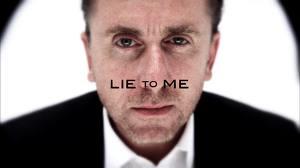
lietomeI loved the show Lie to Me for its use of micro expressions–small facial ‘give aways’ that revealed the truth no matter how someone tried to stop it.  But what do these facial tics and bits of body language have to do with dialogue? Isn’t dialogue about putting down what someone is saying in your story?  Well yes–and no.

I’m doing a workshop on Dialogue for Outreach International Romance Writers starting this next Monday and I chose the title to be “Don’t Let ‘Em Say What You Mean.” The title applies to a common mistake that many beginning writers make–the dialogue is too “on the nose.” That phrase is used to describe dialogue that is clumsy–it’s too specific and not the way anyone really talks.

This kind of dialogue crops up when a writer has a character explain his or her actions, give too much information about his or her past (with no motivation for providing all those details), or explain the plot to another character so the reader will catch up. Now, all of this can be done in character and brilliantly–but for most of us, the goal is to weave subtext and have characters not really say what they mean.

You want your characters to lie–and tell white lies. You want them to exaggerate. You want them to duck questions and change topics. Above all, you want emotion to drive most of what a character says. And this brings us back to those micro expressions and bits of body language–because what a character does while he or she is talking is a tip to the reader that something more is going on.

Do you really believe the story the wife is telling while she also fidgets with her wine glass and licks her lips and keeps looking away? Do you really think the guy likes his brother’s pal–even if the guy says he does–if the guy’s smile looks more like a grimace and he’s giving narrowed-eyed stares at the brother’s pal? Do you really think the little boy did not take the candy when he swears he didn’t if he hides chocolate-stained hands behind his back? Yes, those are all lies, but they’re also giving sub-text–more is going on underneath the dialogue than just the words that are spoken.

Now sometimes you do want your characters to be blunt–and honest. But even then, a character needs good reasons to be that blunt. Maybe it’s a habit. Maybe they’re fed up with the other person and want to drive them away. Those motivations have to be made clear to the reader.

Above all, a story must interest and keep a reader’s attention–and to do that you need dialogue that sparks with tension and conflict. It doesn’t have to be world-shattering conflict, but you want more going on underneath your words as characters work to get what they want in each scene. You want characters who don’t say what they mean, who go the long way around to get to a point, who offer indirect statements, and who sometimes never answer any questions. Always look for better ways to get more of your characters’ emotions on the page and less of their explanations.

And for more dialogue tips you’ll just have to take the workshop.