There’s always a big question with any writing—what do you put in and what do you leave out? This is not just confined to scenes and characters, but also to information, particularly to research to make a story come to life.
This may be why I’m also drawn to cooking—it is still the same idea of what do you put in and what is better left out. Food in general is just a terrific topic. When it comes to history, it is fascinating both how tastes change and how much stays the same. For example, the English classic ‘Toad in the Hole’ (such an odd name, since it has no toads and not much in the way of holes) goes back at least to the 1700s. That was a time when cookbooks really started to flourish.

Cookbooks are both an insight into a period and also something of an insight into a way of thinking. I love that earlier cookbooks use measurement such as “a good handful”. Is that my hand? A small hand? A man’s big hand? And then there’s ingredients such as “blade of mace” (I had to look that one up). Then there’s the spellings to deal with, and how sometimes the instructions leave out some steps, assuming that everyone knows the obvious.
Assumptions—that brings me back to thinking about recipes and the idea of leaving in or out. We sometimes assume someone will know something, but what if the reader doesn’t get it? What if the assumption is wrong? The opposite can be just as bad. We assume the reader doesn’t know so now we slip into overexplaining. Too much detail can be as bad as too little.
One of the keys I find is to make certain the details are always interesting. I find this is true when I did into those old cookbooks.
Two different authors will have the same recipe, but one manage to infuse energy and interest into the writing. This can be done with a point of view put onto the writing. It can also be done with a just a little finesse. There’s a difference between “put the chicken in the pot and boil until done” and “put a fine chicken into a gentle simmer of water and cook until plumped”.
In May I’m doing a workshop for Regency Fiction Writers on Regency Food and Seasons—always good to put those two together (sometimes I think very few people these days know what a truly ripe summer peach tastes like). It’s a workshop I’ve done before, but with history you can always learn more. That means dusting off the writing for the lectures, and more dives down research rabbit holes…and having to make that call as to what should be put in and what is better taken out.
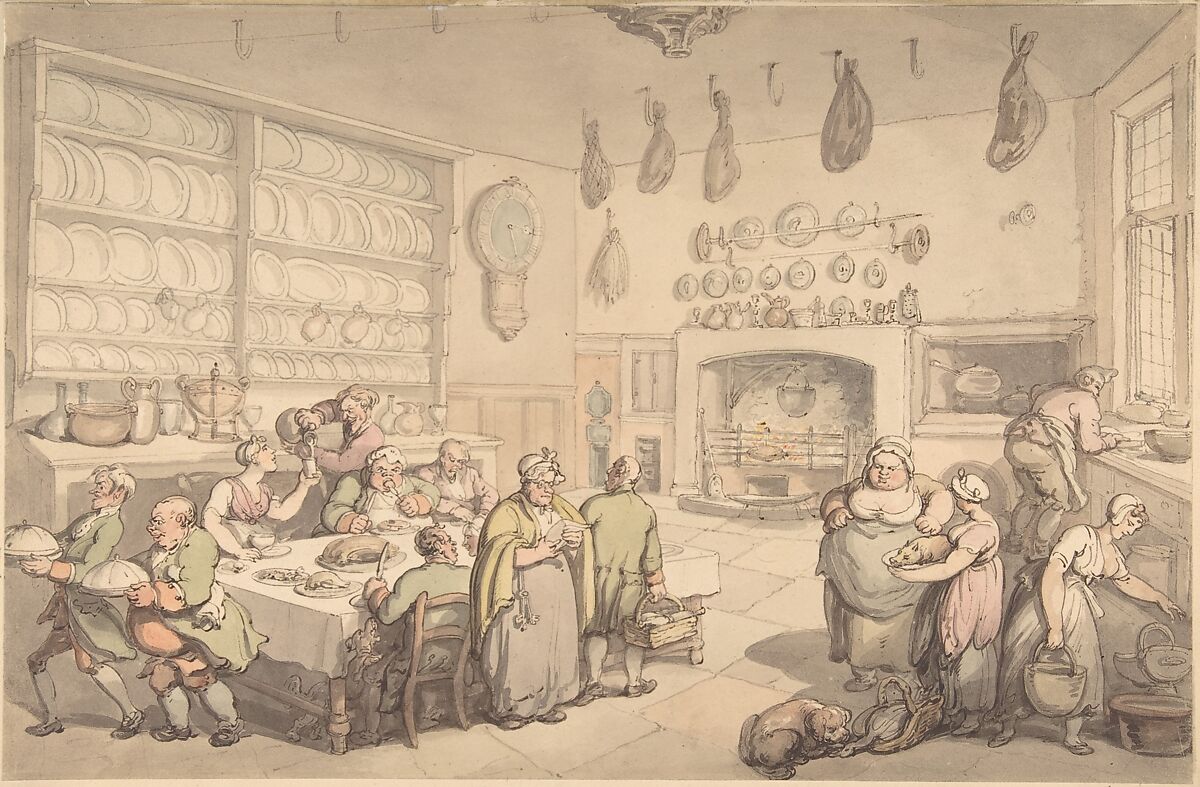
The workshop covers far more than seasons, with a look at kitchens of the era, markets (particularly those in London), a jaunt across the seasons of the year and holiday fare, shops for food in London such as the Italian Warehouses, the eating houses available in places such as London. It’s a broad look at an even broader topic, covering cookbooks of the era which offer up some great recipes, and just some things I couldn’t leave out just because sometimes it’s the cool details that add that spark of insight into a time and place.
For more about the workshop head to Regency Fiction Writers.
 Shannon Donnelly's Fresh Ink