Tag Archive | theme

Finding the Theme in Your Story

Fountain Pen, Paper and writing

I’ve been reading some contest entries of late, and one thing that struck me is that I don’t see the point of the story emerging right away to hook me into the story. Theme is the point of a story–it is why it has to be written. It may be something a writer naturally puts in (I envy those folks), but most writers need to think about theme and make it stronger by intentionally building it into the story and weaving it in to everything.

But let’s start with a definition: Theme is an idea that recurs in or pervades a work of art or literature.

Another good definition is that theme is the underlying idea an author is trying to convey to an audiences.

If you write a novel, spend weeks and then months catching it word by word,
you owe it both to the book and to yourself to lean back
(or take a long walk) when you’ve finished and ask yourself why you bothered—
why you spent all that time, why it seemed so important.
In other words, what’s it all about, Alfie?  Stephen King

In other words, the theme is really the ‘big idea’ that is woven through the entire story. It is a critical belief about life that transcends cultural barriers. It is usually universal in nature, and works best if it is integral to the story, instead of only being used once (which can make it come across as heavy handed, like a club over the head).

Another way to think of theme is that it is a touchstone. Theme is going to help you develop your characters, their main goal, and the main need for each character. It will tell you what you need in the story, and what you need to leave out. It will tell you what should be the dark moment or climax of the main character’s arc. Theme is what makes a story resonate with a reader long after the story has ended.

Theme can be a statement, or a question posed to explore, and smaller themes may echo the larger one. You do have to be careful about making theme a statement. That can make the writing preachy, or come across as a message instead of strong story with vital characters. Sometimes it is best to go with a theme that has you needing to answer that question.

I write entirely to find out what I’m thinking,
what I’m looking at, what I see and what it means.
What I want and what I fear. Joan Didion

Theme also tends to work best if it is something that, as noted above, resonates with you, the writer. If the theme is just an intellectual exercise and doesn’t hit home with you, it can come across to the reader as ‘shoved into place’ or not really fitting—it stands out like a red flag in a field of green grass.

Now, when I say theme is what the story is really about, this does not mean theme is the action that describes the plot.

As in: Two people fall in love, but their families hate each other due to a long-standing feud.

That describes the action of ‘Romeo & Juliette’, but not the theme. Now there are several smaller themes int he play, but a main theme is that “We cannot overcome our fates.” Romeo is fated to fall in love with Juliette. Their love is fated to have a tragic outcome. And Mercutio—the man caught in the middle—is fated to die.

Romeo and Juliet Balcony Scene by Dicksee (lat
Oil Painting by Frank Bernard Dicksee, 1884

To look at another example, “Lord, what fools these mortals be,” pretty much comes right out to state the theme of “love makes fools of us all” for A Midsummer’s Night’s Dream.

Theme may be explicitly stated by a character. (In Blake Snyder’s book on screenwriting, Save the Cat, he argues for this to be a beat in the story, and indeed this can make for a great scene.) Or theme may be woven into motifs and thematic elements—such as Mercutio’s death foreshadowing the tragic fates awaiting Romeo and Juliette.

Here is one simple rule to remember:
Characters carry theme. James Scott Bell

Theme does need to be both rejected by the characters, and then proven at some point, usually in the climatic moment of the story. You usually see theme best at the ‘dark moment’ of a story.

Theme shows up in songs as well (beyond thematic melodies). Think of favorite songs that really resonate with you and you’ll find more than a catchy melody. Theme can be something you explore in one book, in several, or over a lifetime of writing.

‘Nowhere Man’ embodies one of my favorite themes—the hero completely out of his element.
It’s really near and dear to my heart.
Ruth Glick

I used a theme of “What is too great a compromise of self in any relationship?” to explore the idea of compromise to make a relationship work, and I used this over three books. Another theme I’m drawn to is “How do you find a sense of belonging in this world?” I used that in the Proper Series Regency romances I wrote. You may well find yourself drawn back to the same theme over and over. It’s quite possible to either have a lot to say about a theme, or do want to really push into a theme in different ways. A great theme can be explored over a lifetime of work. It’s all about if you still have more to say or discover about that theme.

So…how do you find your theme?

To Learn How to Identify Theme

Pick out three favorite books from your keeper shelf.  Look at the opening when the protagonist’s life is thrown out of balance, and then look at the dark moment.  See if you can identify theme from those two moments–it’ll be a moment early on when the protagonist doesn’t think that theme holds true, and the dark moment is a moment of realization that relates to the theme.

If you can’t find the theme there, head to three favorite movies–again, look for that early scene when the protagonist is thrown into hot water, and then toward the end when the protagonist is faced with the toughest choice.

Finding Themes

With a pen and paper (writing by hand connects left/right brain in a different way than does a keyboard) Write down what ticks you off? What lights a fire inside you? What do you feel compelled to write about? Jot down three things that hit you emotionally.

Now….look at a story you are currently working on. What is it about? Write a sentence that poses a core, emotional question for that story. Then compare the two—are you writing about something that really hits you emotionally?

Another Way to Find Theme

Write down a paragraph about your main character’s arc in the story you’re working on.

Now, read it over, and see if you can condense this to a one sentence theme. The main character’s arc—what the protagonist faces as a dark moment—is going to help reveal theme to you.

If you can’t find your theme right away, don’t sweat it. Start writing, and wait for the theme to show up. That sometimes happens anywhere from 40 to 100 pages into the story. That’s when you can go back and start weaving it. Or even get the book done, and then figure out what needs to be cut or added or changed. Editing is your friend–and sometimes the ending reveals the true beginning, along with that theme.

The first draft is just you telling yourself the story.
—Terry Pratchett

Why You Need a Theme in Fiction

Theme is perhaps one of the most neglected areas of any writing instruction. This may be because it’s highly personal–or because some writers instinctively know how to weave in theme, while others don’t. I had to learn about theme, and its importance to make a story resonate.

I learned about them when I learned about story structure. It’s a vital element. Theme is a writer’s touchstone. It not only makes a story resonate, it tells you want needs to be in a story, and what should be left out.

Using theme in all major turning points makes a story structure work. It creates the main character’s arc.  Think of the movie Casablanca where Rick has the papers of transit–and keeps getting hit with choices about who is he going to give these to–and he starts off all hard-nosed and making choices about selling them, not giving them to anyone who is desperate….but at the end he gives them to Ilsa and her husband so they can escape–those papers are used to SHOW Rick’s changing through the choices he makes and becoming the hero we really want him to be. That’s theme at work.

I’m going to be teaching a workshop on theme for Hearts Through History this October.

We’ll cover:

  • What is theme—a clear definition.
  • Why does a story need a theme?
  • What is too specific, and what is too vague?
  • How to find your theme.
  • Distilling your theme to one sentence.
  • Relating theme to characters.
  • Developing goals and motivations around your theme.
  • Weaving theme into turning points in your story structure.

A great theme can be explored over a lifetime of work—but if you’ve never thought about what theme can do for your stories, or if you struggle with keeping a story on track, this workshop can give you some new writing tools.

Plot, Character & Theme

I’m doing my Plotting from Character workshop this November and as usual before a workshop I’ve been thinking about the elements that go into the workshop–and into a story.

Too often what I see in manuscripts is that “stuff happens.” Now, that’s not bad in an action-packed story, except it can end up not being very satisfying to a reader. Ideally, the stuff that happens has something to do with the main character having tough choices that reveal the character of the character, and has even more to do with theme. So let’s start with theme.

The importance of theme is often overlooked. Theme is what the story is REALLY about–it is what is going to resonate with the reader and create a greater satisfaction. Theme is the touchstone for the writer, too. If you get lost, look to theme to get back on track. So…without theme, a story tends to wander. You might even think of theme as the core phrase or question that puts a focus into the story.

This focus helps you set up a core goal that will lead to conflict and then a crisis (or dark moment, where the protagonist must face his or her greatest weakness, and either overcome it, or not, leading to death of the old self, or in a tragic tale, the character’s death for failure.

What does this have to do with ‘plotting from character’?

With theme in place, the writer can start asking–“What characters do I need to explore this theme?” And also–“What needs to happen to face my protagonist with tough choices related to theme?” In other words, it is no longer about coming up with general stuff, but now coming up with events that will test the protagonist based around the theme, or core ideas the protagonist needs to learn.

This helps greatly in avoiding cliches, such as the heroine gets kidnapped, or the hero and heroine have a misunderstanding after the hero’s ex tells the heroine some lie about the hero. Theme and a specific character will generate a very specific story–and this brings a freshness to the story.

How do you apply all this?

Well, theme and character go hand-in-hand. It’s really hard to develop just one of these, so you have to do them together. For example, if you’re story is REALLY about how there is only fear and love, and the stronger of these will overcome the other, then you know you will need a character who has deep fears to overcome, and faces the need to overcome these in order to have a great love. You’re also going to have a character who doesn’t overcome fears, and a character who is fearless. Those combinations will let you best explore that theme. With that in place, you still need to develop the characters–starting with the protagonist–so that the characters do not come across as flat (or cardboard). And you’re going to develop tougher and tougher choices for that protagonist that fit into the main turning points of the story.

This means the action of the story is going to come from your characters–from facing characters with tougher and tougher choices. Because your characters are yours, this helps you avoid any cliche action in the story. That’s plotting from character. But it’s hard to do this without some idea of theme.

Now I will say some writers know how to do this instinctively (I’m not one of them). I also hold that if you know your theme up front, it is a lot easier to weave it into the story–not with a heavy hand, but a light touch that makes the theme (and the story) stronger. Is this easy–no, not really. But it is well worth it for the reader in that you’ll end up with a stronger story that makes the reader keep thinking about that story long after the last page has been read.

How do you Plot?

notquietThere are as many ways to plot as there are writers. However, one thing I’ve learned over the years is that if you have an idea where you’re going, it can save you from having to do massive revisions. This is not to say you have to know every detail. Sometimes knowing too much can keep you from writing the story–you feel as if it’s already been told.

A balance between too much and too little is my happy spot. I want to know the big moments in every act. I want to know the character arc I’m building–and I want that arc to be the story arc. That’s where I see a lot of writers get into trouble–they build an action arc instead.

Now action can be great–in a mystery, or SF, or a Western. It’s not so good in a romance, which has to be character based. And character-based stories are what I prefer. But character-based stories need to be plotted from the character (not the action). This idea is what led me to my Plotting from Character workshop, which I’m teaching this September for the Contemporary Romance Writers.

handsThe idea behind the workshop is that if you plot from trying to think up actions to happen, you’re more than likely going to end up pushing your characters around as if they are paper dolls. The characters are going to come across as one-dimensional and not well motivated to take the actions demanded by the plot (because the plot is being pushed onto them, not pulled from who these characters are). The other problem is the plot is going to seem contrived–the author will have to manipulate the characters to make these actions happen. That’s going to strain the reader’s ability to believe in these characters (and their situations).
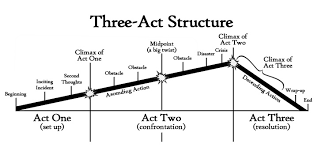
How do you avoid this? Well, that’s the point of the four-week workshop. But there are some tips:

  1. Create one main character–this is your protagonist. I know this seems obvious, but it is amazing how many writers write as if they are really unsure who is the protagonist. This is not the narrator. This is the character who changes the most in the story (and who faces the most problems).
  2. Create an external goal for the main character that is tangible, so the reader knows if the character gets it or not. (There should be consequences for failing to achieve the goal. Failure should be personally costly to the main character. And those consequences are the motivation for wanting this goal.) This will drive your action and needs to be known to the reader as soon as possible (in the first ten pages is best).
  3. Figure out the main characters’ person’s core internal need. This should be something in conflict with that character’s goal so you get automatic conflict for that character between what that person wants and needs.
  4. Make sure you have strong motivations (the why) for a character’s core need. Discard the first three or four ideas (those will be clichés).
  5. Internal motivations are strongest if tied to a specific event in the character’s formative years—create these scenes (you may use them in the story).
  6. WHY is the most important question to keep asking and answering–why would this person act this way? Why do they want that thing? Why must they do this now? Never stop asking this question.
  7. Have a theme in mind–it will help you enormously as you shape all your characters and the story. Theme helps you figure what to put in and what to leave out.
  8. Create secondary characters around the main one, with clear needs, goals and motivations for every character–and with more and more conflict.
  9. Layer in strengths and weaknesses for all your characters–develop them so characters do more than show up to advance a plot.
  10. Leave room for your characters to surprise you.

Obviously, there is more to the art of plotting from characters. But if you keep the story focused on your characters–and keep asking would this person really do this?–then your stories are going to become much stronger.

3act.png