Tag Archive | protagonist

Picking Your Protagonist

The protagonist—your central character—needs to be worthy of a story. The protagonist also needs enough going on to carry the story. One of the big problems I see in a lot of romances that aren’t working is that the writer is trying to make both the hero and heroine the protagonist, and that often leaves the story unfocused. Now, every character needs to have things going on—character arcs are important—but with genre fiction, one main character arc helps to give a story focus and also helps to keep the reader involved. Can you break this guideline? Sure, but think of your protagonist as the central tent post to a story—without that, everything sags or falls. (I use an image of my dog, Inky, because he definitely thought himself to be the protagonist of all stories.)

Inky

The protagonist needs some things set up so the story works better:

1-Conflict. Yes, it’s obvious, but there’s no such thing as enough of this. And this isn’t just external challenges to overcome. Protagonists are more interesting if they have internal issues. You want to set up issues, and personality clashes, and personal problems for the protagonist.

2-A specific past. This means a detailed, specific past. This where I see a lot of writers going for vague. How many characters out there have parents who died, or a rough childhood, or were bullied? You can count these by the thousands, because that description is too vague. If you want your protagonist to stand out and be worthy of a story, make them unique by making their past highly specific. The woman whose parents were run over by a rhino while they were on safari when she was ten and stuffed into a boarding school—that’s starting to shape a unique person. Or the boy who grew up traveling with his parents in a VW bus because they wanted to see the world—he’s got some interesting stories. Details make your characters come alive—never settle for less than highly specific.

3-Strengths and flaws. It’s too easy to focus on just one side of this. The hero who is not only handsome, but tall and talented, and just too good to be real. The heroine who is beautiful and brave and fearless. Or even the bad guy who is nothing but mustache-twirling evil. Characters that don’t have both flaws and strengths start to be boring. A protagonist who doesn’t screw up—or who does nothing but screw up—is going to lose readers. Do yourself a favor and make the main character’s main trait something that is both strength and a flaw—most traits come with a good side and bad.

4-Meaningful habits. We all have these. Twirling a lock of hair. A favorite phrase. A toothpick tucked into the corner of a mouth. Cracking knuckles, biting a thumbnail, tucking a quarter into a pocket. Your protagonist will be more interesting if you figure out not just habits, but specific habits that reveal something about that person. The person who has to organize any bookshelf she sees by topic is a different person from the one who never steps into a cab with a license plate that has the number thirteen on it. Make your protagonist worthy of a story by giving them meaningful habits.

5-Something they want. The best characters always have something they want—something they really want, something they really, really want, and something they really, really, really want. Go beyond that first want and dig deeper. First, second, and often even fourth ideas are usually clichés. These ideas jump at you because you’ve read them so many times. Always ask more of yourself and your protagonist—get down to what they really, really, really want. Do this not just for the story, but for every scene in the story, too.

6-A unique voice. Every character needs a unique voice, but a protagonist needs this more than any other character in your story. To be worthy of being at the center of the story, the protagonist needs to stand out—that means his or her dialogue needs to be sharp and needs to be something that would make any ‘star’ want to play this role. To help with this, image your favorite actor in this role—give this actor the best lines, such great lines that this actor would come up and hug you.

7-Likeability. A protagonist, to be worthy of his or her own story, needs to be likeable. The reader needs to identify with that person—the protagonist carries the reader into and through the story. Now, the protagonist can do things that makes the reader want to slap that character, or can make mistakes—in fact, that often leads to a more likeable person. But look closely at what actions your protagonist takes—does he treat others (who don’t deserve it) badly, does she kick the cat, does he make the same mistake repeatedly, does she do too much admiring of her own looks in the mirror? This is where it’s all about balance. A heroine can kick the cat if that cat is really a demon about to kill her—the action will seem justified. But if it’s a pitiful, cute kitten, that protagonist has just lost the reader’s sympathy. Make sure your readers understand the protagonist’s actions and motivations—we all tend to like people we admire and people whose actions we understand.

9-Friends and/or family. This can be one friend or several, it can be a big family or a small one, but friends and family serve to give your protagonist three dimensions. Allowing the reader to see the protagonist interacting with friends and family helps make the protagonist more interesting and more likeable by being more understandable. It also is a chance to layer in extra dimensions as the protagonist will interact with different people in different ways. If you have a really rough, hard-to-like protagonist (who must change in the story) give him or her a best friend who is easy to like—that person’s liking for the protagonist will convince the reader there are good qualities in the protagonist. This is also a great way to show contrasts—the tough hero can let his elderly mom boss him around, or the feisty no-nonsense heroine could be mush when it comes to helping her little sister play dress-up. Use the characters around the protagonist to make the protagonist more worthy of being at the center of the story.

10-Action. Let’s face it, a character that sits and thinks a lot is just not that interesting. Even Shakespeare sends Hamlet off to visit graves and spy on his uncle and set up plays and a duel—Shakespeare knew enough to put his protagonist into action. Actions show the reader the character’s personality better than anything else. If you have a protagonist who is a marksman, have him shooting a gun and making patterns on the target. If you have a protagonist who is a financial wiz, have her signing a deal that nets her an easy million. A character who is worthy of his or her on story is one who does things.

11-A Relationship to Theme. This is something that can be easily overlooked by writers just learning the craft. The protagonist is going to be the person who realizes theme, and who grows and changes as a character due to that theme. This is what will make a character arc—and the protagonist—resonate with readers.

12-An Antagonist. This can be another character, a sympathetic character or one that isn’t sympathetic, or it can be a situation or even a character trait with the protagonist that causes even more conflict. As the saying goes, the protagonist is only as strong as the antagonist—a really good antagonist can make the protagonist seem more likeable, more admirable, and can greatly improve the story. But this means the antagonist is that this must be a fully fleshed-out character, otherwise this can also make the protagonist seem one-dimensional.

Above all else, find out whatever it is that you need to know to make your protagonist real to you. If you don’t believe in your main character, it’s just about impossible to get a reader to believe, too.


Conflict From the Inside Out

conflictlockI first heard about conflict lock from Bob Mayer–he does great workshops on this. I don’t know if he heard it from someone else, but it has spread, however, I’m still surprised to find folks who don’t really understand (or put in) strong conflict.

The first thing you have to do, however, is figure out who is the protagonist and who is the antagonist.

In a romance, many people think BOTH the hero and heroine are the protagonist–that’s not possible. There is one protagonist in every strong story–yes, even in an ensemble cast which may have very strong secondary leads, there’s still a protagonist.

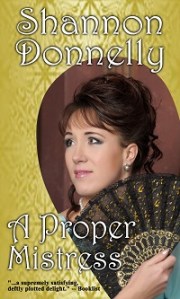
Under the Kissing Bough_200The other thing to work out is if the other person in the romance is the antagonist or not–it doesn’t have to be set up that way. For example, in my book, Under the Kissing Bough, the heroine is the protagonist–she has to change the most (she has the strongest character arc, which makes her the protagonist). The antagonist (the person from keeping her from getting what she wants) happens to be the antagonist. Now…let’s look at another book. In A Proper Mistress, the hero is the protagonist (he has to change the most)–but it’s the hero’s father who is the antagonist. He’s the one causing the hero’s conflict–and the hero is causing his father conflict. That’s a conflict lock.A Proper Mistress

Very often what I see in manuscripts is that the conflict is contrived–it comes from the author manipulating characters as if they are paper dolls–and there is no real conflict from issues and goals. There’s no conflict lock.

So…how do you make a conflict lock?

As noted, you start by figuring out who is the protagonist and who is the antagonist.

Now you have to figure out what are your characters’ main goals.

Goals create conflict if this is one thing that only one person can have, or is two opposite outcomes, or is the same outcome with vastly different approaches.

The best summary I’ve heard of this is also from Bob Mayer—know what your characters want, what they really want, what they really, really want, and what they really, really, really want.

What does that mean?

  1. What does a character want?

?????????????????????????????????????????????????????????????????????????This is the obvious goal, and it’s usually external. This is the goal that drives the plot forward. In one of my books, Paths of Desire, the heroine’s external goal is to get married to a rich man—yes, she’s a gold digger. She has reasons for this buried deep in a past which has left her insecure. But this a surface goal—it’s not what she really really wants.

The obvious goal (external goal) works best if tied to deeper needs and issues, and this is where you start to dig deeper into your characters.

  1. What does a character really want?

Under ever want is a driving need—if a character just wants something, that’s a weak character. So you did deeper and ask why? This why becomes the really want. In the case of Thea from Paths of Desire, her obvious goal of wanting a rich husband comes from her really wanting security—she thinks if she’s rich and married she’ll be safe from an uncertain world. Again, this want has deep roots (the deeper, the better) that go back to a poverty stricken childhood. But this is still not enough.

  1. What does a character really, really want?

When you find out what a character really wants, ask: But what do they really, really want? You’re now starting to dig down into what makes that character tick. In Thea’s case, what she wanted was a rich husband, what she really wanted was security—but what she really, really wants is to not end up like her mother.

This is where you hope the character will surprise you. In Thea’s case, I hadn’t thought about her past, but when this came up it was an “of course” moment. Thea’s mother has ended up abandoned by a man (Thea’s father)—she’s ended up broken because of love. Thea’s determined to be practical to marry rich and have her security—but it’s her secret fear she’ll become like her mother. However, we’re still not done. We have rich material, but you want to dig deeper.

  1. What does a character really, really, really want?

This is where you get down to bedrock in a character’s psyche—this is what drives this person and makes them do stupid as well as smart things. This is where deep emotions brew—and where actions are driven by core issues for that character. In Thea’s case, her brother died when Thea was just a girl. The boy was even younger, and he died because there wasn’t enough money to pay for a doctor. That event both scared the young Thea and drives her still—she doesn’t want herself or anyone she loves to ever be hurt by lack again. That’s what she really, really, really wants—to have enough.

Now all of this is great stuff, but without obstacles (and other characters to stand in the way), you’re not going to have much in the way of conflict. A character that can move forward without problems is going to give you a boring story. So…what gives you conflict. Working out characters who want things that conflict with the main characters wants.

You also want goals with consequences–failure to achieve the goal will mean a change in status (not that things stay the same). The goal works best if it really, really, really matters to the protagonist (and the antagonist). And you want the goal to reflect something to do with the theme–or the story won’t resonate as well as it should.

You also want to look at your other characters, find out what they want and set them up to provide maximum conflict.

In every book, I love it when ever character wants something—and really wants something. And really, really wants something. And all of this causes trouble for the main character. In Paths of Desire, Thea (of course) meets a man who lives for adventure—he’s also married. He’s the last man she should become involved with. But he wants to keep his friend, who is rich, away from her, and that brings them together. His goals are not only different from Thea’s, but tangle with hers in a way so that something has to give—one of them has to change in order for them to find happiness together.

And that brings up the next issue with conflict.

If a character can easily give up his or her goal, that’s not a core, strong goal.

This is where you have to be honest with yourself—and dig deep for those very core goals. You don’t want a character who can casually say, “Oh, never mind, it wasn’t that important.” This leaves readers feeling cheated by the story.

Recently I watched a movie in which Will Farrell plays a man who loses his job and his wife leaves him on the same day (Everything Must Go). His company car is repossessed after he slashes his bosses’ tires and his soon to be ex-wife freezes the bank accounts to try and force him into a quick divorce. And she puts all his stuff on the front lawn and changes all the locks on his house. Everyone thinks he’s having a yard sale, so that gives him some money—and he starts to live on his lawn.

Now this is a character that seems without a goal—but he actually has one. His goal is simply to get by every day—and get hold of drink. He wants oblivion. But it’s not what he really wants. He really wants to get back at his wife and his ex-boss. But that’s not what he really, really wants. What he really, really wants is to get his life back. But that’s not what he really, really, really wants. His old life was a shambles, too—and he gradually realizes that. And what he really, really, really wants is to find his way back to a fresh start.

The really interesting thing about the story is watching the character cling at first to every stupid little thing that is his—all the junk on the front lawn. At first, he’ll sell nothing. He has a signed baseball worth thousands (not that he can sell it given he can’t get anywhere), and he has more stuff that no one needs. He hangs onto everything—at first. But the stuff is a symbol of his old life. As he starts to let it go, he starts to make room for a new life. The stuff becomes a metaphor for living. And letting go of it shows both his conflict and his growth.

Because the stuff is important to the character, letting it go is difficult—if the character had walked away without a look back, there would not have been conflict or a story. And it’s what the character wants, really wants, really, really wants, and what he really, really, really wants that drives the story.

That’s the kind of conflict you want to build into your characters. If you build this into the characters when you are first starting out with the story, you won’t have to contrive additional conflict. You’ll have tons of material all set up.