It is easy to think of Regency England’s upper class being full of starch–going to the opera and concerts for classical music and to the theater for Shakespeare and high-brow plays. However, the pantomime was big business and drew in an audience from all classes. The tradition of a Christmas ‘panto’ was already firmly entrenched by the Regency era. In many ways, the pantomime was the forerunner of the modern day stage musical due to Parliament’s Licensing Act 1737 which limited spoken drama to patent theaters–meaning the three Theater-Royals of Drury Land, Haymarket, and Covent Garden. The Theatrical Representation Act 1788 relaxed this to license occasional dramatic performances that lasted up to 60 days, for such theaters as the Lyceum, but most theatrical runs were of a few weeks, or as even as little as a week or two in the countryside.
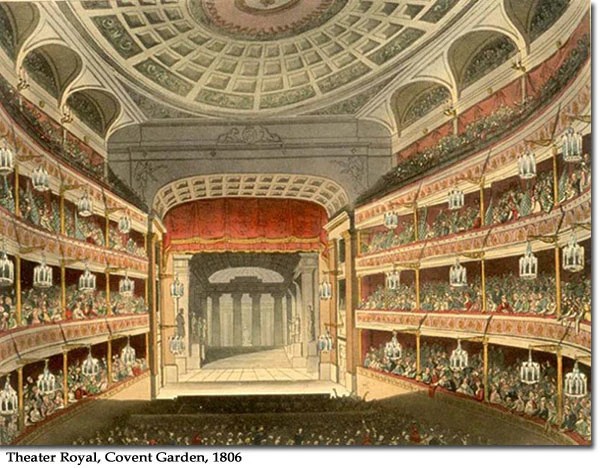
Since pantomimes were all about comic songs and dance, colorful costumes, and spectacular effects (characters flying in or out, water scenes, falls and leaps, and all manner of action) and a good one drew in paying customers, this was the bred and butter of theaters such as Saddler Wells where Joseph Grimaldi often performed. The pantomime was a huge crowd pleaser, but audiences also expected great performances, and this is where Joseph Grimaldi becomes famous.
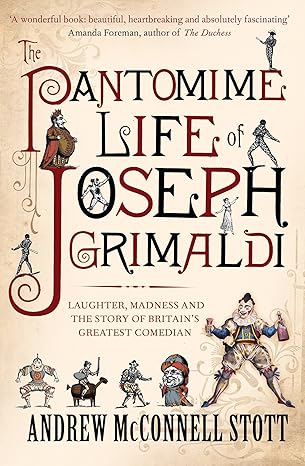
As noted by the description of the book, The Pantomime Life of Joseph Grimaldi: Laughter, Madness and the Story of Britain’s Greatest Comedian Paperback by Andrew McConnell Stott, “…Joseph Grimaldi (1778-1837) was the most celebrated of English clowns. The first to use white-face make-up and wear outrageous coloured clothes, he completely transformed the role of the Clown in the pantomime with a look as iconic as Chaplin’s tramp or Tommy Cooper’s magician. One of the first celebrity comedians, his friends included Lord Byron and the actor Edmund Kean, and his memoirs were edited by the young Charles Dickens.” Stott’s book is excellent not just for his details about Grimaldi’s life, but for details of the theater, both the performances and what went on backstage.
Pantomime is still popular in England, and Mother Goose is again on the London stage (you can catch a look at a modern version on YouTube), but opened as ‘Harlequin and Mother Goose or The Golden Egg’ on Boxing Day in 1806 with Grimaldi playing the Clown to rave reviews. (A summary of that panto can be found here, but all pantomimes used familiar characters, usually those from folk or fairy tales, and often with Harlequin being the star, or he was until Grimaldi’s Clown made that role the main draw.) Even the larger patent theaters put on a pantomime to pull in audiences–the Mother Goose pantomime penned by Thomas Dibbin premiered at Covent Garden.
Stott’s book is excellent for anyone interested in theater or the Regency era–the details are marvelous. Other articles:
Theaters of Regency England – https://regencyfictionwriters.org/the-theaters-of-regency-london-by-regan-walker/
Joseph Grimaldi, Clown – https://spitalfieldslife.com/2012/02/05/joseph-grimaldi-clown/

 Shannon Donnelly's Fresh Ink