Tag Archive | books

Flow

Recently I read a book where the flow of the story was chopped off in the jump from chapter one to chapter two. I’ve also read books where the flow was interrupted from one sentence to the next, or one paragraph to the next. Flow hits on all levels from word to word all the way up across the story.

Flow is one of those important, yet, neglected writing topics. This may be due to being something difficult to really nail down.

We read about pacing all the time—how the story needs to have good pacing and not sag in the middle. Flow is a little different. Flow is about linking thoughts to gently pull the reader along. The Truman Capote quote may sum it up best, “’What I am trying to achieve is a voice sitting by a fireplace telling you a story on a winter’s evening.” That is a very good way to think about flow. It can make the writing seem effortless, very much like a river that is just moving along.

Desna River at dawn. Ukraine

The flow can be in fast paced or slow stories. Flow is more about linking one word to the next, one sentence to the next, one paragraph to the next, one scene to the next, and one chapter to the next. It is about using words and sentences in such a way that the reader is engaged—but never thrust from the story. It is very much like a river’s flow that move on without the reader noticing the water is being deliberately move.

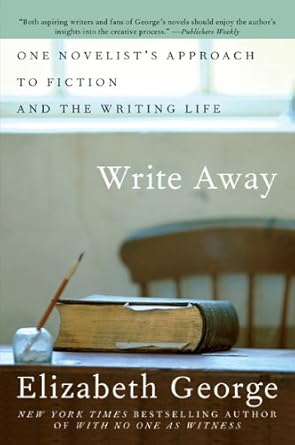
Write Away by Elizabeth George Book Cover

This idea was first introduced to me by Elizabeth George’s excellent book Write Away. It is something a writer should think about, but I believe it is something to work on after you get the basics of craft down and you’re looking to bump your writing to the next level. It can leave a writer choked if thought about too much. It also is something that shows up if you read your work aloud.

That trick of reading a story aloud is one that I often think is neglected. Different things show up when you read a story aloud—and it is a pity we’ve lost the habit of sitting down in an evening with one person reading while others do handicraft. Typos jump out, stumbles become clear, and flow—or the lack of it—becomes much more obvious.

Flow is about word choice, but also about sentence structure, and how paragraphs are built. This is why I consider it a more advanced topic for a writer—if you’re still struggling with the basics of building a character, of crafting dialogue, and structuring a scene, flow is something to look at after you finish a book or two.

In an article by David Jass on ‘What Writes Mean by Flow’ he speaks to the importance of syntax and writes that, “…altering our syntax does more than help us write flowing prose; it allows us to get our thoughts off the normal track on which they run.” When it comes to the use of syntax and varying sentence structure Jass quotes Robert Hass, “New rhythms are new perceptions.” This is what someone means when they say the writing is or isn’t fresh.

So…fresh and flow…and syntax. It is enough to stumble any writer into a block—too much thinking about this can be deadly. But if you write enough words, you will start to find your own flow…and when you get to revising what you’ve written this is where a focus on flow becomes important (also called word choices, and syntax or use of variable sentence structures).

One general guideline that helps me is to keep in mine one thought to a sentence, one topic to a paragraph. If I chop up sentences, or paragraphs, I want to do so with intent for the scene and still keep flow in mined even as I look at the pace. Thinking about the emotion behind each word—its connotations as well as its meaning—and looking at how the sentences and paragraphs, and scenes reveal character I want to keep asking a couple of questions. What should the reader feel? And is it all getting too intellectual? Sometimes, if the emotion is on the page, you want to leave things alone.

I do believe that if you write long enough you start to get a handle on flow with a writer’s instinct. I also believe that reading a lot can help with absorbing this idea of flow. It also helps to stop and take apart a sentence, or paragraph, or scene that either thuds for you or has that “flow”. (This is the curse of a writer—you start to read like a writer, not like a reader.) To head back to the analogy of a river running, leading inevitably to the sea, that is why the word “flow” crops up for writing. The story can carries the reader along is the one the reader has trouble putting down—I’ll just read one more chapter, a few more pages…oh, I finished the book and I want the next one from that writer. Flow is attached to a writer’s voice—it’s not just the rhythms of thought, it is the rhythms of intent. It is something that makes writing forever an interesting challenge.

Finding the Theme in Your Story

Fountain Pen, Paper and writing

I’ve been reading some contest entries of late, and one thing that struck me is that I don’t see the point of the story emerging right away to hook me into the story. Theme is the point of a story–it is why it has to be written. It may be something a writer naturally puts in (I envy those folks), but most writers need to think about theme and make it stronger by intentionally building it into the story and weaving it in to everything.

But let’s start with a definition: Theme is an idea that recurs in or pervades a work of art or literature.

Another good definition is that theme is the underlying idea an author is trying to convey to an audiences.

If you write a novel, spend weeks and then months catching it word by word,
you owe it both to the book and to yourself to lean back
(or take a long walk) when you’ve finished and ask yourself why you bothered—
why you spent all that time, why it seemed so important.
In other words, what’s it all about, Alfie?  Stephen King

In other words, the theme is really the ‘big idea’ that is woven through the entire story. It is a critical belief about life that transcends cultural barriers. It is usually universal in nature, and works best if it is integral to the story, instead of only being used once (which can make it come across as heavy handed, like a club over the head).

Another way to think of theme is that it is a touchstone. Theme is going to help you develop your characters, their main goal, and the main need for each character. It will tell you what you need in the story, and what you need to leave out. It will tell you what should be the dark moment or climax of the main character’s arc. Theme is what makes a story resonate with a reader long after the story has ended.

Theme can be a statement, or a question posed to explore, and smaller themes may echo the larger one. You do have to be careful about making theme a statement. That can make the writing preachy, or come across as a message instead of strong story with vital characters. Sometimes it is best to go with a theme that has you needing to answer that question.

I write entirely to find out what I’m thinking,
what I’m looking at, what I see and what it means.
What I want and what I fear. Joan Didion

Theme also tends to work best if it is something that, as noted above, resonates with you, the writer. If the theme is just an intellectual exercise and doesn’t hit home with you, it can come across to the reader as ‘shoved into place’ or not really fitting—it stands out like a red flag in a field of green grass.

Now, when I say theme is what the story is really about, this does not mean theme is the action that describes the plot.

As in: Two people fall in love, but their families hate each other due to a long-standing feud.

That describes the action of ‘Romeo & Juliette’, but not the theme. Now there are several smaller themes int he play, but a main theme is that “We cannot overcome our fates.” Romeo is fated to fall in love with Juliette. Their love is fated to have a tragic outcome. And Mercutio—the man caught in the middle—is fated to die.

Romeo and Juliet Balcony Scene by Dicksee (lat
Oil Painting by Frank Bernard Dicksee, 1884

To look at another example, “Lord, what fools these mortals be,” pretty much comes right out to state the theme of “love makes fools of us all” for A Midsummer’s Night’s Dream.

Theme may be explicitly stated by a character. (In Blake Snyder’s book on screenwriting, Save the Cat, he argues for this to be a beat in the story, and indeed this can make for a great scene.) Or theme may be woven into motifs and thematic elements—such as Mercutio’s death foreshadowing the tragic fates awaiting Romeo and Juliette.

Here is one simple rule to remember:
Characters carry theme. James Scott Bell

Theme does need to be both rejected by the characters, and then proven at some point, usually in the climatic moment of the story. You usually see theme best at the ‘dark moment’ of a story.

Theme shows up in songs as well (beyond thematic melodies). Think of favorite songs that really resonate with you and you’ll find more than a catchy melody. Theme can be something you explore in one book, in several, or over a lifetime of writing.

‘Nowhere Man’ embodies one of my favorite themes—the hero completely out of his element.
It’s really near and dear to my heart.
Ruth Glick

I used a theme of “What is too great a compromise of self in any relationship?” to explore the idea of compromise to make a relationship work, and I used this over three books. Another theme I’m drawn to is “How do you find a sense of belonging in this world?” I used that in the Proper Series Regency romances I wrote. You may well find yourself drawn back to the same theme over and over. It’s quite possible to either have a lot to say about a theme, or do want to really push into a theme in different ways. A great theme can be explored over a lifetime of work. It’s all about if you still have more to say or discover about that theme.

So…how do you find your theme?

To Learn How to Identify Theme

Pick out three favorite books from your keeper shelf.  Look at the opening when the protagonist’s life is thrown out of balance, and then look at the dark moment.  See if you can identify theme from those two moments–it’ll be a moment early on when the protagonist doesn’t think that theme holds true, and the dark moment is a moment of realization that relates to the theme.

If you can’t find the theme there, head to three favorite movies–again, look for that early scene when the protagonist is thrown into hot water, and then toward the end when the protagonist is faced with the toughest choice.

Finding Themes

With a pen and paper (writing by hand connects left/right brain in a different way than does a keyboard) Write down what ticks you off? What lights a fire inside you? What do you feel compelled to write about? Jot down three things that hit you emotionally.

Now….look at a story you are currently working on. What is it about? Write a sentence that poses a core, emotional question for that story. Then compare the two—are you writing about something that really hits you emotionally?

Another Way to Find Theme

Write down a paragraph about your main character’s arc in the story you’re working on.

Now, read it over, and see if you can condense this to a one sentence theme. The main character’s arc—what the protagonist faces as a dark moment—is going to help reveal theme to you.

If you can’t find your theme right away, don’t sweat it. Start writing, and wait for the theme to show up. That sometimes happens anywhere from 40 to 100 pages into the story. That’s when you can go back and start weaving it. Or even get the book done, and then figure out what needs to be cut or added or changed. Editing is your friend–and sometimes the ending reveals the true beginning, along with that theme.

The first draft is just you telling yourself the story.
—Terry Pratchett

Lady Lost – Coming March 2025

Lady Lost

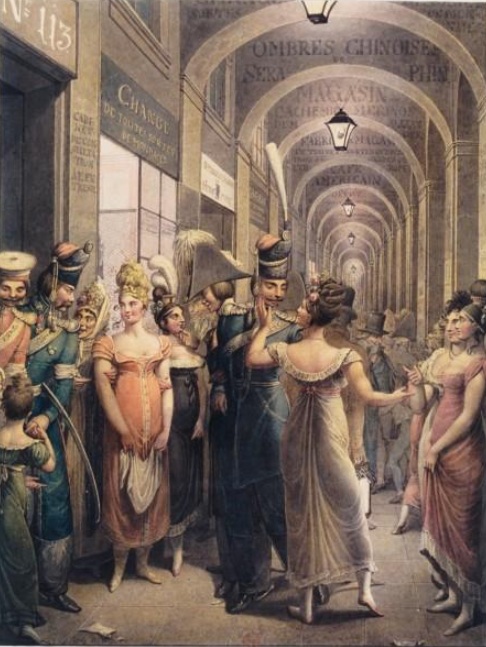
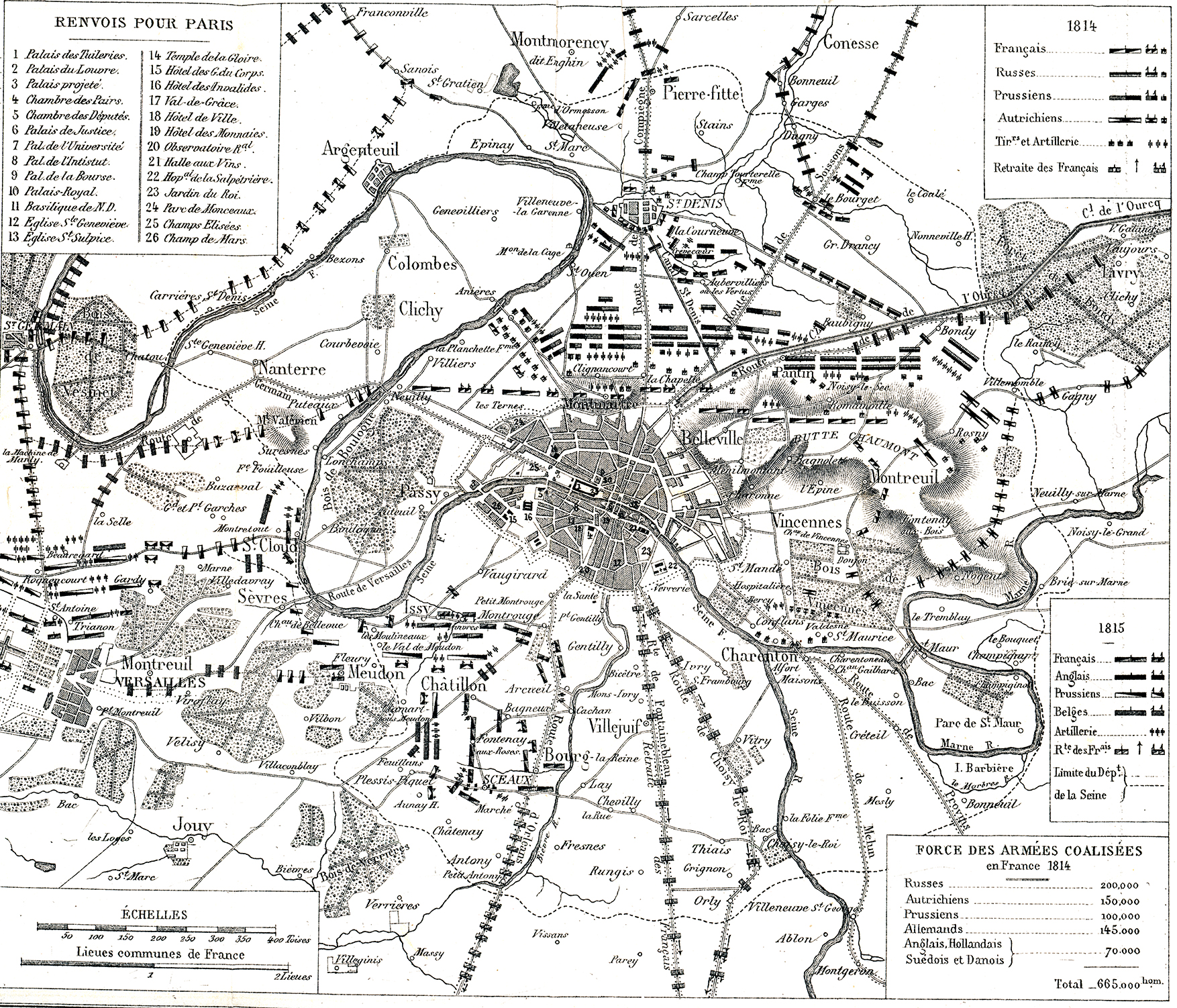
Some stories just take more time—and this one took ages! Part of this is due to the research needed for Paris in 1815. Part is just due to Jules being a reticent character who took a bit of coaxing before he finally agreed to this. Another part comes from the interruptions of life. But at last Lady Lost, the third book in the Ladies in Distress series, is done and coming out March 2025.

Below is an excerpt from the book…

Chapter One
Paris, March 1815

She stepped onto the stage in a ripple of smoke, shadows dancing on the white plaster of the wall behind her. Jules sat straighter in his chair.
The illusion of fog was a good one. It would hide any trap doors. The actress took one step forward, into the light of the stage lamps. Makeup left her oval face pale and perfect—a slash of dark, arched eyebrows, a curve of a red mouth. Under her black cape and hood, the brown of her elaborately arranged hair showed through glistening white powder. Her skirts rustled and the spangles on her gown glinted. The dress belonged to a previous generation, but the woman moved with the grace of youth. She swept the room with a look…a challenge…arrogance in the dark eyes.
For an instant, their stares clashed.
Awareness shot through Jules and tingled on his skin. The woman commanded the stage—and his attention.
Her gaze seemed to linger a heartbeat longer before it shifted. He let out a breath.
With a wave of her hand and a burst of smoke, she conjured a box with thin legs onto the stage. A good trick from Madam de Mystére, otherwise known as Simone Raucourt, the featured act. She was his connection to Henri Allard…and the missing courier.
Shifting restless in his chair, Jules glanced around the theater. It was more of a café with its tables and chairs, and its black-and-white checkered floor. Past splendor haunted the décor with bits of carved columns in dark corners. Two chandeliers clung to the ceiling as if desperate to hold onto past glory, their crystals dusty and dim. The crowd had quieted. Those sober enough to give their attention leaned forward. For an instant, irritation surged that he must wait for his answers.
“Patience, patience,” he muttered, keeping his words in French, not English, his accent that of his old governess who herself had come from Paris.
He let his gaze slip back to the stage.
The woman proceeded to conjurer a bouquet of violets—the symbol for this rebirth of Bonaparte’s Empire. She transformed them into a deck of cards and back again, and threw a few into the audience. They cheered. More cards appeared from the ether. Fanning them out, she changed the suits all to hearts. She managed several other sleights of hand. Coins did not go over well, but scarves in the tricolors of France’s Revolutionary flag had the audience going wild.
Turning to the box she’d summoned onto the stage, she beckoned with a slim, pale hand. An oddly still monkey in a blood-red coat rose from inside the box to perch on its top.
Jules had seen more than a few automata—mechanical beings that ran on some sort of clockwork with gears and cams, metal discs with the edges notched to create instructions. Most played an instrument, while others could write or draw. One, he recalled with a smile, had been an extraordinary swan made from silver. It caught fish from glass rods that appeared to be reflective water.
This mechanical monkey sat before a tiny harpsichord, bits of black hair glued to its head and the backs of its paws. Glass eyes shone in the lamplight with the illusion of life. The uncanny creature mimicked playing a sweet tune, its paws moving over the keys, which depressed on their own. The music obscured the click and creak of the mechanism. Madam de Mystére sang along, a plaintive melody about home and loss.
She had a good voice, a deep contralto that would enchant anyone. An ache wound through her song. The audience quieted. Some stared into their drinks. A few wiped a tear. No doubt everyone here knew someone who had died for France—the wars drained more than a few villages of every able-bodied man. Jules turned his drink on the table once, like winding a watch that might turn time back to better years. The conjurer had power, he had to give her that. Her emotions seemed heartfelt. Perhaps she, too, had lost a brother or father to the wars. He tightened his fingers around his tumbler.
Life had left him wary of maudlin sentiment.
He shifted on the chair and wished he could pull off his boots. He knew himself not in a mood to be pleased. The hour for his dinner had long passed, this café stank of onions, wet wool and the acid of inferior wine, and his feet ached from tramping over this damp city.
Allowing the last note to trail off into silence, the actress held still. The spangles on her dress sparked with each breath. She lifted her hand. The automaton did the same, a small pistol slipping down its coat sleeve and into its mechanical grip.
The audience gasped. Jules did not.
The female magician held up a card. A sharp report stung the air and sulphury gunpowder bloomed. The woman turned the card so all could see the image of the king shot through the center. The symbolism could not be clearer—royalty shot dead. Cheers rose, along with stomping.
Deciding he’d seen enough, Jules stood and gathered his hat and gloves. He tossed a coin onto the table and made for the door at the side of the stage pausing long enough to speak to a waiter to ask directions and pushing a few francs into the man’s hand.
On his way to the dressing rooms upstairs, he spotted a spray of violets on the floor, one tossed into the audience by Madam de Mystére. He hesitated, and then gave into impulse. He swept up the tiny purple flowers. He brought them to his nose only to have silken petals brush his skin. That left him wondering if the woman who had thrown the flowers was as false as the violets.

Pacing Yourself

I’m giving a talk via Zoom for Orange County Romance Writers on November 9 on Pacing Tips and that has had me thinking about story pacing, and what I see so very often in writing contests. It is not a too slow pace, but actually a too fast pace–the story speeds ahead as if the writer is worried about losing the reader’s interest. The problem with this is that this steps all over immersing a reader into a story.

Now we’ve all read lists of great opening lines–some of them are on the verge of being cliche they’ve been quoted so soften. Pacing is about far more than just a good opening hook, however.

Any story needs to set the pace–and I often think about this in comparison to a horse race or a runner in a footrace.

There’s the short sprint that needs to be fast from the start to the end.

There’s the marathon or race over a couple of miles for a horse that needs for early speed not to be so fast it burns up the energy and leads to a lackluster finish.

You can hook a reader with a great opening line, and then lose that reader in the first chapter.

You can have a great first chapter, and then the book sags in the middle and the reader’s interest drops away.

You can also have a great premise, but weak execution means the reader is not pulled into a fully realized world with fully developed characters.

Dealing with all of this is what I’ll be talking about with those pacing tips, but what I’m talking about here is to just take a deep breath–and imagine more. Slow it down a bit. Figure out and put in those vital details that make the world come to life.

I think too often writers worry so much about a fast pace–a fast start–that what gets forgotten is building a scene and enjoying the process. There’s so much about agonizing about writing that we forget we love words–and love to put them together in fresh, inventive ways. We forget to pace ourselves and hurry to finish the scene or the chapter or the story, and forget to weave in all the stuff we love the most.

I sometimes wonder if we slowed ourselves down–read a book aloud, sat on a park bench and watched the world go by, took a drive into countryside with no destination in mind, strolled down a street without the idea of hurry or losing weight–would that help bring more to the page?

That’s one thing that writing by hand does–it slows us down a bit. It gives a little more room to thinking and imagining and a little less pressure to get a word count done. I think we have to look at pacing ourselves as well as our stories.

But there are still some more practical tips that can help–and those go into that talk for Orange County Romance Writers.

The Fun of Something New

In every story I like to try something a little bit different, but I have learned a couple of things about this that I have to keep in mind.

First off, the shiny something new is always more attractive than finishing up the something current–and I have to resist that urge. The something new seems better because it is in my imagination. Once it gets on paper the story in my head disappears and I have to deal with what is on paper. In other words, time to fix things and make it better, which is really the most difficult part of writing. I also hit with every story the point at which I can no longer tell if it is good or bad–it simply just is. That’s the time to trust in the process. There’s a quote from the movie Shakespeare in Love that seems to sum it up best. The wonderful Geoffrey Rush gets all the best lines, but as the play producer Philip Henslowe he notes that even when it is a disaster heading for ruin, somehow it all works out in the end. “It’s a mystery.” (He also says all you really need in a good play is love and a bit with a dog, and it’s hard to argue with that.)

Secondly, as for something new to try out I try to limit this. When I was first struggling with the craft of writing the technical challenges often overwhelmed me. There’s dialogue to get right–perhaps the most important skill since that brings characters to life–and description to make snap, and then there’s viewpoint to handle and scene structure and pacing and dealing with foreshadowing and making sure the characters and the plot makes sense, along with all the bits of punctuation to handle. I quickly learned that taking on one technical challenge at a time served me well. I could work on just that in a story and everything else could be handled in edits.

What if a couple interacted over the years, how would the relationship develop? What obstacles would keep them apart for long periods of time? How would they reconnect? Would they be friends who could just pick up right where they left off no matter how much time came between?

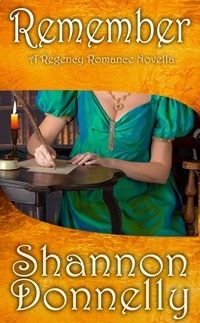
With my novella Remember the technical challenge I set was dealing with time…so many love stories seem to happen over days not weeks or months or years, but what if a love story did take place over years? That idea intrigued me, and I started to dive into the lovely game of “what if?”.

I’m not knocking the instant attraction of first glance, and there are people who know right on the spot ‘this person is for me’ while others don’t get that bolt from the blue. But the slow burn appealed to me as something I had not tried before. It was a something new technical challenge.

Chapter breaks helped a lot with that–new chapter, new year–but then I had to sort out the timeline and figure out what was going on in the world that could cause gaps in the relationship without breaking the relationship. I also had to decide what obstacles, such as age of the characters or status or background or goals, might be slowing down the immediate desire to become more than friends.

All of that ended up being a lot of fun–and some work in editing to make certain I wasn’t putting things out of order. So Remember ended up being a sweet story–I do like a story where not much happens other than lots of banter and getting there eventually. While it is fun to write some action and adventure, love and a bit with a dog goes a long way to pleasing audiences even to this day.

New Cover, New Book – Paths of Desire

Paths of DesirePaths of Desire comes out as an eBook this week—my first venture both into self-publishing and my first Regency Historical romance. I’ve been bringing out my backlist of Regency romances, and that’s encouraged me to take this next step.

There are several reasons to take “Paths” on this path, the main one being I really want the book out in print and in reader’s hands. It’s a book about courage and stepping out onto risky paths, so it seems to be one that really fits into new ventures.

It’s a book I wrote a few years back—my step into writing a longer Regency Historical. But it ended up being smack in the middle between being a Historical romance and a Historical novel—there are elements of both, and therefore it’s a hard book to market to publishers. Traditional publishers don’t know what to do with it. It covers ten years, a long time for a romance, and the hero is a married man—unhappily so. That’s a really hard sell to any romance publisher. But that’s something I wanted to deal with in this story. Fiction is a place to look at life, and romances can tackle issues of infidelity and what does it mean to love someone when you have ties to others. Yes, I could have pulled that out, changed the character to better fit the market, but this one stuck with me—this story needed to be told.

It’s a story about paths crossing—about how sometimes the timing for a relationship isn’t right, and then it is. The heroine struggles with her own issues—her need for security after having grown up on the streets of London and seen her younger brother die due to not having the money for a doctor. And also her realization that her acting talents are never going to get her to the top of her craft—limitations are a hard thing for anyone to come to terms with. The hero has both a loveless marriage with a wife who doesn’t really like sex, and a wanderlust that keeps taking him from home—he’s an adventurer, and the wrong man to love if you’re looking for that illusion of security. As with all my books, I wanted to give all the characters a “star moment” in the book—that was fun. It was great fun to research London theaters of the early 1800’s and to also be able to use Lady Hester Stanhope in a story—she’s the larger than life type of character that you could never hope to create and have believable because she defies all the conventions of the time.

So “Paths” is about to take its own path—and it’s actually been hard to let it go (compulsive editing and checking and I know I’ve still left typos in there or formatting stuff where Word is not playing nice with eBook formatting). But it’s been an adventure to get this ready to go out in the world—it’ll be another one to see if readers like something that’s a little different. But that’s the point of the book—we all have to find our own paths, and the courage to follow them if we’re to be worthy of our desires.

Look for Paths of Desire as Amazon Kindle eBook, exclusive to Amazon until April 2012.

Cat’s Cradle – Behind the Story

Cat's Cradle There’s a story behind every story–this one is about Cat’s Cradle, which is now available at Amazon for Kindle, BN.com for Nook, and at Smashwords. And I have to start this off by saying I’m partial to this story–ridiculously so, for a couple of reasons.

The first reason is this is the first Regency novella that I wrote. That’s not to say this is the first short fiction I’d written. I’d actually cut my writing teeth on shorter works before I went after novels–in fact, I wasn’t sure I could write anything longer than fifty pages or so until I’d written a longer work. But I’m a believer that structure is structure. Meaning if you can structure a story, you can structure a story. The nice thing about starting off working in shorter form is that there’s no room for wandering. In a novel, you can put in side bits, you can mess around a bit, you can basically add fluff. You can get lost. In a novella or short story, every word counts, so they all have to be right. You have to keep your focus. And I love working within the restrictions that applied.

The second reason this story holds a special place in my heart is that when I was asked if I’d like to do a kitten story, I knew I wanted the cats/kittens to be integral to the plot–they could not be stuck in there for window dressing (I hate that kind of story). With that in mind, I applied my theory of idea hunting–I went mining my past.

Now, I’ve heard it said that some writer write about their own lives and some steal other people’s lives for their source. I’m not sure which group I fit into–I’ve done both. But I do find that mining my own past tends to make for stronger stories. And I’d had this cat.

Stripey showed up one summer day when my brother and I were eating lunch on the back patio. She was–as she was named–a grey-striped cat with white patches. She was also hungry. And I was not about to eat the baloney in my sandwich. (I have never liked baloney and still do not eat the stuff.) Stripey was happy to help out with the sandwich, and since she hung around for more handouts, she became my cat. (I seem to recall there was also shameless begging on my part, but the end result is that Stripey stayed long enough to give us three litters of kittens.)

Most of time Stripey was the most timid of cats. She was the cat other cats chased–the weakling into whose face all felines kicked metaphorical sand. Until she had kittens. Then she became Stripey the Tiger, capital GRR. No one messed with her kittens–or her when she had kittens to look after. She also had one other habit. Her idea of the proper place to raise the kittens was in the garage.

We had an old dresser in the garage and my dad stored his tools and bits and pieces there. Stripey also insisted on having her kittens in the bottom drawer, which wouldn’t close. No matter what kind of beautiful kitten basket we made her, the kittens came into the world in that dresser. We’d try putting the kittens into the basket for her. Soon, she’d be trotting back to the garage, one kitten at a time dangling from the hold she had on the scruff of their necks. Eventually, we gave way to her demand that the kittens spend their first few weeks in the garage–as I said, she was more than decisive with kittens in her charge.

Stripey’s story became the story of “Bea” who insists on having her kittens in one place, even if that place proves inconvenient for her owner. And that became the catalyst (sorry about the pun) for the romance in the story.

Of course, a cat alone a romance does not make. Meaning I needed a hero and heroine to go with the cat. Obviously, such a protective mother as Stripey needed an owner with the same inclination–like cat, like owner. And so the hero would have to pose a threat to my heroine’s offspring (but the husband would have to be out of the scene). Thankfully, my muse presented me with two very good candidates–Ash and Evelyn. This also gave me a chance to do a fresh take on the “proper spinster” (the heroine’s not actually a spinster), and the bad boy (Ash isn’t that bad, either, but he does have a past that’s not all that savory).

One thing I’ve found with short stories or novellas–you have to limit the characters. Too many characters and you either cannot do justice to everyone or the story expands into a novel (that’s a tale for another day about Under the Kissing Bough and how that came to be written). But Evelyn needed boys–two youngsters, because it raised the stakes for her to have kids to look after. And Ash needed someone, too, because it’s no fun having the hero talk to himself or spend all his time brooding and thinking–besides, long-time servants are as good as family and families always cause the best additions of conflicts for characters. So that rounded out the cast to about six (including Bea, the cat–the kittens are a little too young to be more than “spear carrying” kittens). And there’s a couple of walk-ons, but a novella could handle that.

And so Cat’s Cradle was written. It’s one of those blessing stories–it flowed from start to finish, and I loved writing every bit of it. I got to have fun, and to put in those little bits I love in a story. I don’t know that it’s one of my best works, but it’ll always be a special story for me. I’m more than delighted that it’s available again, now as an e-book.

Keeping it Light – Writing Humor

Just finished the edits to get A Proper Mistress online, and it’s a delight to have a visit back with these characters. It’s a lighter romance, more what’s been called a Regency romp, though I don’t go for taking things too absurd. And that got me thinking about how touchy this sort of thing is to write, and my own guidelines for writing humor. My style is a blend of humor, a little drama, action, and I like to mix all of that up. I’ve tried to see how dark I can go, and I never can go all that dark–it almost always twists into black humor at some point. But, then, I like a little spice in almost everything. And, yes, you’re going to get a lot of cooking metaphors here–Molly Sweet, the heroine of A Proper Mistress is a delight and a cook and she always puts me into that frame of mind — which leads us to where we need to start, which is with characters.

A Proper Mistress

A Proper Mistress

Humor, in particular, needs characters who can carry the absurd. That’s harder than it sounds. I also think humor needs dialogue–great, snappy, fast dialogue. All the stuff that folks usually think needs to come out of their mouths and onto the page, and that’s going to keep the pace of any story moving and keep it fun. The other critical element is that I think the characters need to take their own situations seriously–its their lives. We may laugh, but if they do, it’s a bit like someone laughing at their own joke–kind of puts the pressure on that you should laugh, too, and that takes away the fun.

The other critical element is to know your character’s intelligence. I think writers often forget about this one, but it’s vital with humor. You need to know if a character is quick-witted, or a bit slow. You need to know how every character thinks. And you need to give them good reasons for why they are that way–there needs to be a reason why someone may be smart, but uneducated, or why someone else is smart in one fashion, but very stupid in other ways. This affects the story in major ways, and can be a great source of humor–with this, you don’t end up relying on ‘things’ being funny. Humor always works best when it comes from the characters, and the absurdity of life.

I also think you need to either build the absurd, or you need to start with it. Building the absurd is what the screwball comedies of the ’30’s do so well–they just keep stretching the absurd until its insanely silly. For a book, I like to go the other route and start with a situation that’s already heading off into crazy land.

For A Proper Mistress, I also wanted to start with twisting a cliché. This works great in any scene or story–take something that’s done to death and put a fresh spin on it.  The spin was that I’ve read way too many books in which the hero or heroine needs to get married in order to get an inheritance. This is such a worn old shoe that it squeaks. However, with the twist comes the need for motivation.

Good characters are method actors, always asking, “What’s my motivation?” Characters need reasons to do absurd things–these may be absurd reasons with faulty logic, but they should seem sensible to the characters. Which leads to the core question: what pushes a guy into trying to get disinherited?  Of course, the answer is what pushes us into most stupid things, and for me that’s a dysfunctional family.

The good part of being a writer is that all that junk in your own attic of live is useful. Creating a dysfunctional family isn’t hard for me since I had one, all my friends have one, and I actually have a hard time with normal. Everyone in A Proper Mistress is coping as well as they can, but they all have Issues–with that capital in there. The other thing about humor is that a little drama can help you ground it–it’s like having a string to a balloon.  Or to really mix the metaphors, a nice dense chocolate cake to go under the fluffy, sweet whip cream. Backstory for characters–the faulty motivations–is a great place for this grounding. And so is the character’s secret.

For me, characters start to come alive when they start keeping secrets–from others and from themselves. In A Proper Mistress, the hero both worships his older brother, but he’s also secretly a little resentful, and he doesn’t even realize it. The heroine has a secret wish to have a family (she’s an orphan). Theo’s dad has the biggest secret of all, one that’s impacted everyone’s lives, and all this is starting to sound a bit heavy. Which is where the last ingredient comes into play.

Balance in a story is as critical as the balance of spices and elements in a meal. And you want to push this balance off-center to get the emotion and effect you want. Go too far, however, and you end up with a hot mess. So with humor, you want to keep it light, fast-moving–the balance has to be more on what’s happening in the story, with only the lightest touches of heavy backstory. Molly was a godsend in A Proper Mistress. She could have ended a very tragic person–she’s had a tough life. But she’s resilient. She has no time to dwell, and is all about dealing with what’s happening now. She kept the story moving with her personality as much as anything else.

That brings us full circle and back to characters. Writing light, characters are everything. Their actions, their dialogue, their motivations, their flaws–which need to come out big time–provide all the elements for funny. Humor, for me, is about poking gently at all the flaws we carry with us–and pushing them a little bigger so those flaws stand out in the bright light of the absurd.  It’s about letting your characters go so they can surprise you and come up with their own twisted thinking. Give everyone a point of view and a plan, so that nothing ever goes right, or goes quite the way the characters think it will.

Above all else, humor needs two more things.  The first is a light hand–you need to edit, but you can also edit the funny right off the page. This means you have to treat the writing with a light touch–keep the prose clean and the plot even cleaner. If you get too fancy with technical stuff, it’s going to weigh the work down and dull the humor. The second is the courage to let your own quirks come out. Take your own flaws and put them on the page and into your characters. If you can laugh at yourself, it’ll be easier for readers to laugh at your characters and their absurd lives.

Backlist Back for the Holidays

There is nothing quite as exciting as an adventure–also, nothing quite as uncomfortable, fraught with peril and generally the sort of thing that makes you both nervous and thrilled. Adventures also make for good story telling after the fact.  I’m still in the early stages of this new path, but seems like a good time to start sharing on what it’s like to bring out books in electronic format. And why not bring back my out-of-print books–I have the rights back and I’ve had folks asking when they could get these for electronic readers, so…let’s go.

Now, I’m not trail blazing here–lots of folks are going electronic, and there are definite advantages. But we’re not talking freeway fast path, either. We’re more like Oregon Trail–there is a trail, many folks have passed this way, and you can see the skeletons of some of them.  And we’re still in covered wagons–this is not a trip for those who aren’t stubborn as hell.

My particular trip started with getting enough info from the Novelists Inc. conference that I decided it was time to do some experiments, at the very least. My day job is web work, so you’d think my adoption factor would be high, but my books ran into the cobbler’s children syndrome–not an electronic stitch to have them shod. Time to change all that.

Under the Kissing Bough

First step–the cover.  The books are all done, so I don’t have to worry about finishing them, or edits (well, mostly not, but more on this later). I had the contact info for Albert Slark who did a couple of my covers. He gave me a great rate, and now I’ve fantastic covers coming, including one for Under the Kissing Bough (RITA nominee for Best Regency).

Second step–file conversion. My final edits were on paper, so I pulled out the books and the files to put in final edits. My initial thought was that I’d keep the books the same–they represent my writing at a certain stage of my life, and I thought that should stay the same. Then I started finding things I just did not want to allow in any new edition. There are no major edits, but I found things I wanted to be cleaner, stronger–my skills have improved as a writer, and I found I wanted the electronic edition to be as strong as I could make it.  Now I’m going to have to do that with all eight books, so this is going to take more time than I wanted.

Third  step–more file conversion. Formatting is a pain in the ass. There’s no way around that. There’s fussing with formats, and fonts, and making sure it’s going to display right on the reader. This is where that stubbornness can really help. You have to get everything ready for upload, and then you have to fuss more with the upload. This is where, on the Oregon Trail, you’re crossing the Continental Divide.  You just have to get  out and push sometimes.

Fourth step–this one is optional.  I bought ISBNs for the books–if you go this route, you need an ISBN for each version, print, electronic, etc.  This also gets the books listed in Books in Print, but it is more fussing. (I already have copyright on the books, but if you want to button everything up, you can also get a copyright on the book for not much money).

Now comes the next steps–promotion, promotion, promotion. Getting the word out in an already noisy world is always tough.  But I feel as if I’ve got my stake in the ground for some of the new promised land–I’ve cross the great divide and now must learn how to make this adventure work on a long-term basis.

I have to thank a few people who provided great info and insight, including Bob Mayer, Joe Konrath, Della Jacobs — these are all writers, so please go buy their books, too, all in convenient electronic format.

And you can now buy my RITA Nominee for Best Regency, Under the Kissing Bough, for: Amazon Kindle, Barnes & Noble Nook or for Sony readers or other formats at Smashwords…and next month, I’ll let you know how the adventure progresses. I’m pretty sure that, to paraphrase the words of Betty Davis when she played Margo Channing in All About Eve, what we all need to plan on is to, “Fasten your seatbelts. It’s gonna be a bumpy ride.”

Writing Resources

I’ve been doing a workshop on research, which led to my digging out some old notes on useful writing books.  This is the short list of the books that have taught me so very much about writing–these are the books I still have on my shelf, the ones I go back to for a refresher course. These books may speak to you, or may not, but if you find one good piece of advice and some entertainment, these will have served you well, too.

Bird by Bird, Anne Lamott — some instructions on writing and life, the perfect inspiration book

The Artist’s Way, Julia Cameron — a workshop on how to unblock any blocks

The Courage to Write, Ralph Keys — one of the best books ever written on writing

A Manual Of Writer’s Tricks, David L. Carroll — a great idea generator

Characters & Viewpoint, Orson Scott Card — How to invent, construct and animate vivid, credible characters and choose the best eyes through which to view the events of your short story or novel

Creating Characters, Dwight Swain — great advice for beginners and for experienced writers

Techniques of the Selling Writer, Dwight Swain — teaches the bones of story structure

Story, Rober McKee — get the CD, or take his workshop, the book is so dense it’s very heavy going, but there’s a tone of great story structure basics here

Write Away: One Novelist’s Approach to Fiction and the Writing Life, Elizabeth George — Fabulous book, but will be more useful for an experienced writer to take her writing to the next step

On Writing, Stephen King — simple clear advice on keeping writing simple, clear and powerful

Self-Editing for Fiction Writers, Renni Browne & Dave King–a book I still keep right beside by desk and these days every writer needs to learn how to edit her work.

How to Write Romances, Phyllis Taylor Pianka — the basics of the genre

The Art of Fiction, John Gardener — wonderful writing about writing