Archives

Flow

Recently I read a book where the flow of the story was chopped off in the jump from chapter one to chapter two. I’ve also read books where the flow was interrupted from one sentence to the next, or one paragraph to the next. Flow hits on all levels from word to word all the way up across the story.

Flow is one of those important, yet, neglected writing topics. This may be due to being something difficult to really nail down.

We read about pacing all the time—how the story needs to have good pacing and not sag in the middle. Flow is a little different. Flow is about linking thoughts to gently pull the reader along. The Truman Capote quote may sum it up best, “’What I am trying to achieve is a voice sitting by a fireplace telling you a story on a winter’s evening.” That is a very good way to think about flow. It can make the writing seem effortless, very much like a river that is just moving along.

Desna River at dawn. Ukraine

The flow can be in fast paced or slow stories. Flow is more about linking one word to the next, one sentence to the next, one paragraph to the next, one scene to the next, and one chapter to the next. It is about using words and sentences in such a way that the reader is engaged—but never thrust from the story. It is very much like a river’s flow that move on without the reader noticing the water is being deliberately move.
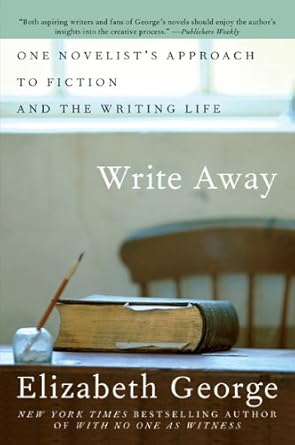
Write Away by Elizabeth George Book Cover

This idea was first introduced to me by Elizabeth George’s excellent book Write Away. It is something a writer should think about, but I believe it is something to work on after you get the basics of craft down and you’re looking to bump your writing to the next level. It can leave a writer choked if thought about too much. It also is something that shows up if you read your work aloud.

That trick of reading a story aloud is one that I often think is neglected. Different things show up when you read a story aloud—and it is a pity we’ve lost the habit of sitting down in an evening with one person reading while others do handicraft. Typos jump out, stumbles become clear, and flow—or the lack of it—becomes much more obvious.

Flow is about word choice, but also about sentence structure, and how paragraphs are built. This is why I consider it a more advanced topic for a writer—if you’re still struggling with the basics of building a character, of crafting dialogue, and structuring a scene, flow is something to look at after you finish a book or two.

In an article by David Jass on ‘What Writes Mean by Flow’ he speaks to the importance of syntax and writes that, “…altering our syntax does more than help us write flowing prose; it allows us to get our thoughts off the normal track on which they run.” When it comes to the use of syntax and varying sentence structure Jass quotes Robert Hass, “New rhythms are new perceptions.” This is what someone means when they say the writing is or isn’t fresh.

So…fresh and flow…and syntax. It is enough to stumble any writer into a block—too much thinking about this can be deadly. But if you write enough words, you will start to find your own flow…and when you get to revising what you’ve written this is where a focus on flow becomes important (also called word choices, and syntax or use of variable sentence structures).

One general guideline that helps me is to keep in mine one thought to a sentence, one topic to a paragraph. If I chop up sentences, or paragraphs, I want to do so with intent for the scene and still keep flow in mined even as I look at the pace. Thinking about the emotion behind each word—its connotations as well as its meaning—and looking at how the sentences and paragraphs, and scenes reveal character I want to keep asking a couple of questions. What should the reader feel? And is it all getting too intellectual? Sometimes, if the emotion is on the page, you want to leave things alone.

I do believe that if you write long enough you start to get a handle on flow with a writer’s instinct. I also believe that reading a lot can help with absorbing this idea of flow. It also helps to stop and take apart a sentence, or paragraph, or scene that either thuds for you or has that “flow”. (This is the curse of a writer—you start to read like a writer, not like a reader.) To head back to the analogy of a river running, leading inevitably to the sea, that is why the word “flow” crops up for writing. The story can carries the reader along is the one the reader has trouble putting down—I’ll just read one more chapter, a few more pages…oh, I finished the book and I want the next one from that writer. Flow is attached to a writer’s voice—it’s not just the rhythms of thought, it is the rhythms of intent. It is something that makes writing forever an interesting challenge.

Finding the Theme in Your Story

Fountain Pen, Paper and writing

I’ve been reading some contest entries of late, and one thing that struck me is that I don’t see the point of the story emerging right away to hook me into the story. Theme is the point of a story–it is why it has to be written. It may be something a writer naturally puts in (I envy those folks), but most writers need to think about theme and make it stronger by intentionally building it into the story and weaving it in to everything.

But let’s start with a definition: Theme is an idea that recurs in or pervades a work of art or literature.

Another good definition is that theme is the underlying idea an author is trying to convey to an audiences.

If you write a novel, spend weeks and then months catching it word by word,
you owe it both to the book and to yourself to lean back
(or take a long walk) when you’ve finished and ask yourself why you bothered—
why you spent all that time, why it seemed so important.
In other words, what’s it all about, Alfie?  Stephen King

In other words, the theme is really the ‘big idea’ that is woven through the entire story. It is a critical belief about life that transcends cultural barriers. It is usually universal in nature, and works best if it is integral to the story, instead of only being used once (which can make it come across as heavy handed, like a club over the head).

Another way to think of theme is that it is a touchstone. Theme is going to help you develop your characters, their main goal, and the main need for each character. It will tell you what you need in the story, and what you need to leave out. It will tell you what should be the dark moment or climax of the main character’s arc. Theme is what makes a story resonate with a reader long after the story has ended.

Theme can be a statement, or a question posed to explore, and smaller themes may echo the larger one. You do have to be careful about making theme a statement. That can make the writing preachy, or come across as a message instead of strong story with vital characters. Sometimes it is best to go with a theme that has you needing to answer that question.

I write entirely to find out what I’m thinking,
what I’m looking at, what I see and what it means.
What I want and what I fear. Joan Didion

Theme also tends to work best if it is something that, as noted above, resonates with you, the writer. If the theme is just an intellectual exercise and doesn’t hit home with you, it can come across to the reader as ‘shoved into place’ or not really fitting—it stands out like a red flag in a field of green grass.

Now, when I say theme is what the story is really about, this does not mean theme is the action that describes the plot.

As in: Two people fall in love, but their families hate each other due to a long-standing feud.

That describes the action of ‘Romeo & Juliette’, but not the theme. Now there are several smaller themes int he play, but a main theme is that “We cannot overcome our fates.” Romeo is fated to fall in love with Juliette. Their love is fated to have a tragic outcome. And Mercutio—the man caught in the middle—is fated to die.

Romeo and Juliet Balcony Scene by Dicksee (lat
Oil Painting by Frank Bernard Dicksee, 1884

To look at another example, “Lord, what fools these mortals be,” pretty much comes right out to state the theme of “love makes fools of us all” for A Midsummer’s Night’s Dream.

Theme may be explicitly stated by a character. (In Blake Snyder’s book on screenwriting, Save the Cat, he argues for this to be a beat in the story, and indeed this can make for a great scene.) Or theme may be woven into motifs and thematic elements—such as Mercutio’s death foreshadowing the tragic fates awaiting Romeo and Juliette.

Here is one simple rule to remember:
Characters carry theme. James Scott Bell

Theme does need to be both rejected by the characters, and then proven at some point, usually in the climatic moment of the story. You usually see theme best at the ‘dark moment’ of a story.

Theme shows up in songs as well (beyond thematic melodies). Think of favorite songs that really resonate with you and you’ll find more than a catchy melody. Theme can be something you explore in one book, in several, or over a lifetime of writing.

‘Nowhere Man’ embodies one of my favorite themes—the hero completely out of his element.
It’s really near and dear to my heart.
Ruth Glick

I used a theme of “What is too great a compromise of self in any relationship?” to explore the idea of compromise to make a relationship work, and I used this over three books. Another theme I’m drawn to is “How do you find a sense of belonging in this world?” I used that in the Proper Series Regency romances I wrote. You may well find yourself drawn back to the same theme over and over. It’s quite possible to either have a lot to say about a theme, or do want to really push into a theme in different ways. A great theme can be explored over a lifetime of work. It’s all about if you still have more to say or discover about that theme.

So…how do you find your theme?

To Learn How to Identify Theme

Pick out three favorite books from your keeper shelf.  Look at the opening when the protagonist’s life is thrown out of balance, and then look at the dark moment.  See if you can identify theme from those two moments–it’ll be a moment early on when the protagonist doesn’t think that theme holds true, and the dark moment is a moment of realization that relates to the theme.

If you can’t find the theme there, head to three favorite movies–again, look for that early scene when the protagonist is thrown into hot water, and then toward the end when the protagonist is faced with the toughest choice.

Finding Themes

With a pen and paper (writing by hand connects left/right brain in a different way than does a keyboard) Write down what ticks you off? What lights a fire inside you? What do you feel compelled to write about? Jot down three things that hit you emotionally.

Now….look at a story you are currently working on. What is it about? Write a sentence that poses a core, emotional question for that story. Then compare the two—are you writing about something that really hits you emotionally?

Another Way to Find Theme

Write down a paragraph about your main character’s arc in the story you’re working on.

Now, read it over, and see if you can condense this to a one sentence theme. The main character’s arc—what the protagonist faces as a dark moment—is going to help reveal theme to you.

If you can’t find your theme right away, don’t sweat it. Start writing, and wait for the theme to show up. That sometimes happens anywhere from 40 to 100 pages into the story. That’s when you can go back and start weaving it. Or even get the book done, and then figure out what needs to be cut or added or changed. Editing is your friend–and sometimes the ending reveals the true beginning, along with that theme.

The first draft is just you telling yourself the story.
—Terry Pratchett

Pacing Yourself

I’m giving a talk via Zoom for Orange County Romance Writers on November 9 on Pacing Tips and that has had me thinking about story pacing, and what I see so very often in writing contests. It is not a too slow pace, but actually a too fast pace–the story speeds ahead as if the writer is worried about losing the reader’s interest. The problem with this is that this steps all over immersing a reader into a story.

Now we’ve all read lists of great opening lines–some of them are on the verge of being cliche they’ve been quoted so soften. Pacing is about far more than just a good opening hook, however.

Any story needs to set the pace–and I often think about this in comparison to a horse race or a runner in a footrace.

There’s the short sprint that needs to be fast from the start to the end.

There’s the marathon or race over a couple of miles for a horse that needs for early speed not to be so fast it burns up the energy and leads to a lackluster finish.

You can hook a reader with a great opening line, and then lose that reader in the first chapter.

You can have a great first chapter, and then the book sags in the middle and the reader’s interest drops away.

You can also have a great premise, but weak execution means the reader is not pulled into a fully realized world with fully developed characters.

Dealing with all of this is what I’ll be talking about with those pacing tips, but what I’m talking about here is to just take a deep breath–and imagine more. Slow it down a bit. Figure out and put in those vital details that make the world come to life.

I think too often writers worry so much about a fast pace–a fast start–that what gets forgotten is building a scene and enjoying the process. There’s so much about agonizing about writing that we forget we love words–and love to put them together in fresh, inventive ways. We forget to pace ourselves and hurry to finish the scene or the chapter or the story, and forget to weave in all the stuff we love the most.

I sometimes wonder if we slowed ourselves down–read a book aloud, sat on a park bench and watched the world go by, took a drive into countryside with no destination in mind, strolled down a street without the idea of hurry or losing weight–would that help bring more to the page?

That’s one thing that writing by hand does–it slows us down a bit. It gives a little more room to thinking and imagining and a little less pressure to get a word count done. I think we have to look at pacing ourselves as well as our stories.

But there are still some more practical tips that can help–and those go into that talk for Orange County Romance Writers.

Picking Your Protagonist

The protagonist—your central character—needs to be worthy of a story. The protagonist also needs enough going on to carry the story. One of the big problems I see in a lot of romances that aren’t working is that the writer is trying to make both the hero and heroine the protagonist, and that often leaves the story unfocused. Now, every character needs to have things going on—character arcs are important—but with genre fiction, one main character arc helps to give a story focus and also helps to keep the reader involved. Can you break this guideline? Sure, but think of your protagonist as the central tent post to a story—without that, everything sags or falls. (I use an image of my dog, Inky, because he definitely thought himself to be the protagonist of all stories.)

Inky

The protagonist needs some things set up so the story works better:

1-Conflict. Yes, it’s obvious, but there’s no such thing as enough of this. And this isn’t just external challenges to overcome. Protagonists are more interesting if they have internal issues. You want to set up issues, and personality clashes, and personal problems for the protagonist.

2-A specific past. This means a detailed, specific past. This where I see a lot of writers going for vague. How many characters out there have parents who died, or a rough childhood, or were bullied? You can count these by the thousands, because that description is too vague. If you want your protagonist to stand out and be worthy of a story, make them unique by making their past highly specific. The woman whose parents were run over by a rhino while they were on safari when she was ten and stuffed into a boarding school—that’s starting to shape a unique person. Or the boy who grew up traveling with his parents in a VW bus because they wanted to see the world—he’s got some interesting stories. Details make your characters come alive—never settle for less than highly specific.

3-Strengths and flaws. It’s too easy to focus on just one side of this. The hero who is not only handsome, but tall and talented, and just too good to be real. The heroine who is beautiful and brave and fearless. Or even the bad guy who is nothing but mustache-twirling evil. Characters that don’t have both flaws and strengths start to be boring. A protagonist who doesn’t screw up—or who does nothing but screw up—is going to lose readers. Do yourself a favor and make the main character’s main trait something that is both strength and a flaw—most traits come with a good side and bad.

4-Meaningful habits. We all have these. Twirling a lock of hair. A favorite phrase. A toothpick tucked into the corner of a mouth. Cracking knuckles, biting a thumbnail, tucking a quarter into a pocket. Your protagonist will be more interesting if you figure out not just habits, but specific habits that reveal something about that person. The person who has to organize any bookshelf she sees by topic is a different person from the one who never steps into a cab with a license plate that has the number thirteen on it. Make your protagonist worthy of a story by giving them meaningful habits.

5-Something they want. The best characters always have something they want—something they really want, something they really, really want, and something they really, really, really want. Go beyond that first want and dig deeper. First, second, and often even fourth ideas are usually clichés. These ideas jump at you because you’ve read them so many times. Always ask more of yourself and your protagonist—get down to what they really, really, really want. Do this not just for the story, but for every scene in the story, too.

6-A unique voice. Every character needs a unique voice, but a protagonist needs this more than any other character in your story. To be worthy of being at the center of the story, the protagonist needs to stand out—that means his or her dialogue needs to be sharp and needs to be something that would make any ‘star’ want to play this role. To help with this, image your favorite actor in this role—give this actor the best lines, such great lines that this actor would come up and hug you.

7-Likeability. A protagonist, to be worthy of his or her own story, needs to be likeable. The reader needs to identify with that person—the protagonist carries the reader into and through the story. Now, the protagonist can do things that makes the reader want to slap that character, or can make mistakes—in fact, that often leads to a more likeable person. But look closely at what actions your protagonist takes—does he treat others (who don’t deserve it) badly, does she kick the cat, does he make the same mistake repeatedly, does she do too much admiring of her own looks in the mirror? This is where it’s all about balance. A heroine can kick the cat if that cat is really a demon about to kill her—the action will seem justified. But if it’s a pitiful, cute kitten, that protagonist has just lost the reader’s sympathy. Make sure your readers understand the protagonist’s actions and motivations—we all tend to like people we admire and people whose actions we understand.

9-Friends and/or family. This can be one friend or several, it can be a big family or a small one, but friends and family serve to give your protagonist three dimensions. Allowing the reader to see the protagonist interacting with friends and family helps make the protagonist more interesting and more likeable by being more understandable. It also is a chance to layer in extra dimensions as the protagonist will interact with different people in different ways. If you have a really rough, hard-to-like protagonist (who must change in the story) give him or her a best friend who is easy to like—that person’s liking for the protagonist will convince the reader there are good qualities in the protagonist. This is also a great way to show contrasts—the tough hero can let his elderly mom boss him around, or the feisty no-nonsense heroine could be mush when it comes to helping her little sister play dress-up. Use the characters around the protagonist to make the protagonist more worthy of being at the center of the story.

10-Action. Let’s face it, a character that sits and thinks a lot is just not that interesting. Even Shakespeare sends Hamlet off to visit graves and spy on his uncle and set up plays and a duel—Shakespeare knew enough to put his protagonist into action. Actions show the reader the character’s personality better than anything else. If you have a protagonist who is a marksman, have him shooting a gun and making patterns on the target. If you have a protagonist who is a financial wiz, have her signing a deal that nets her an easy million. A character who is worthy of his or her on story is one who does things.

11-A Relationship to Theme. This is something that can be easily overlooked by writers just learning the craft. The protagonist is going to be the person who realizes theme, and who grows and changes as a character due to that theme. This is what will make a character arc—and the protagonist—resonate with readers.

12-An Antagonist. This can be another character, a sympathetic character or one that isn’t sympathetic, or it can be a situation or even a character trait with the protagonist that causes even more conflict. As the saying goes, the protagonist is only as strong as the antagonist—a really good antagonist can make the protagonist seem more likeable, more admirable, and can greatly improve the story. But this means the antagonist is that this must be a fully fleshed-out character, otherwise this can also make the protagonist seem one-dimensional.

Above all else, find out whatever it is that you need to know to make your protagonist real to you. If you don’t believe in your main character, it’s just about impossible to get a reader to believe, too.

Setting the Mood

An open iron gate leads to an enchanting secret garden surrounded by ivy covered trees.

Something what sets a good story apart from a great one is the use of setting as a character. A setting is not just description of a place—it gives the reader more emotion on the page. It uses mood and vivid details to put the reader into the story. Setting is also as much about theme and motifs as anything else.

Let’s take a look at one setting, but given two very different moods and themes. Let’s put the main character into a summer garden—or, actually, two different summer gardens:

She pushed open the gate. It groaned on rusted hinges, barely yielding to her shoves. Ivy dangled low from the wall, browned and gnarled, and a willow tree in the corner sagged against the bricks as if braced for her. A wind whispered, dry and cool, brushing through the leaves as if warning the garden against her presence. Sweat trickled down her back and gathered on her brow, and the bees swarmed to her right, the buzz an angry sting of noise to break the quiet.

That’s garden one—now, same time of year, but a very different mood for this garden:

She pushed open a gate that squeaked on rusted hinges, yielding to her shoves as if grateful for someone to come at last. Ivy curled down from the wall in splashes of green against the red bricks. The willow tree in the corner stirred, the long fronds of leaves beckoning with a luxurious shade away from the heat that pressed down on her. The breeze brushed her cheeks, dusting away her sweat, bringing a sweet tease of wild roses and lavender and honeysuckle. Bees hummed through the dazzling colors at her feet, their legs heavy-bright with pollen, wobbling like drunk sailors in a welcoming port.

This summer garden has gone from a touch ominous to a lush romantic spot through word choices—this lets the reader into the world through the character’s senses. Obviously, in the first garden description, the mood is one of danger and tension. We’re going to have a theme of danger and suspense. The second garden offers a lighter mood—this is going to be a fun story, possibly with some hints in the theme of magic or romance.

That’s what description can do for a story—that’s what setting can do. Setting can anchor the reader into the world. It draws the reader into a place and time and into sensations that make the world come to life. It becomes a vivid character if the writer takes the time to develop all the characters.

All this starts with asking a simple question—what is the mood here? You can follow this up with—what would my character notice? You can overwrite—that’s always possible. But by remember mood and what is important to the story, that will tell you what you need in your setting.

Theme will also help you in that it will tell you what motifs you want to use over and over to better weave theme into your story. Perhaps your theme is about the masks we all wear to protect our inner selves, and so masks and their collection or use, or things hidden with shadows and shading will be part of the settings to bring this theme to the reader without hitting the reader over the head. Or perhaps the theme is about rebirth of self, and you want setting to move from winter to spring several times over to bring that them into the story in subtle ways. All this means the writer must pay attention to the real world and the fictional world.

When thinking about setting, bring in something more than sight. We all lean too much on the physical description of things we see, but very often it’s the aroma floating in the air or the notes of music lingering that really capture our imaginations. A touch of jasmine incense could bring in the exotic, or the sour note from an out-of-tune piano clattering adds a jarring feeling to the reader’s mood. Maybe it’s the taste of something—a spice that goes from nose to tongue. Or maybe it’s the shiver of fog on the skin. Go for the very specific detail.

When you’re editing, look at the writing to remove clichés and look for fresh modifiers—and watch those weak verbs.

Notice that in the garden above, I never write: “The garden was overgrown.” That is flat telling and robs the description of the vivid touches the reader needs to be inside that garden. “Was” becomes a weak verb in such a case. Notice the fresh modifiers—a breeze that dusts away sweat, a sting of noise. You may not come up with these in the first draft, so as you edit, look for fresh ways to convey the mood you want the reader to get from that scene.

By vivid, I mean VERY specific. If you don’t have the specific in mind, go hunting in your experiences or in your imagination.

Never been to the Redwoods, but need them in the story? It’s time to get a really good travel guide, or watch a very detailed documentary. Do the same for any profession you might give a character, or for that character’s background. This is the truth in the phrase “write what you know.”

Whenever you can, pull from where you have been and use your own experiences to give you that perfect smell, that right feeling on your skin, the sounds you heard, and the taste in your mouth. A vivid imagination can help, but so can stepping outside—close your eyes and put your other senses to work. What birds do you hear? What about traffic, or the lack of it. If you’re near the ocean, that tang of salt in your mouth will be noticeable—and perhaps that sand itching under your swimsuit as it dries. Think about what details will best realize your setting as a character and a mood, and reveal something to the reader without “telling” the reader that information.

Maybe your protagonist is an artists and the world is vivid colors—teal, azure, verdant green. Or what if your antagonist has perfect pitch and the least dissonate voice is a screech to her? Be picky about word choices, particularly when editing. In a second or third draft, that is a great time to read your work aloud and write in the margin the emotion you want, and then decide if the words pile into the correct cadence and mood.

Look for overused words. Do you repeat the same phrase too often? Is there a “pet” word you fell in love with that starts to hammer on the reader?

Remember that each new scene needs to be “set” for the reader—the reader won’t be happy if left floating in a void. It doesn’t take much—look at the paragraphs above for the garden. Four or five sentence can do the job. If you have a character in that description and that character’s viewpoint to layer in tension, the reader is going to be caught up in the moment.

Above all, take the time—don’t feel that you have to worry about “oh, it’s a slow pace with too much description.” That description allows the reader to settle into the story and the scene. If your setting is a character, that character can bring forward so many more layers to your story that it can move from just okay to a book a reader can’t put down.

How Much is Too Much? The Art of Backstory

Stack of old books

Backstory is one of those things that can drive any writer nuts. How much is too much? When do you reveal more? When do you hold back? Too much backstory can sink a story—because you’re not moving the story forward. You’re giving background, and while that can be interesting, readers really want the story to keep moving forward not backward. Too little backstory and you run the risk that character motivations may not make sense—or the reader may not care enough to keep going.

There are no right answers about how to handle backstory, but there are some tips to help you with the art of backstory.

Does the reader really need to know this? This is the first thing to ask. Does the reader really need to know the heroine’s puppy was stolen when she was six? Is this just a cool background fact, or is it a vital plot point? (As in the puppy comes back in the next chapter and he’s magical now.) This is a tough question to answer because you usually want to think, “Of course the reader has to know this.” Be brutally honest with yourself. It is quite possible that you—the writer—needs to know this information, but the reader doesn’t. When in doubt, save the backstory for later.

Can you show the reader instead of telling? What you tell a reader doesn’t have the same impact as showing. Instead of telling the reader the hero is a great guy, show him being great. Instead of telling the reader the heroine knows how to knit, show her doing. Look for places where backstory can be revealed to the reader instead of being told to the reader—it will make the story and backstory more interesting.

Does the reader really need to know this now? Sometimes you need to set the scene or the world for the reader. This is very important when dealing with history or alternate worlds. The reader may need to know how magic works in your fictional world. Or the reader may need to know the importance of manners in another age. These may be vital to making the very premise of your story work—and so the reader needs that information right away. But there really is an art to backstory, which brings us to…

Can you weave in the backstory with a just sentence or two? Go ahead and write those three pages of backstory. Go wild with it. Have fun. Then cut it down to just a sentence here or there. Think of backstory as colorful threads that you want to weave in—not as big chunks. Tease the reader with some information without doing a dump.

How long can you leave the reader waiting? This is a great device that requires foreshadowing. If you HINT at your protagonist having some history or issues from the past, the reader is going to start wanting to know more. Drop enough hints and the reader will then wade through any amount of backstory because now the reader is dying to know more. The good news is you can weave this stuff in after your first draft is done—or cut down on it as you edit the second draft.

Can you add the backstory with something else going on? Readers want conflict—they want the story to keep moving forward. Look at some of your backstory and see if you can have it come out at the worst time possible for your character. Instead of finding out in chapter one that your hero hates heights, have him find out in chapter ten when he’s standing on the edge of a cliff and it’s jump or die. If your heroine has some issues with her mother, maybe they can come out every time the two of them are on the phone and the sniping starts over long dead family issues that neither of them can resolve. Look to add conflict by bringing in the character’s past to that scene. The caution here is don’t overdo this…and do foreshadow with hints (and hints means hints—trust your readers and do not beat them over the head with the same information over and over again because you worry ‘they might not get it’.

Is less more, or is more more? When you’re in the middle of any story and writing madly away it’s very easy to lose all perspective. Get the book—the story—done. Set it aside for a couple of week. Then come back with fresh eyes. Now you’ll be able to look at it to see if you need to add a touch more backstory—or if you need to cut back on the backstory. If the scene is dragging pull out some of that backstory. Is the scene a little confusing, time to add a touch more backstory. Another reader can be a great help here.

Can you use dialogue to add backstory? This can be a great device—or a deadly one. Sometimes you need characters to add to the backstory—but this must be done in character and true to the character’s voice. The last thing you want is a character talking in plot exposition—that’s deadly. Nothing flattens dialogue more than making it all about exposition. Layer in emotion to that dialogue. If you have two sisters who are arguing about something that happened ten years ago, let them use the kind of shorthand siblings would use—in other words, Theresa wouldn’t tell her sister, “Remember when you stole my beau from me and asked him to the dance.” That’s too “on the nose.” Maybe Theresa says, “I remember what happened at the last dance—do you think I’m going to ever let you forget what you did!” Now the reader is also wondering what happened and wants to hear more. But here’s another place to go back to the earlier questions of does the reader really need this information—and does the reader need this now?

Is less skimping on detail? Details are what create the world for the reader and put the reader into that world. It is possible to be so worried about pacing—and a slow story—that you end up robbing the reader of a rich and vivid world. This is where the reader needs to see, smell, hear, taste and touch the world—this is where you can weave in a character’s backstory by how that character experiences the world and their emotions. An artist has a different experience than a soldier—someone who gardens sees the world differently than someone who is city born and bred and couldn’t care less about the outdoors. Use the details to show the world to the reader through a character—it is a great place to use bits of backstory to enrich the story.

Is the backstory missing? It’s quite possible that an idea has carried you away—it’s a great setup, or scene, or concept, but is that all it is? Did you flesh out the characters—or did you dump them into an idea? This is where a character won’t really make sense because the motivations are missing due to not having any backstory. If you don’t know your characters, the reader won’t either. This is where you want to know WHY do the characters act as they do—and why a character might act ‘out of character’ as well. This is particularly important for antagonists. It’s not enough to have the bad guy kidnap the heroine—you need to know WHY he would think this is a good idea, and why he is a good guy in his own mind. It’s not enough to have the ex-girlfriend cause problems just because you need that story idea to work—there needs to be backstory here for her about WHY she would do it (and it needs to be more than ‘to get her boyfriend back’—why would she want the guy back? What’s her deeper reasons and motivations? What’s her backstory?) A lot of times, you as the writer need to know this—then you can figure out if it belongs on the page of the story or just as background you’ve developed so that the characters have strong motivations for what they want.

Finally, did you make it interesting? If the backstory is boring to you, it’s going to bore readers, too. Making it interesting means great writing—clean prose, cutting repetition, and really good editing. Making it interesting means compelling information that fascinates you—and the reader. Lean into your strengths here. If you do great dialogue, do more of that to weave in the backstory in an interesting scene with action. If you do great description, use that skill to make the backstory a compelling read.

The good news in all of this is the more you work on your writing—scene structure, story pacing, character development—the better you get at it. But you’ll also find yourself studying other writers and how they handle backstory, which can destroy your reading pleasure. You’ll end up reading like a writer. But you’ll get ideas on how to deal with the art of just enough backstory.

The Story’s in the Details

Every now and then I’ll help judge in a writing contest, and one of the things I often see is that details are wrong or missing. I’ll admit I am a little OCD—I like jigsaw puzzles, and I need the right details to even write a scene. Details matter—a lot in fiction. Why are they so important?

A woman who drives a restored 1963 VW bug is different from a woman driving this year’s BMW, and her attitude about each vehicle says something about her. Does she love her car, name it, curse it, treat it like a moving trash can? A man who owns and uses his grandfather’s pocket watch is different from one wearing a ten-dollar Timex. The details reveal the character to the reader, and specific details matter. If you just have a woman who drives a car, that doesn’t say much about her, other than that she lives in an era when most folks drive. Same goes for a man who has a watch—the lack of details means there’s a lack of characterization on the page.

Details need to show the reader how your characters are different from any others. Too often in romance the hero is tall, muscular with startling (or piercing or arresting) blue eyes. The heroine has strawberry-blonde or auburn or reddish hair with emerald green eyes. In other words, we’ve all read these descriptions so often the characters blur together into sameness. What details make your characters different. Details that could fit into a list (height, muscles or curves, hair color and eye color) are what I call a ‘laundry list’ that don’t help a reader to really see your character. Next time you’re watching a TV show or you’re out people watching, start really watching—you’ll find that what you  notice first are the details that are different. It’s the limp that old lady has that she’s working hard not to show. It’s the large, dark mole on the woman’s left arm, visible because of her sleeveless dress. It’s the chipped front tooth when the man next to you smiles, and you wonder if he got it from a bar fight or playing some kind of sport because he’s got both the attitude and the tan to go either way. The details give the reader a vivid, specific picture in mind.

The wrong details can also derail a reader. Too often I see things like a tall man who rides an Arabian stallion (why it’s always a stallion, I have no idea). But Arabian horses are typically not all that big—put a large guy on one and you might as well have him riding a pony. It’s a funny image, not at all sexy. Then there’s the use of reigns instead of reins—and spellchecker won’t help you with that one. Or the heroine who does a Cinderella and goes from wearing ugly dresses to beautiful ones, but we’re never really clear if it is a Victorian dress with hoops and bustles or a Regency empire gown.

Historical fiction brings its own issues with a need for research, and a tough time deciding what’s enough and what is too much—you can overwhelm the reader with too many details. But I think it’s easier to pull back on this and much harder to weave in enough. (The same actually holds true for emotion on the page—it’s easier to pull back on this with a little editing.)

The trick in all of this is to find the right detail, and that means you need to know what it is that the reader should understand about this character without explicitly telling the reader. An example of this is if you want the reader to understand that a character is understated on the surface, but a dangerous man underneath. This means you might put your character into a faded Yale sweatshirt and baggy Levi 501s that leave room to hide the .35 and holster on his hip—notice these are specific, too (it’s not just sweats and jeans and a gun). Or maybe you want the character to come across as high class and respectable, meaning instead of telling this to the reader, you show the character tugging on her gloves, tying the ribbon to her bonnet at the precise forty-five degree angle that both remains out of her way and yet is flattering, and she chooses a parasol to match her kid slippers in a fashionable shade of Pomona green, and which compliments the stripped gown delivered yesterday from her dressmaker. The reader has both images in mind and is also picking up the clues you are dropping that this woman has money to spend on fashion and is particular about how she wears things. This is not someone throwing on the nearest shawl to dash outside.

All this means you have to spend time thinking about the right details to use, and also some time researching those details. You can also use details you already know a lot about. I’ve written horses since I was a horse-craze kid, so writing about anyone who rides—or about those lovely animals—is easy for me. The details are familiar to me, but I do have to stop and think about making sure I don’t dip into jargon that will leave a non-horsey person scratching their head. Some terms like ‘a sweet-goer’ are self-explanator, but others such as a ‘bog spavin’ could throw a reader out of a story, so again it’s about thinking of the right details and being careful to choose the right ones.

I often think this is similar to constructing a painting. If you work in oils, you have to think about shapes, colors, and contrasts. You have to look at light and shadow, and what to put on the canvas to convey the images you see either in font of you or in your mind’s eye. You have to choose details to put in or leave out with the brush strokes you put onto the canvas. Too much and the painting can become a muddy mess. Too little and the canvas ends with blank spaces, leaving the image unfinished to anyone who views it.

This is where layering can help. It’s difficult to get all the details you want into one pass, or one revision or edit. You may have to do one that is just about putting in the right touches for the setting, and another that is about putting in the right details for just one main character. And yet another edit to put in the right touches for the mood of the scene with weather, scents, the feel of the air, and other details that make the world vivid to the reader. Sometimes you may need to get out in the world to get that right detail. It’s hard to know that a barn smells of leather, hay and horse—a wonderful musky mix—if you’ve never been inside a barn, with the soft nickers of horses asking for some grain as you pass by, or shifting in their stalls, straw crunching under their hooves. It’s tough to know that if you slam a poker down on a wooden box, the vibration is going to travel up your arm unless you do this (yes, I did this for a scene in A Much Compromised Lady because I needed that ‘right’ detail). You might not think about the vibrancy of wildflowers in a pasture—bright yellow, softer pinks, pale purples—breaking like a wave under a summer breeze unless you’ve seen this. Experience—writing what you know—helps a lot. So does enough immersion in research.

Immersion in your fictional world comes from thinking about it, from delving into books about the subject you need to know (there always seems to be something new for a story that you have to find out about—I needed to know the weather in 1815 Paris, and I was happy enough to have been there to know spring can be miserable and wet, with splashes of sudden sunlight between fast-scudding clouds). The right details can also come from talking to people who know an area or a subject, so you can get those specific details that will realize the world for you and for the reader.  

You want to keep looking for those right details—the vivid ones, the perfect touch. It is that one dab of titanium white against aquamarine that makes those colors into a wave. It is the specs of umber against strokes of green that reveal seeds sprouting from grass. It is the right detail that makes your character suddenly different from all other characters, and shows your character to the reader because you got the details onto the page and into your story.

Positive Proofing

When writing, there is one thing you can never do enough of and that’s proofing. I find it takes several passes—and several sets of eyes—to catch all the typos, find the awkward sentences, punch the dialogue, trip over the things that clunk, and sharpen the descriptions. A great book to help you learn to be a good editor on your own work is Self-Editing for Fiction Writers by Brown & King. In the meantime, these tips can help.

First off, do multiple edits, looking for different things in each pass. It is hard to catch everything in just one edit.

Do an edit on dialogue. This is the time to cut every extra word—what doesn’t improve the writing will detract. Double-check your punctuation. Keep a copy of Strunk & White’s Elements of Style handy to look up anything you’re not sure about. Know your weaknesses—if you’re bad with knowing when to capitalize a proper noun, or have a hard time with commas, or don’t know when to hyphenate, Strunk & White can help you.

Do an edit just on descriptions. Are you weaving in the senses, or just leaning on visuals? Can you be more vivid and detailed without being overly wordy? Are you showing enough, or telling too much? Look for those “writerly” phrases that may stand out too much—those darlings that don’t really belong. You may have a lyrical passage that throws the reader out of the story and back into “reading” instead of being caught up deep in the story.

Do an edit just on each main character. Is the viewpoint slipping in spots? Does that character’s voice stay consistent to that character? Does the protagonist have a strong arc?

Do an edit just on each scene. Do you have conflict in every scene? Is it building to an outcome?

Do an edit just on pacing. Does the story flow and does tension build? Do you foreshadow the ending?

Do an edit just on theme. Do you realize the theme? Do you weave in theme with metaphor and really explore your theme?

Once you think you’ve got all your edits in, rest the story. Give it a couple of weeks or more to become fresh again.

Print out your work for proofing. The brain wants to put in things that it thinks go into place, breezing right past the missing word, the misspelling, and the wrong punctuation. To trick the brain into giving you new eyes, a different perspective is needed. A couple of more things to do is change the color of the paper—go from white to pink or to green—and change fonts. Anything to make the page look fresh to your eyes.

Read your work aloud, and try to get through as much of the book in one sitting as possible. This is very important. If you trip over something, the reader will as well. Mark stumbling places and come back to them later for revisions.

Mark anything that might need a fact check. It might be just checking that you got the setting right, or the historical details, or maybe you got the streets in a city wrong or the wrong kinds of plants for your setting.

Remember that if you rewrite anything, that work needs revision so it doesn’t stand out as “first draft” when everything else looks more like polished third or fourth draft.

When you think everything is perfect, that’s the time to bring in a beta reader or two. This is again about getting those fresh eyes. Have the beta reader mark up where the pacing drags, or where something isn’t clear, or where there’s a plot mistake, or anything else.

Once those corrections are in, you’re now ready for a copy editor to go through it and again flag typos, mistakes of punctuation, and plot holes. And, yes, they’ll be there.

Depending on how many issues a copy editor finds, you may want a clean revision to go through yet another copy editor for fresh eyes to make sure you caught everything.

None of this includes a development edit—meaning having someone look at the story early on to catch issues of characterization or plot or pacing that need major revisions. All this proofing work is done long after you know you have a solid story, with good pacing and a great character arc.

A word of warning here—you can polish and edit the emotion out of a scene. If a scene is working, and the emotion is on the page, be careful with your edits. Do light revisions just to smooth out any mistakes or typos and don’t overwork the scene.

You want to also make sure any revisions do improve the original. It is easy to end up with just pushing mashed potatoes around on the plate instead of making everything more palatable. This is where having that printed version of an early draft can help you—you can compare the two and really see which is better.

All this sounds like a lot of work—and it is. But it will give you a much stronger story if you take the time to do your best to get the story in you head onto the page in a way that flows and make the writing invisible to the reader.

Voice–Your Character & Yours

VoiceI’m linking to an excellent post on Deep POV at Live, Write, Thrive that got me thinking about voice. Writers need to do more to guard their voices–too often I see writers looking for outside validation or trying to write like someone else. Now it’s fine to have those experimental phases–I certainly did. I had my Edgar Allen Poe phase and my Ray Bradbury phase and my Dorothy Sayer phase and my Georgette Heyer phase. I finally wrote enough to start developing my own voice, and I can now look back at my past work and think “at last” because it all sounds like my voice. And like my characters voices.

Character voice can be tough. Some characters show up right away, others have to be coaxed into revealing their voice. Character voice can be there on page one or may not be there until page one hundred. A common mistake I see as well is a writer inserting the writer’s voice into what should be the middle of the character’s thoughts or dialogue–that’s an interruption that can throw the reader. That’s where editing comes into play–and developing the writer’s ear.

This is where I think writers can develop their own voice–in editing. Voice comes out through word choice and through structure of sentences and paragraphs. All that is best tuned in editing. I will often to an edit just on one character to make sure that character’s voice is there on the page–and that I haven’t stepped on that voice with my own. I’ll save my voice for places where narrative is more important, as in transitions, setting up scenes, or places where I may need to slow the pace a touch or weave in vital plot exposition. Character voices need to show up in their dialogue and their thoughts–and that’s where I need to make certain I am not putting in that very clever phrase that I thought up, which doesn’t match the character’s personality, mood, or step on what their attention should be focused on.

An example of this is where the writer says something like “she never noticed the gum stuck to the bottom of her shoe”. Well, if she’s not noticing this and we’re in her POV why is this here? Much more effective to write, “she heard the snick of the gum sticking the sole of her shoe to the polished wood floor–with every step, her face heated, but she couldn’t stop to scrape it off.” Now we’re in the character’s POV.

This is where the phrase “kill your darlings” comes into play as well. We all come up with those oh so clever lines that just don’t fit a character. Wonderful descriptions are great–but they should be there to serve the character’s voice as well. They can be revealing–and not just darling lines that we fall in love with that really need to be cut. Again, we’re back to learning to edit your own work.

Self-Editing For Fiction WritersFor that, I recommend Browne & King’s Self-Editing for Fiction Writers–a wonderful book. The other thing I do recommend is protect your characters’ voices and your own–that means you want to be careful about how much advice you take in from others. Some folks will tell you how they would write a scene–that’s not going to help you. Others will tell you about not liking a character–and that’s actually good if that character is meant to be tough to like. That doesn’t mean you want to change the character. And this means a writer needs to learn what advice is useful and what should be accepted with grace and then thrown out.

Voice matters–it’s what makes a reader want your stories above all others. It’s worth the time to develop and to guard.

Dialogue–What Your Character Doesn’t Say

V for Vendetta QuoteI’m teaching my workshop on dialogue this September, and so it’s a good time to bring up some tips on dialogue. A story can live or die just on dialogue. Bad dialogue will make a character flat and uninteresting, and may even send the reader running from the story–no amount of great action or terrific plot twists will save a story with weak dialogue. But great dialogue can make a reader forget to look for plot holes or poor pacing. That’s because great dialogue is where you characters can shine.

Now, learning to write great dialogue is no easy task. It takes time to figure out how to make fictional dialogue sound better than how folks talk in real life but still sound possible. All of this starts with your characters.

The workshop will go into detail on dialogue–and exercises to improve dialogue skills–but here are a few tips.

1-Get to know your characters. I don’t mean charts or lists, and I mean beyond a few scenes. How does that character lie? What are the verbal habits? Is this person a talker or not? Spend some time away from the story just getting your character talking.

2. Become a habitual eavesdropper. Listen to how real people talk–and jot down notes. Notice how real conversations usually make for terrible dialogue–there are pauses, jumps, repeated phrases and words. It is still useful to pay attention to all this stuff because this is what fiction mimics. Notice how rarely people stick to one topic. Notice slang, and how words are used as leverage. Notice how one person will speak differently to the different people in that person’s life.

3-Close your eyes in the next movie and just listen to the words. Pay attention to how dialogue–and the pauses–are used to reveal character. Listen for the emotional words. Use just your ears to get a sense of rhythm, and so you won’t be distracted by flashy visuals or the actor.

4-Take apart your favorite writers’ works. Yes, this means getting out some markers and marking up the book–ebooks readers also let you mark up books. Pause over the really great dialogue moments and look at how the words are used. Look at word choice, at sentence structure, at paragraphs and how they link.

5-Write a lot of dialogue. Write pages of the stuff. Write just dialogue–fit in any description later. Nothing helps you learn faster than writing–a lot.

6-Get the technical stuff out of the way. Dialogue can clunk with periods in the wrong places, or commas that are missing, or with quote marks that don’t make sense. All of this can trip up the reader. Buy a copy of Strunk & White’s Elements of Style and nail the punctuation so it becomes invisible.

7-Look to give your characters great lines. Think about your favorite actor playing that role–wouldn’t you want him or her to come up to you and gush about having wonderful lines. Let your characters be more witty and better than anything in real life.

8-See how long you can have a character talk and not mention the real topic. This is the art of subtext. Make what the character doesn’t say important. Make the reader want to know what the character isn’t putting into dialogue.

9-Punch and polish, and then polish some more. Great dialogue often comes with revision, rewrites, edits, and then even more edits. Polish those words. Say them aloud to see how they sound. Fall in love with those words and make them wonderful.

10-Keep learning. Some links to help you with that:

http://fictionwriting.about.com/od/crafttechnique/tp/dialogue.htm

http://www.musik-therapie.at/PederHill/Dialogue&Detail.htm

Writing Emotionally Layered Dialogue

Got Subtext? Writing Better Dialogue

Dialogue: Don’t Let’Em Say What You Mean by Shannon Donnelly