Archives

Getting More From Online Workshops

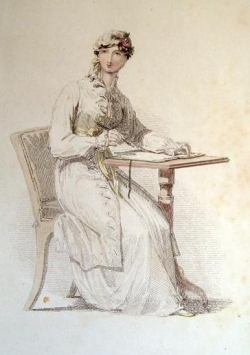
writingdeskI’ve been teaching (and taking) online workshops for a number of years now, and they’re always tricky beasts. The instructor can’t see the students’ eyes, so there’s no using glazed stares to realize the students aren’t getting it, and no seeing the spark of understanding. There’s also a slow down in communication–questions have to be written out and answers written out, and back-and-forth becomes a bit harder. And witting comments can sometimes come across as snide insults (from the instructor or the student). So how do you deal with this and still do an online workshop and get something out of it?

Here’s my recommendations. (And since I’m doing three back-to-back workshops this summer–Plotting from Character July 8 – Aug 4, Writing the Regency Set Novel July 22 –  Aug 18, and a Storytelling Workshop Aug 5 – Sept 1–I hope folks will take notes of what can improve your workshop experience.)

1-Interact–a lot! The more you put into the workshop, the more you’ll get out of it. I’ve “lurked” in some online workshops and I never found them as useful as when I participated. This can be with questions or assignments.

2-Offer feedback. This can be praise or suggestions for what might work for you better. Be polite, but do offer feedback (this is so helpful to me when someone suggests a new idea).

3-Ask your questions. Even if it seems dumb or basic, ask anyway. You might also help someone who is just too shy to ask.

4-Make mistakes. Forget the idea of “doing it right.” Every workshop someone will post the phrase, “I hope I did this right.” It drives me nuts. First because there is no “right” in writing–there’s what works, or doesn’t work. And second because if you were pro and slick at everything why would you need (or take) this workshop? Go in with the mind-set that you’re there to screw up and make mistakes–you’ll learn more from mistakes.

5-Use emoticons. Semi-colon, close parenthesis are great to add a smiley face 🙂 to let folks know you intend to be funny here. For a long time I didn’t use them and I think I ended up with a lot of folks not understanding my humor to try and make a point.

6-Relax and have fun. Workshops should be a safe place. You don’t have to impress anyone there. It’s a place to take risks and try new things and see what works and what doesn’t work.

7-Remember you are getting one person’s point of view. Every writer has a different process. It’s great to find out what works for someone else–and often those tips can help your own process. But not everything that works for someone else will work for you. That doesn’t mean you’re a failure–or that you are not a writer. It means your process is different. Try new things out. But discard what doesn’t work for you. Run everything past the filter of your own writing process and style.

Above all, use the workshop as a reason to get yourself writing! Remind yourself you paid money for that class, so use that as your reason (excuse) to get up early or stay up late to read the lessons and do the writing assignments. Make your writing your first priority, at least for the duration of the workshop!

The Fear Factor

“I’m convinced that fear is at the root of most bad writing. . . . Good writing is often about letting go of fear and affectation.” – Stephen King

Up in a balloonFear shows up in a number of ways, and hits each of use differently. It shows up a lot in the only workshops I teach.

It shows up in excuses (I’m too old, I’m too busy, I won’t try this because I don’t understand).

It shows up in procrastination (I’ll catch up later, I’ll try the exercises after the class on my own).

It shows up in perfectionism (I’m awful because I didn’t do this right, I failed, I suck, I’m stupid).

It shows up in a refusal to try new things (I’ll post this old story bit instead of writing anything new).

And I can see it every single time. Then we have the brave souls who face their fears dive in and fall on their faces. I applaud that. Because they’re learning. Which is the point of a workshop. It’s supposed to be a safe place to try things, to experiment. Instead, I see so many writers who are afraid to spread their wings—as if one mistake is going to be a disaster.

Folks—we learn from our mistakes. Go out and make more of them.

I am amazed how many people resist this idea. They want to be praised. That’s not good. That’s not going to help you learn. What does help is the rewrite and the revision and the experiment. Try something new. Write a scene. Then rewrite it from a different viewpoint. Just because. Throw stuff out there. Try something in first person if you’ve never done first person. Or in present tense. Just try it out. Tell yourself that:

a) it doesn’t have to be perfect

b) it doesn’t have to be good

c) it can actually be really awful

Just let it be what it’s going to be. Then read (aloud so you catch what you’ve really done) what you’ve written and look at what you can learn from what you did. Look at what works. Look at what doesn’t work. Keep the good stuff.

This happens when I cook, too. I’ve made some awful things—I once put too much baking soda into my gingersnaps. They came out Alka-seltzer hockey pucks—hard and fizzy if you chewed on one. Great for your digestion (if you needed it), and not something anyone would eat (not even the horses would go for them, despite the sugar on the outside). Learned a great lesson on baking soda from that one.

Same applies to my writing. I’ve written awful scenes (and I expect I’ll keep doing that). Sometimes the dialogue clunks like a flat tire. I’ve tried first person, third, second, even. Present tense, past tense—it’s all about stretching those writing muscles and trying new things. You don’t know what really works until you’ve tried it.

I’ve written books that are not for everyone (go read the reviews)—sometimes folks hate my character (hey, it’s better than indifference). And I worry about all of it. I still get the nerves going and I still wonder if I’m any good at any this—no amount of praise ever takes that worry away.

The point of this is you’re never going to get over your fear.

Live with it. Know it’s there. Let it flow into you and out of you again and go write anyway. Use the fear—let it keep you sharp. Let go, too, of the affectations that King talks about—which means get out of the way of your characters. Let them tell you their story and stop pushing them into plots that don’t work. Stop being so damn writerly and just get clean words onto the page.

And if you need more good words from Stephen King buy his book On Writing: Memoirs of a Writing Career. Or read more at: http://grammar.about.com/od/advicefromthepros/a/StephenKingWriting.htm

(First published at https://writersinthestorm.wordpress.com.)

Best Advice from RWA National: The Promise To Your Readers

It was an upbeat conference this year. Editors didn’t look so hunted. Those writers not yet published didn’t look so desperate—probably because the decision to be published is now in their own hands. And the self publishing panels weren’t just about how to format an ebook, but actually had a lot of great info.

My favorite workshop was held by Barbara Freethy, Bella Andre, and Tina Folsom—three ladies who’ve done very well for themselves and who have shown that self published does not mean bad books or terrible sales. The best advice I heard came from Bella Andre who talked about the contract a writer has with a reader—a contract to deliver not just a good read but a certain level of sensuality in the books. She’s established as a secondary identity for a different type of book (and no, I’m not going to tell you the name—you’ll have to hunt it up yourself). But she did the new name because the books offer a different level of sex in the books—it’s a different “type” of book.

Now, I’d been looking at genre for “different”—and thinking that of course that’s why you needed a pen name. But this hit home—of course it’s not genre. It’s more about the feel of the book—what type of book is it. And that got me looking at my own bookshelves again.

I read sexy books—love the good ones. But it’s not my primary read. And that got me thinking.

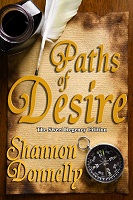
Paths of Desire is a book I did to break out to a larger book and a more sweeping historical. I amped up the sex in the book—probably too much so. It’s a good book—or I think so. But I got to thinking about my readers. I’d had one reader post a one star review—and I think she’s right. It’s not the book for her, but she’s my reader. And it’s a brave new world.

This lead me to do an edit and I’m bringing out Paths of Desire: The Sweet Regency Edition. It’s more like my other Regencies—not exactly the door shutting on the sex (it’s a romance, and these folks become lovers, and that’s a vital part of the plot), but making it more about the emotion and less about the body parts. A new cover and a new ISBN denotes the new version of the book. And now readers can choose which version they like better.

I’m also going to be looking closer at my urban fantasy books, too—maybe I’ll bring out the hot version and the plot version and let readers pick which they prefer. Or maybe I’ll just bring them into the “Shannon Donnelly” version so that no pen name is needed—it’ll be a change of genre, but not a change of tone.

Either way should be interesting.

So what do you think—hot or not? Or is it best to have a choice that you the reader can make in which edition you like best?

Writing Workshops

I’m just starting up the Writing the Regency Workshop online for Outreach International Romance Writers, which works well since I just gave a talk on this at RWA National Conference, too. This had me thinking about what is it that folks need to get right, and I also asked the RWA Beau Monde Chapter about what they thought. Here’s the short form answer:

1 – Basic History. Even if you’re doing alternate history, you need to know some of the basics because this informs the characters–people live within the context of their world, and it helps to know what events formed their parents and grandparents and their family.

2 – —Titles & Class System.  Gossford Park is great to help us Yanks get an idea of a nuanced class system–Americans are used to rich/poor and something in between and that’s about it. Getting this right can be tricky since titles evolved over more than a thousand years, but it’s important–nothing can throw a reader out of a story faster than a title that makes no sense.
—3 – British Sensibilities.  BBC America is a big help here, so is being an anglophile.  This one is another tricky spot since you can end up with characters who don’t seem as if they’ve ever been near England.
—4. Legal Stuff.  If your story premise has anything to do with inheritance or marriage laws, it’s time to break out the research books and make sure the basic premise works. If that doesn’t work the whole story can fall apart on you.
5. —Society’s Attitudes. The 1800’s are similar to our world, but it’s also a different era–and while your characters may rebel against this, they should know what they’re up against. Folks back then knew about a woman’s place, and a man’s place, and that there were no teenagers, just adults and children. All of this can affect your characters.

6. Social/Personal Constraints. Honor mattered, so did duty–and while some folks might shrug those off, others did not and it said a lot about a character who did not take these to heart. This is also the stuff that makes for great conflict so it’s wonderful meat for a writer.

Now, of course, there’s lots more to know–but those are the big ones. We’ll get into the rest in the workshop.

Character Arcs, Plot Lines, and the Synopsis, oh my

My synopsis workshop finished up this past April for RWA’s Outreach International Chapter, and I’ve also been judging in some contests–boy do folks need to figure out their story arc and plot lines (and character arcs, too). This is one place where a synopsis can help you because it highlights every flaw in your story–all the weaknesses come out. Which is why I think editors really ask for these things.

So what are the THREE big flaws that I’m seeing (on a regular basis)?

1) The big one is that there is no plot line or story arc. In other words, the story rambles along and stuff happens.

This usually can be traced back to the main character (your protagonist) not having a strong, clear goal that’s well motivated and which kicks off the main plot line, or the main character’s arc in a more character-driven story. This goal can be as simple as survive a night in a haunted house in order to win a million dollars (motivated by the need for that money to save mom, who is about to lose the family farm), or it can be to win a contest to win her own self respect, or it can be as big as saving the universe. But there’s a couple of important things about this:

A) The main character’s goal must matter to that character–there has to be something personal at stake.

B) There have to be consequences for failure–ones that would shatter than character.

Once these are in place, the character has been set on a path. Now you’ve started a story arc. The stuff that happens now tries to push the character off that path (this is your plot). Worse and worse stuff happens until the character gets faced with a crisis–and this crisis had better be one that pits the character against wants and needs, so that the character has to make very tough choices. This is where the character gets stripped down to their core–to what makes that person tick. (And if you don’t know this, you need to get to know your characters better.)

Now stuff does happen still but it’s all related to the character’s struggles to get what that person wants. And you make it worse for the character by layering  in what a character needs. As in if you’ve stuffed your character into a haunted house for a night, what your character may need is sanity and a sane world, and that haunted house may strip both away from her. Now your character has internal conflict–stay for the money (external want) or leave to be safe (internal need). And now you can add in an antagonist with a conflicting goal.

This is going to complicate the pl0t–and give you more conflict.

Now your antagonist needs to be thought out–as in what does she want and need?

For example, what’s your ghost’s goal in driving everyone out? This is where you do not want to cop out and go for the cliche. In other words, don’t just go for “She’s insane” or “She’s angry because she was jilted.” Those are weak motivations.

Orson Scott Card in his book on Characters & Viewpoint notes that when you’re digging for your character’s motivations, the first three or four things that pop into mind will always be cliches. (If you don’t have this book, go buy it now, then come back to read the rest of this.) These great ideas are cliche because they are cliche–they’ve been used to death. Keep digging for better motivations. This is vital for any antagonist–write this person as if this character is the hero (we’re all heroes in our own stories).

Could be the ghost is trying to protect others from the damnation that caught her–except she’s driving them mad in the process. Or maybe the ghost has a secret she’s trying to hide. Or maybe the ghost is trying to find a body she can inhabit so she can live again. (And see how those cliches creep in as you’re batting ideas around–that’s why you keep writing down ideas.)

Find out what your bad guy wants as a goal. Find out what your bad guy needs, too. We all need love, right? Well, we all need our own internal rationalization systems, too. Even someone who is mad will have their own reasons for doing what they do.

2) The other biggie I see is that in what’s supposed to be a romance, but the romance is put in like an afterthought. The action overshadows the romance, so the story doesn’t seem as if it’s really about two people struggling to build a relationship. This one is tough.

In a romance, the romance is the main plot line. It’s the main story arc. So you have to have thought about both your hero and your heroine. What does each person want from a relationship? What does each one need? This can be different from the action plot line. It could be your heroine needs to save the world from a plague of vampires–that’s the action sub-plot in a paranormal romance. The plot needs to put her in conflict with a hero (and possible love interest). It makes sense that in this case the hero is the head of the vampires–that’ll give you great conflict in both the romantic plot and the action plot. But now you have to figure out what does each person need and want on a personal level–and how are these going to conflict?

Does the heroine need a steady guy? (And what’s her reason for that–did she grow up in an unstable home?) If she needs stable, you want to either pair her up with Mr. Seems-Like-A-Bad-Risk, or with Mr. Stable-But-Boring. And then you add in what she wants. Could be your vampire fighting heroine needs a partner to watch her back–and she gets Mr. Unstable. Or could be she needs a vampire to come over to her side–so she’s got to seduce one into helping her. The trick here is to keep looking for what adds more conflict and more complexity. Pair up the compulsive clean freak with the slob (The Odd Couple is really a great romance disguised by the fact that it has two guys). Layer in reasons for your romantic pair to be attracted to each other–and layer in plenty of personality issues to drive them apart. Make the relationship the focus of the plot.

Then go back to your action sub-plot. Just remember if the main plot line or story arc is all about action, then you’ve got something other than a romance on your hands. In a romance, the relationship is at the center of the story.

3) The third big thing is that every character’s motivations needs to be clear–that means this info must make it onto the page. This is one where I often feel, as I’m reading, as if the writer knows this stuff, but it hasn’t gotten to the page.

There is the story in your head. There is the story on the page. There is the story in the reader’s head. Ideally, all these match. If one is off, the story flops. This is where you want to ask–“Did I put in WHY my character acts this way or feels this way?” In a synopsis, you simply tell the reader–“He hates cats because he was once locked in a closet with ten of them.” You want to make sure the reader understands WHY your character acts as she does.

The other part of this is make sure your reader understands the setup for the story–how the plot line or story arc kicks off. Get a friend you trust to tell the truth to read this, too, and make sure you are not fudging things. It’s too easy to think, “This is good enough.” You need outside eyes here and someone who’ll say, “This doesn’t make sense” or “I don’t believe this.” That is something to fix with stronger motivations. (You can have a character act out of character or do amazing things only if this is sufficiently motivated–if you have cake-making mom suddenly pull out a sword and behead someone there’s got to be something in her background that would explain why she can do this, or she’s doing this because her child is threatened and she’s got adrenaline making her into super-mom.)

Too often I’m reading something and all I think is “why”. Why did that happen? Why does she feel that way. The worst is when a synopsis just says: And they fall in love. Well…why? What’s different about this relationship and love story? What’s motivating the emotion. Again, this is where a friend who will write “why” all over your synopsis can help. Answer every why–or leave the reason for the question coming up out of the synopsis.

There’s other stuff you can do, but if you cover the big three, you’ll have a much stronger book (and a stronger synopsis).

Writing the Regency Novel

I’m giving a workshop at the RWA National Conference this July (just got the times and it’s Friday at 4:30 – 5:30, so early enough to enjoy dinner Friday). And part of what I’ll cover is why set your fiction in the Regency era?

For all that it covers an amazingly short time span (1811 to 1820) the English Regency has a remarkable allure.  Mystery writers, including the great John Dixon Carr, have chosen this era for a setting, and the Napoleonic wars offer the setting for the popular Sharp series by Bernard Cornwell and the Aubrey/Maturin Series by Patrick O’Brian’s. In Romance writing, the Regency is perhaps the most popular historical time period, and has launched many now best selling authors. But why should such a short time span–nine years really, although the Regency influence extends over perhaps thirty years–prove so magnetic?

Answering that question could be the target of a scholarly book, but space is limited–and time fleeting–so perhaps the best course is to emulate the Regency in brevity, as well as in style, and carry things off with a high hand. Of all time periods, the allure of the Regency might well be that it was a time when style triumphed. The era sparkles with wit, gallantry and elegance in fashion, furnishings and frivolity. It was an era in which a man with no background–Beau Brummell–could become the leader of male society just because of his style and wit. At the same time, Turner was painting and shocking the world with his art, while Byron was writing and shocking society with his life. Charles Fox was being brilliant in politics, and shocking just about anyone who met him. And Sheridan was writing plays that still amuse with their wit.

It was a brilliant era. And an era of the extremes of rich and poor, and yet it was an era in which if you were good at something, you could gain fame and fortune. The prizefighter John Jackson (1769-1845) won fame with his fists, but went on make his real fortune by teaching boxing lessons to the cream of society. For a gentleman to say he got the chance to spare with Jackson was considered a social coup. The status given Jackson makes him perhaps a forerunner of the modern sports superstars. In fact, the Regency could be said to be a time when much of our modern sensibility of admiring skill–rather than inherited status–seemed to take hold.

A full answer to the appeal of the Regency era, however, must look at not just the actual time period itself, it must take into account the fiction and films which have so greatly shaped our impressions.

All this and some details of the history that you have to get right (and what can you fuss with or make up) will be covered in the workshop. But it’s worth noting that the Regency’s reflections to our era cannot be overlooked: change, uncertainty, but still the need for daily routine, and the relief of pleasure. The royal scandals filled newspapers with sympathy for the Princess of Wales, and this left the Prince unhappy about this. There were opportunities for those with vision, and at the same time great risk for those so unwise as to invest in the wrong future.  All of these qualities resonate with us. However, the Regency is blessedly in the past.  It is a world slipped into the past and therefore one with a safely known future.  Somehow these people who lived then found a way to happiness, to prosperity, to joy, to survival.  And what more comforting message can a reader find?

A Sexy Synopsis

The synopsis–we all hate writing them, and yet, it’s one of the most valuable tools a writer has. And it’s not just about condensing the story–for me, it’s really more about if I have an idea for where the story is going and  a clear handle on the conflict. It’s a place where flaws shine big and bright, which means I need to fix them in the book, too. But, oh, have I written some very, very bad synopses.

What set me on the course to learn how to do a better job of this was my first synopsis. Like many writers, I just wrote. And then I heard about RWA’s Golden Heart contest. Ah, ha–a way to get to an editor faster than through a slush pile. But I needed a synopsis to enter. So I wrote one–twenty pages of details about the book. Thank heavens, this was a time when you still got feedback from this contest, and some kind soul pointed out I really needed to condense my synopsis and do a better job of just telling the story.

With that in mind–and now as a member of RWA–I set about to learn how to do a better job.

One of the best tools came to me through Dwight Swain’s book Techniques of the Selling Writer.

I still reference his book when it comes to writing a new synopsis. His advice is to boil your story down to some immediate, big picture information.

  • Who is the main character, and what is the situation this character is coming out of?
  • What does this person want?
  • What’s keeping this person from his or her goal?
  • What are the consequences–the bad outcome–from this character not getting his or her goal?

This was great. This allowed me to write an opening paragraph for each of my characters in the romance. The next year I went on to final in the Golden Heart–but I still wasn’t satisfied. Yes, it was progress, but it wasn’t a win and it wasn’t a sale (my ultimate goal). So I kept at it. And I kept learning. I’d go listen to anyone talk about writing a synopsis, and gradually I learned I not only needed a good synopsis, but I could use that to show me if I had weaknesses in my book (if the middle of a synopsis is vague, the real problem is probably not enough conflict to keep the story going).

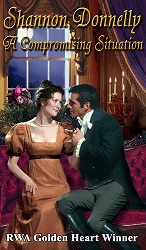
I was happy with the book, and the synopsis I wrote for A Compromising Situation–and the book won the Golden Heart and sold. That was a huge win.

A Compromising Situation

The synopsis then turned into a sales tool for me. From it, I was able to pick out possible cover scenes–because I knew by then that you needed a couple of key scenes in the synopsis to show the relationship developing. I was able to help focus cover copy, and also to write promotional copy that I could use on my website.

Now I realized just how powerful–although still painful–a synopsis could be.

Here’s the opening for that synopsis for A Compromising Situation.

After breaking her heart once years ago, MAEVE MIDDEN now only longs to find a position as a governess in a house full of young girls, where she might have a permanent position and a place to belong.  But can she settled for that after she falls in love with COLONEL ANDREW RICHARD DERHURST, now LORD ROTHE, a man far above her in station, a man who is supposed to be her employer, a man who may not be able to return her love?

And here’s how it fits into Dwight Swain’s advice:

Who is the main character, and what is the situation this character is coming out of:

  • After breaking her heart once years ago, MAEVE MIDDEN

What are the consequences–the bad outcome–from this character not getting his or her goal?

  • …now only longs to find a position as a governess in a house full of young girls, where she might have a permanent position and a place to belong.

What’s keeping this person from his or her goal?

  • …far above her in station, a man who is supposed to be her employer

What are the consequences–the bad outcome–from this character not getting his or her goal?

  • …who may not be able to return her love?

Notice the consequences are not world-ending. This was (and is) a story about people and so the consequences are deeply personal–and, for Maeve, a woman who has experienced rejection before, this type of rejection is deeply wounding. This would be a loss that would scar her.

By this point I’d learned how to stick to the main plot points in the synopsis, to focus on the conflict and the relationship since this was a romance, and I’d learned how to be very picky about each word used in the synopsis so that it was crafted to convey a tone and feel for the story (there’s no sense writing an action-packed synopsis if your story is a character study).

And I’m still learning.

Which is also why I’m still giving the synopsis workshop. Except these days a synopsis has to be even shorter, and even more able to catch someone’s interest. Which is why I call this a “sexy synopsis“. It’s got to be like a little black dress. It’s got to be something you can wear anywhere, and that’s useful as well as sexy–but it has to cover all the vital parts.

Just like the perfect little black dress,  a synopsis can take a lot of work to find all the right parts–the parts that flatter as well as fit. So if you, too struggle with your synopsis, head on over to the workshop at ORIW to pick up more tips and help for learning to get a synopsis that’s more than just something you need for writing contests and queries.

Showing More, or Lessons from Your Favorite Actors

The old adage given to most young (and I mean young in writing years, not in age) is: “show don’t tell.” Good advice, and while there’s a place for story telling in any story, showing is important enough to get top billing. You can see this in action in any decent film with good actors at work.

Actors have to show more–telling in a movie gets you boring exposition or, even worse, the deadly monologue from the bad guy as he explains evSilent Film Becky Sharperything. When you’re working in a visual media, telling ends up being talking heads. So movies have to show more–and actors have to put their characters into action. But novelists get to cheat.

In a novel or short story, the writer can just put down the words: “He was angrier than he’d ever been in his life.” Not great prose, but the reader gets the idea. Give that to any actor, and you’d end up with an actor struggling how to show that on the screen. So that’s one way a novelist can switch over from telling too much to showing more–imagine your favorite actor in the role.

What would an actor do to show this character’s anger on the screen? Would his jaw tense, his fists bunch? Would he hit something? Or would he smile, pull out a gun and shoot someone. Would he turn away, and turn back with a punch? Or would he offer up a cutting remark? It’s those little bits of business that an actor uses to better show their character in action–to put the characterization on screen. And it’s just those bits of business that a novelist needs to create to make a character come to life on the page.

Years ago, I took some improve classes. They were fun, and I was going out with an actor–and it was a great way to meet other cute guys, too. It was also great to get my head wrapped around thinking like a character, instead of myself. I had to start thinking about “how do I get this emotion across” or “how do I show this better?”  And that’s a great exercise for a writer, too–to act out your scenes.

Silent Film Star Theda BaraAnd this is where I study my favorite actors, too. How is he underplaying this scene–getting everything across with just a twitch, or a tilt of the head, or a slump of the shoulders? How is she making me see and feel the sorrow her character is dealing with–and not just with tears? I look for the honest performances–the ones that seem effortless, but which have had all the hard word done before the actors show up in front of the camera. I look for the actors who may know how to overplay a scene for farce, but who also know how to pull back and let their characters listen and react in ways that help me start to understand their characters.

All of this has gone into the Show and Tell workshop I teach–and which I’m giving for OCC RWA chapter this September (starting Sept 11). And it does seem to be the show part that most folks are working on, and which gives them the most trouble.

But narrative is a part of any story or novel–the narrative is often the stitching that holds all those great “showing” scenes together (which is why the workshop is called Show AND Tell).

Regency Actor GarrickHowever, next time you’re watching a favorite TV show or movie, or at the next play you go to, start to watch like a writer (or another actor, or the director). Look for those little bits of business that put a twist on the dialogue, or which reveal a ton about what the character is thinking or feeling. Would you have done something differently in that scene? Chosen to play it another way? Study the pros–and then write a scene that would earn the undying love of your favorite actor if you were to give them such a juicy, emotional scene with so much character hidden in the actions that show us the real person.

What’s My Motivation?

No wonder most folks think they suck at plotting—they do. Lately, I’ve read implausible plots, overly melodramatic plots only missing the villain twirling a mustache, plots so tangled there’s no way you can get the synopsis to five pages and have it make sense, and complex plots where the romance (and the character) are lost in the action. How do you fix this? It all goes back to character.

To quote Robert Mckee “character is story and story is character.” A good story comes from good characters—folks with clear goals and motivations that make sense. The plot then is actually pretty easy—you throw things (events) at those characters that will hit on their weak points (take them off track from their goals) and hit their buttons for their internal issues. The plot tests the characters you’ve created.

If you haven’t done the homework of creating strong characters to start—that means well developed characters—those story people are going to be feel pushed through a contrived plot. This will give you implausible, melodramatic, tangled, and/or too complex plots. This is because you’ll be using action to make up for weak conflict due to weak characterization.

I’m going to be doing my Plotting from Character workshop again soon, and from what I’ve seen in contests lately, a lot of folks could use this. If you start with character, plotting gets a lot easier. And characters need a few things to work well in fiction:

Goals – everybody wants something. Even the character who wants for nothing will still have something that he or she wants and needs – a story is about a character whose life is pushed out of balance. And the goal for that character is to fix this imbalance—to get back to a happy place. Goals work best when they are a specific thing that represents achieving that goal—which is how you end up with things like the Maltese Falcon (it’s something tangible folks can be after—having it in your hands means goal achieved).

Negative goals (to avoid some event), aren’t so great unless you also have a clock running—as in stopping the bomb from blowing up becomes a positive due to that ticker. But something like avoiding marriage is a little harder—since it’s a negative, the reader doesn’t knows when the character has achieved this goal (Is he married now? Married now? How about now?) See—that’s not going to give you a tangible “he made it” goal.

Motivations – to go along with the goals, fictional character needs good reasons for their actions, for their goals. Fictional folks have to make a lot more sense than real people.  And motivations work best if deeply rooted in the characters psyche—the deeper, the better. As in, a motivation that comes from a key, formative event the character’s childhood is much stronger than a motivation that comes from a recent event. For example, a character that needs to find a new job because she’s been fired—that’s motivation, yes. It matters, but it hasn’t been made personal. A deeper motivation comes from that character having been raised poor. So what if she saw her mother crying over a broken down car when she was ten and vowed never to be that person. Now, she’s got strong motivation to get that new job. The motivation has been made personal. And notice how you also want to tie this motivation to a key moment in that character’s life so it will resonate—and you can use that scene then in the story.

Internal Needs – this relates to motivations, and also to goals. Stories work best with lots of conflict, so you want to develop characters with strong internal needs. And hopefully these are going to be in conflict with their goals. So the character who is out of work and needs that job—and has motivations from being poor in childhood—if she’s got the internal need for respect, and she’s offered a menial job with no respect, now her external goals and internal needs are in conflict. She wants the job (external), but she needs respect (and won’t get it from the job). So what does she give up? She’s in conflict, which is always good stuff for fiction. How the character then resolves this conflict becomes part of your plot—and reveals this character’s true colors.

Motivations – just as with goals, internal needs have to be motivated. (Remember, fictional folks have to make sense—much more so than real people.) So this character needs an event in his or her formative years that leaves him or her with deep reasons to have these internal needs. And, again, you want to tie this motivation to deep, core issues—could be the character is compensating for a handicap, and respect isn’t just about being respected.

Characters should have such strong goals and needs that the character (and the reader) should feel as if that character’s “self” will be destroyed by giving up either the goal or need.

And then you throw in the romance (if you’re writing a romance).

Once you create your main character, now you design the love interest, and all the other characters. The love interest is someone with a conflicting goal, conflicting internal needs, and motivations that are just as deep and strong. In other words, this is both the ideal person, and the totally wrong person. This is a soul mate (and I use the definition that soul mates are those people who push all your buttons—they make you grow).

You develop goals and motivations for all characters—in other words, you never have a bad guy who is bad just because he is bad. And you look to develop goals and motivations that go beyond clichés. (Trust me, your first few ideas for goals and motivations will be cliché—that’s why they pop up so readily. As Orson Scott Card advises in Characters & Viewpoint, dig deeper.)

And, very important, you want the story’s antagonist—the person up against the protagonist—to have conflicting goals. Only the protagonist or the antagonist should be able to win the day (and for more on this, study up on Bob Mayer’s talk on Conflict Lock – he’s bestselling author and he knows what he’s talking about).

Theme – this is what helps you with all this goals and motivations stuff, and with all the secondary characters you need. If your theme is about how love heals, you’re going to need hurt characters, and folks who’ve never been hurt by love. You’ll need folks who haven’t been heeled by love—and those who have. You need all sides of the theme. And the main character is going to be at the center of that theme.

Now, with characters and theme shaping up, you can plot. Meaning you look at your main character and you keep asking—What is the worst thing that could happen to this person? You ask this many, many times and jot down the answers. What could prevent this person from getting his or her goal? What would force this person to give up his or her goal? What would push this person to the extreme to get his or her goal or meet his or her needs? Keep pushing, keep making it worse. (Action movies are great to take apart for this sort of stuff—look at Indiana Jones, and how his life just gets harder and harder and harder.)

These ideas for obstacles that the main character must overcome can then be shaped into the main turning point actions—the plot that will test your character. It will also test the main character’s relationship—the romance. You put just as much strain there as you do for any action.

As you do this, you’re coming up with events to throw at your character, but this is not the time to decide yet how your character will act—that come from knowing your character and putting your character into these bad, bad situations. In other words, you set up the obstacle course—your characters decide how to run that course. The story comes out of the characters dealing with worst case scenarios.

Two things about this—first, you need to structure the action so that tension and conflict rises. In a good story, things go from bad to worse—not the other way around. Second, you’ll develop subplots around the main plot, but it’s the main action line—the main character’s driving goal, motivations for this, and obstacles (or turning points)—that should be the main focus. The main story arc must have the main character at its heart—the main character must resolve the story (or fail at this, which makes it a tragedy). And this should be the last set of story points to be resolved. (Subplots can start sooner than the main story, but should be all wrapped up before the main story is in order to create the most satisfying story.)

Notice how all this plotting now comes out of the characters that you set up. Your characters give you your theme, they start to suggest events you’ll need in the story to block them from their goals. For example, you know the woman who need a new job is going to start off applying for new positions—and maybe that’s not so exciting, so you start her where she’s just been turned down for the 100th time. But she starts off trying to do this the easy way—that’s so your story can build and get worse. You know you’re going to make things worse for her—she’s going to be face with choices. Maybe even asked to commit murder in order to make a million dollars. But she’s not going to be asked that right away—that’s going to come after she’s been tested, and tested, and tested more. That’s going to come when she’s more than desperate. That’s going to come when she has so few other choices this extreme one seems a viable option.

Once you get the ideas and characters down in writing, you’re going to check in with a writer friend. You’re going to look at this from all angles to see if it makes sense. If it’s plausible. If every character is well motivated with strong goals. You do this because it’s too easy to think you’ve got it all buttoned up when you don’t. And you’ll find you have stuff worked out in your head that doesn’t make it onto the page—you want to always make sure to get the story on the page as close to what’s in your head.

What this means it that you won’t be coming up with cliché conflict (the heroine is kidnapped and the hero saves her)—conflict will be very specific to the characters you’ve created because it will be deeply rooted in individual pasts. You won’t be stuck with how to escalate conflict and tension, because you’ve got goals and you’re going to take away all the easy ways for that character to reach his or her goals. You won’t be caught with a romance that relies on misunderstandings or mistaken assumptions to create problems in the relationship—problems will be built into your characters.

Just keep in mind—it’s all about the characters.
How to get More from Online Workshops

Having taught and taken online workshops, I’ve some thoughts on how I think folks can get more bang for the buck. I’ve also taught in classrooms and at conferences, and it’s a whole different animal when you go online.

The good news is that most online workshops are cheep–there’s no overhead for classroom space, no issues about traveling to the workshop (which can be wearing if the workshop runs for more than a day or two), and you get to attend when you have the time.

The bad news is that both the instructor and the attendee miss out on face to face interaction: that’s bad, because a good instructor can gauge where/how a class is going by the interest shown in the attendee’s eyes–you can’t do that online.

With an upcoming online workshop on Writing Regency Set Novels that I’m teaching for Lowcountry Romance Writers this August, and one on Show And Tell: An Interactive Workshop, for OCC RWA chapter in September, I’ve been thinking about things that attendees can do to make the class more interesting–and to get more from the workshop.

1-Participate. In every online workshop, there are the lurkers, the participants who don’t participate. I’ve been one of them more than once. There are a hundred reasons to lurk in the electronic shadows, including lack of time, however, I’ve always gotten more out of the workshops where I’ve participated. This may mean trying some writing exercises, or just asking questions.

2-Ask questions to the group. Each workshop there’s at least one person who wants to communicate outside the workshop. As the instructor, I can’t do that–everyone benefits from every question and every answer. So ask those dumb questions to the group.

3-Stay on topic. This one’s hard. In a classroom, it’s easy to get off topic and to bring the workshop back on topic. These side branches can be useful. But online, getting off topic tends to snowball into anarchy. If you have a question that’s off topic, preface this so that you let everyone know you’re aware this may be off topic. Or find a way that it fits into the overall workshop theme and structure. Do keep in mind that you signed up specifically to get information on the workshop topic.

4-Follow the structure. This one’s very difficult. Online is a great equalizer–meaning it’s too easy to ignore posting guidelines, and to start side conversations, and to wander off on your own path. Unfortunately, if you do this in an online workshop, you take the workshop with you — meaning you’re missing out on what the instructor had planned. And remember you can always ask questions about how flexible the structure is to help you get the information you need.

5-Let the Instructor instruct. Side comments can be a great way to participate, but again, if you hijack the workshop away from the instructor, chances are you’re going to miss out on the benefits the instructor might be able to give you of that person’s experience and knowledge.

6-Give good feedback. If something clicks for you, don’t forget to post the “ah ha” moment. That may help someone else and will help the instructor.

7-Keep asking questions. If something doesn’t click for you, look to rephrase the question and try again. Provide more detailed information in follow ups. Communication online can be tricky since you don’t have someone’s face and body language to read–you just have words. This is good in that we’re supposed to be writers–we’re supposed to communicate. But we also have to always check back with our words to see if what we intended made it onto the page.

Whenever I take an online class, I try to follow the above guidelines–I don’t always succeed. Sometimes the workshop assignments seem more work than I’m willing to tackle at that moment. Sometimes I just feel like hanging back.

But I know that I get back from any workshop what I put in–that includes the workshops that I teach. And I figure if I get one gold nugget of information, I’m that much a better writer.

As an instructor, I love the attendees who contribute ideas, and comments, and who participate. They make the workshop more interesting for me as well as for others. And I have to keep reminding myself when I take a workshop to be that brave soul who steps up and participates fully, instead of being the lurking writer who likes to sit back and observe.