
Recently I read a book where the flow of the story was chopped off in the jump from chapter one to chapter two. I’ve also read books where the flow was interrupted from one sentence to the next, or one paragraph to the next. Flow hits on all levels from word to word all the way up across the story.
Flow is one of those important, yet, neglected writing topics. This may be due to being something difficult to really nail down.
We read about pacing all the time—how the story needs to have good pacing and not sag in the middle. Flow is a little different. Flow is about linking thoughts to gently pull the reader along. The Truman Capote quote may sum it up best, “’What I am trying to achieve is a voice sitting by a fireplace telling you a story on a winter’s evening.” That is a very good way to think about flow. It can make the writing seem effortless, very much like a river that is just moving along.

The flow can be in fast paced or slow stories. Flow is more about linking one word to the next, one sentence to the next, one paragraph to the next, one scene to the next, and one chapter to the next. It is about using words and sentences in such a way that the reader is engaged—but never thrust from the story. It is very much like a river’s flow that move on without the reader noticing the water is being deliberately move.
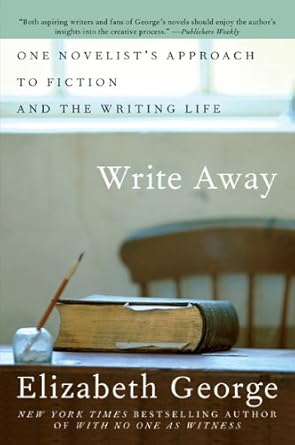
This idea was first introduced to me by Elizabeth George’s excellent book Write Away. It is something a writer should think about, but I believe it is something to work on after you get the basics of craft down and you’re looking to bump your writing to the next level. It can leave a writer choked if thought about too much. It also is something that shows up if you read your work aloud.
That trick of reading a story aloud is one that I often think is neglected. Different things show up when you read a story aloud—and it is a pity we’ve lost the habit of sitting down in an evening with one person reading while others do handicraft. Typos jump out, stumbles become clear, and flow—or the lack of it—becomes much more obvious.
Flow is about word choice, but also about sentence structure, and how paragraphs are built. This is why I consider it a more advanced topic for a writer—if you’re still struggling with the basics of building a character, of crafting dialogue, and structuring a scene, flow is something to look at after you finish a book or two.
In an article by David Jass on ‘What Writes Mean by Flow’ he speaks to the importance of syntax and writes that, “…altering our syntax does more than help us write flowing prose; it allows us to get our thoughts off the normal track on which they run.” When it comes to the use of syntax and varying sentence structure Jass quotes Robert Hass, “New rhythms are new perceptions.” This is what someone means when they say the writing is or isn’t fresh.
So…fresh and flow…and syntax. It is enough to stumble any writer into a block—too much thinking about this can be deadly. But if you write enough words, you will start to find your own flow…and when you get to revising what you’ve written this is where a focus on flow becomes important (also called word choices, and syntax or use of variable sentence structures).
One general guideline that helps me is to keep in mine one thought to a sentence, one topic to a paragraph. If I chop up sentences, or paragraphs, I want to do so with intent for the scene and still keep flow in mined even as I look at the pace. Thinking about the emotion behind each word—its connotations as well as its meaning—and looking at how the sentences and paragraphs, and scenes reveal character I want to keep asking a couple of questions. What should the reader feel? And is it all getting too intellectual? Sometimes, if the emotion is on the page, you want to leave things alone.
I do believe that if you write long enough you start to get a handle on flow with a writer’s instinct. I also believe that reading a lot can help with absorbing this idea of flow. It also helps to stop and take apart a sentence, or paragraph, or scene that either thuds for you or has that “flow”. (This is the curse of a writer—you start to read like a writer, not like a reader.) To head back to the analogy of a river running, leading inevitably to the sea, that is why the word “flow” crops up for writing. The story can carries the reader along is the one the reader has trouble putting down—I’ll just read one more chapter, a few more pages…oh, I finished the book and I want the next one from that writer. Flow is attached to a writer’s voice—it’s not just the rhythms of thought, it is the rhythms of intent. It is something that makes writing forever an interesting challenge.
 Shannon Donnelly's Fresh Ink